White House slashes medical research on monkeys and other animal testing, sparking fierce new debate


This story is a CBS News collaboration with the post and Courier de Charleston, in South Carolina.
The Trump administration has canceled nearly $ 28 million in federal subsidies for animal tests, because the main federal health agencies suppress research on living animals in favor of new alternatives, a joint investigation by CBS News and the post and mail of Charleston, in South Carolina, revealed.
“We are witnessing at a time in the watershed at the moment,” said Justin Goodman, the main vice-president of White Coat Waste, a non-profit organization for animal rights. “We have a skeptical administration as for expenses, skeptical on the science of the establishment.
The pressure for the change comes from an improbable coalition of animal rights activists and bipartite members of the congress who wish to stop what animal rights groups estimate $ 20 billion per year of federal spending for animal experiences. Considered a cause of the left for a long time, the animal rights movement has widened and has taken steam under the Trump administration. The Secretary of Health, Robert F. Kennedy Jr., leads the charge against high medication costs, vaccine safety and the grinding approval process required to market innovations.
Justin McCray CBS News. 
Animal tests, often involving painful experiences that end in euthanasia, have played a crucial role in the development of new vaccines for COVID 19malaria, polio and popular drugs such as tylenol and Ozempicwho inaugurated a craze for drug.
“In conventional medicine, these procedures, these diagnoses, these therapies, for the most part, were discovered in animals,” said Steven Marks, dean of the Clemson University Veterinary School. “But they change the landscape of human health at the moment.”
No one knows where it will end.
From President Trump took officeAll major federal health agencies have promised to eliminate research on animals, with various degrees of efficiency. The veterans administration says that it is on the right track, as promised, to put an end to all primates research that has been used to develop new treatments for neurological disorders, alcoholism and mental problems.
The vast National Institutes of Health has agreed to eliminate experiences with dogs, cats and primates, but childcare dogs have found recent examples from the agency launching new research on animals. Federal money has continued to circulate to incomplete research projects and entrepreneurs who reproduce and take care of thousands of animals for laboratories.
The effort has aroused uncertainty in South Carolina, where a research company maintains a free monkey colony on the isolated island of Morgan, where nearly 4,000 rhesus monkeys belonging to the federal government claim in the sun until they are shipped to federal laboratories.
The American representative Nancy Mace, a Republican of Charleston, was a leader in the fight against animal rights, joined by White Coat Waste, a group that counts the billionairer Elon Musk Among his supporters. Mace has introduced legislation to end research on animals funded by the federal government. She also recently inserted the language into a house expenditure bill to force the NIH to justify continuous spending on Morgan Island, which is better known as “Monkey Island”.
“Honestly, it’s heartbreaking,” Goodman told CBS News and the Post and Courier during a recent visit to the waters surrounding the island.
As Goodman looked at it, mothers and rhesus babies clashed on the sandy beach of the island and looked at palm trees. But each year, hundreds are “taken from this wild habitat with their friends, with their families and dispatched to laboratories. They will be socially isolated in tiny cages by themselves and subject to some of the most barbaric pains you can imagine,” he said.
The mission of his group, said Goodman, is to “reduce as much animal funding as possible”.
Patients who benefit from continuous animal research are at stake. Animal experiences have helped develop revolutionary drugs, such as immunotherapy that saves Max Harbin’s life, 11 months of Folly Beach, South Carolina. Max has a vertebral condition which once classified as the main genetic cause of infantile death.
Before Max therapy was approved for pediatric use in 2019, he suffered years of study with mice and monkeys. An official of the Food and Drug Administration described therapy as a means of “changing the lives of patients who may have faced a terminal state”.
Max’s mother, Laura, animal lover, said that she was not aware of the rigorous animal experiences that led to human approval from Zolgensma, a single dose therapy produced by Novartis.
“It is strange to think that it is a step in the process, but it is necessary, and without it, my son would be in a very, very different place. I am really grateful that there is a way to test it so that we know that it is sure.”
Now, the FDA is now one of the agencies promising to make a “paradigm change” in the way new drugs are approved.
He wishes to use new techniques such as IT -based IT modeling, laboratory tests on human organs and data analysis to “obtain safer processing for patients faster and more reliable while reducing R&D costs and drug prices,” said FDA commissioner Martin Makary. “He is a winner for public health and ethics.”
There is still a major obstacle to remove all federal research on animals. The science behind the alternatives evolves quickly, but many experts say that it is not yet ready to serve as a safety and efficiency gauge in humans.
“I want to see us out of the business to use animals in research,” said Paul Locke, who is a lawyer for environmental health at the Johns Hopkins Bloomberg School of Public Health Health Health Health Health Health Health of the Center for the Center for alternatives to animal tests. “The question is when. When we can do this and achieve the double goal of having better science and practically no animals? The answer is not tomorrow.”
Craig Olmstead / CBS News 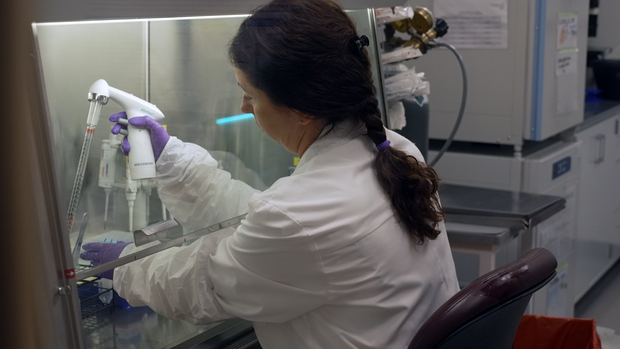
Locke testified this year during a conference audience organized by MACE on the need for federal agencies to intensify alternative research and to “establish the global standards of these areas”.
The hearing has drawn more attention, including the publication of support for President Trump’s social media, about MACE’s office that the federal government has spent more than $ 10 million to create transgender mice and other animals and study their behavior.
Parents like Justin and Rosalyn Porcano in San Rafael, California, look at the debate with concern. Their 7 -year -old daughter lia has a rare genetic disorder, Usher 1B syndrome. She was born deaf and faces blindness, without treatment currently available. Without medical advances in the treatment of disorder, she will probably become blind when she is in high school.
Justin Porcano / CBS News 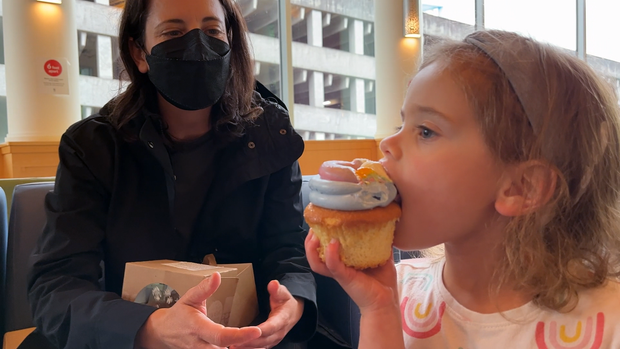
Porcanos have found a primate researcher at the National Oregon Primate Research Center who, with the help of the family, develops a model that will allow the development of effective treatment. Laboratory work is underway while the debate in Washington is intensifying.
The couple, who lead a non -profit organization called Save Sight now which is dedicated to the search for treatments for Usher 1B syndrome, said that they would prefer an alternative to animal tests, but that makes no sense for them to suspend research until better solution arrives. Lia does not have this luxury of time, said Rosalyn Porcano.
“Until technology and science have a better solution for tests, I think it’s silly,” said Justin Porcano. “You can’t just stop testing in all animal models at the moment. It’s a crazy concept.”
Post and messaging journalist Mitchell Black contributed to this report.


