
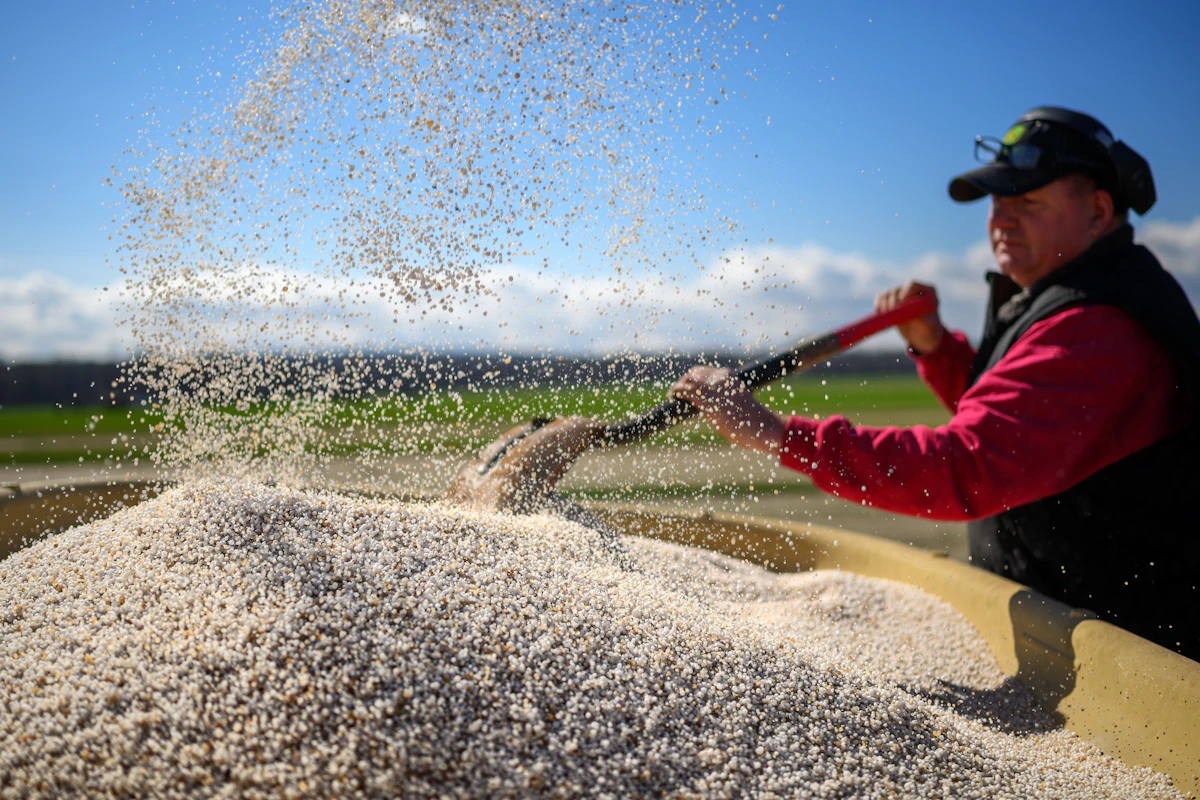
There are ways to reduce fertilizer usage, though—starting with farmers simply using less of it. “The department of agriculture in each state [has] a recommended usage of fertilizer—in this state, in our climate, in this soil, growing this crop, you should use this amount per acre,” said Lilliston. “And typically farmers go considerably over that” just to be safe, even though that exacerbates runoff and water quality problems.
Fertilizer application could also be timed more precisely. In Canada, Farrell said, the fertilizer industry, and to some extent the Canadian government, has advocated for what’s dubbed the “Four R nutrient strategy”—applying fertilizer from the Right Source (types of fertilizer tailored to the particular crop), at the Right Rate (exactly how much the crop needs), at the Right Time (looking at the plant’s life cycle), and Right Place (so, not just spread evenly over the field). The political support for this, he explained, “grew out of trying to reduce nitrous oxide emissions from fertilizer and soils, because soils are the largest source of nitrous oxide, which is a really potent greenhouse gas, 300 times that of carbon dioxide.” A variety of tools for more precisely tailoring fertilizer application are under development, but many aren’t commercially available yet—and would probably require subsidies for farmers, who already operate largely on credit, to afford them.
Another way to reduce nitrogen application is via crop rotation, which a lot of American farmers already practice. “What you are seeing already is farmers saying they’re going to grow soybeans instead of corn,” Ben Lilliston, director of rural strategies and climate change at the Institute for Agriculture and Trade Policy, told me. Soybeans, which like all legumes take nitrogen from the air and “fix” it into the soil, not only require less fertilizer themselves, but can reduce the amount of fertilizer required by corn in a subsequent year. In 2022, when fertilizer prices spiked due to the Russia-Ukraine war, many farmers switched to soybeans for the year, Lilliston said. And that’s likely what some people will do this year, as well.


