
Western states like California and Arizona have recorded a higher-than-usual number of venomous snakebites so far in 2026—and hikers and other trail users are experiencing the brunt of it.
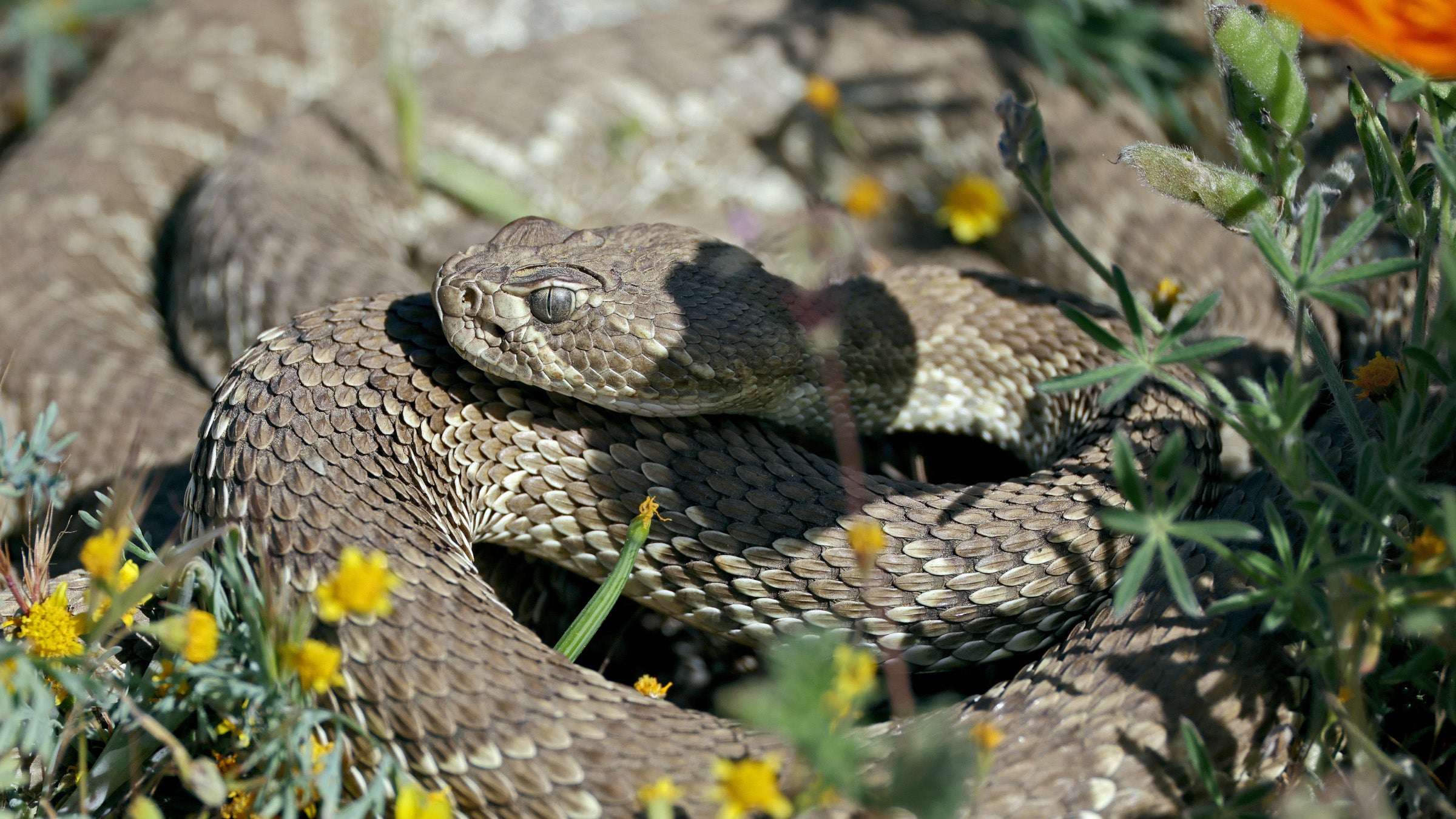
Two rattlesnakes in California’s Lancaster poppy fields (Photo: Raul Roa / Contributor / Los Angeles Times via Getty)
Published April 14, 2026 10:31AM
On April 12, a hiker was out for a Sunday stroll on Montecito, California’s Buena Vista Trail when a rattlesnake bit her on the ankle. Without enough cell service to call 911, the stricken hiker texted a “loved one,” who contacted emergency services, Montecito Fire said in a Facebook post. Firefighters and search and rescue personnel managed to track down the hiker after she began blowing her whistle, and transported her to the hospital by ambulance, where her condition is unknown.
The incident is the latest in an unusual rash of rattlesnake bites that California and other western states have experienced this spring. In the first three months of 2026 alone, California’s poison control system received 77 calls about snakebites, putting the state on pace to exceed the annual average of 200 to 300. Sunday’s incident marked the second time in a month that a snake has bitten a hiker on a Montecito trail. Just to the southeast, Ventura County authorities responded to six snakebite calls—about two-thirds of the number they recorded in 2025—in less than a month. In Arizona, a representative of the Phoenix Herpetological Society told Fox 10 News that there had been roughly twice as many bites in the area by mid-March as by the same time the previous year.
For a few unlucky individuals, the consequences of a rattlesnake bite can be deadly. So far this year, two people, both in California, have died from venomous snakebites, including a 46-year-old hiker who passed away five days after suffering a bite this March.
What’s Behind the Rise in Rattlesnake Bites?
While it’s not out of the ordinary for hikers to encounter rattlesnakes in spring, unusual weather patterns in 2026 have led the reptiles to become active early across much of the western U.S. Emily Taylor is a professor of biological sciences at California Polytechnic State University and the founder of Central Coast Snake Services (CCSS), which provides free rattlesnake removal and relocation. In a phone call, she told Backpacker that she suspects the bump in snake encounters so far has been driven less by an increase in their population and more by that early emergence.
“March did have a heatwave and everything was kind of accelerated,” she says. “Plants have been blooming early, rodents have been booming early, and the snakes were out early.”
With two recorded snakebite deaths, California, which averages zero or one annually, has already seen more fatalities than in a typical year. But while Taylor called the deaths “really terrible,” she’s quick to point out that they’re not necessarily a cause for hikers to be concerned.
“That’s just a statistical anomaly, right?” she says. “That can happen occasionally. It’s not because rattlesnakes are getting more aggressive or their venom is getting worse or any of these rumors you’re seeing going around. It’s just because there was a tragic coincidence.”
Those rumors can have serious consequences not just for hikers, who may avoid going out because of fear of encountering one of the slithery reptiles, but for the snakes themselves. Taylor and CCSS have responded to incidents where hikers have attacked and killed rattlesnakes they encountered on the trail.
“Because of these two tragic deaths, people have been going out and saying ‘let’s exterminate snakes,’ which of course they can’t do. All they’re doing is harming wildlife and also putting themselves at risk,” says Taylor, who added that hikers have been bitten in the past while attempting to harm snakes.
Hikers’ Real Risk
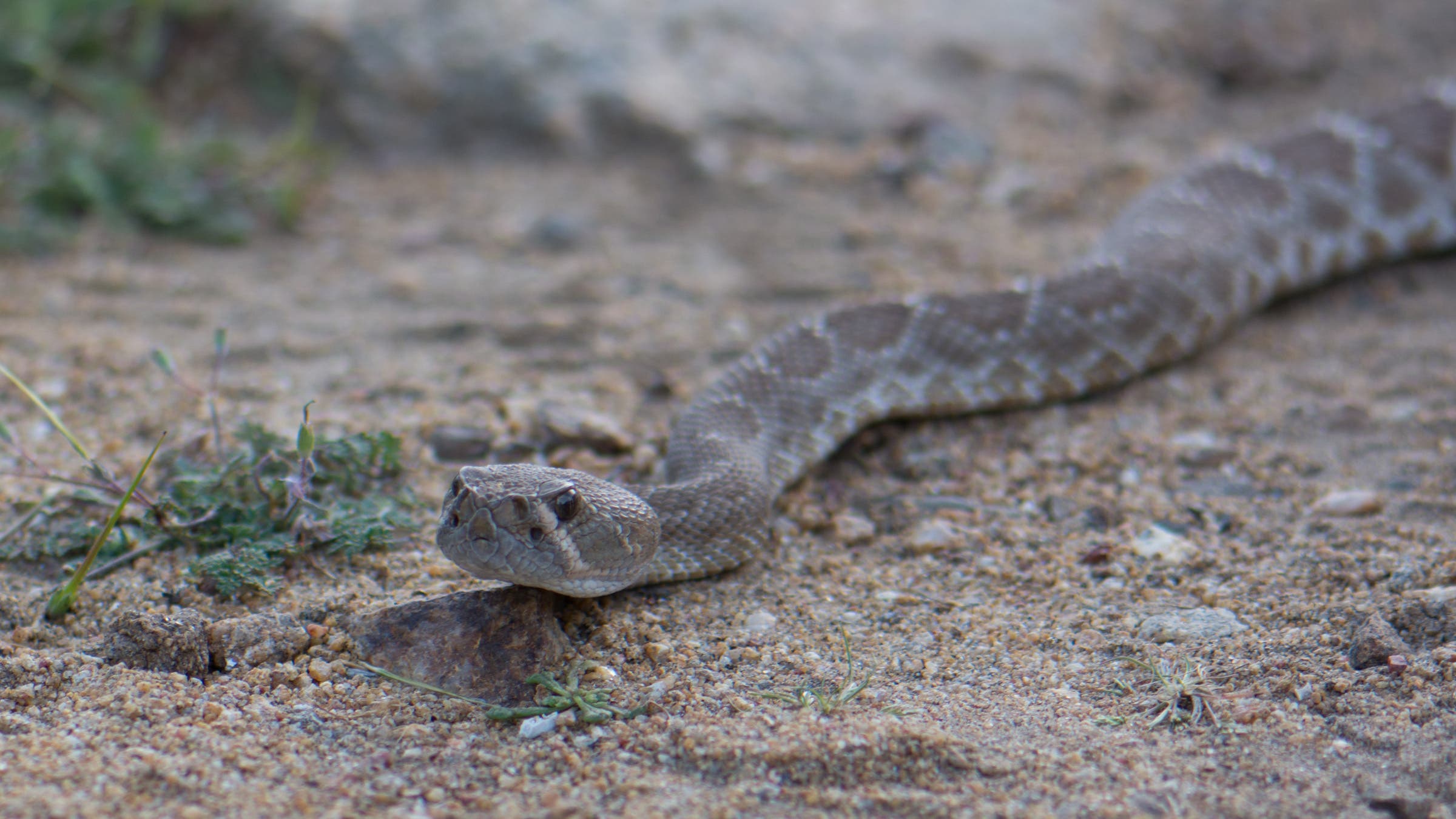
While snakes have been getting a lot of press this spring, Taylor noted that the general public’s risk of having a bad encounter with a rattlesnake is still miniscule.
“People are four times more likely to die from a lightning strike than a snakebite, 10 times more likely to die from falling off of a ladder in the United States than from a rattlesnake bite,” she says. “Everyone who gets in their car every day is at a much, much greater risk. But still, there’s this mania.”
Still, it’s going to be “a good year for snakes,” which have enjoyed plentiful prey after a wet winter in Southern California, and Taylor says that outdoorspeople in states like California and Arizona can likely count on seeing them. She suggests that hikers headed to rattlesnake habitat should ditch their sandals and lightweight hiking shoes in favor of sturdier footwear and pay close attention to their surroundings.
That advice will be essential for hikers on the Pacific Crest Trail and other long routes, who will likely find themselves sharing space with venomous snakes during their journeys.
“They need to make sure … they’re watching where they put their hands and feet, especially for your PCT hikers,” Taylor says. “Places where they’re taking their rest breaks—sitting in the shade, going to areas where there’s water. That’s where rattlesnakes will be hanging out on hot days. So situational awareness, don’t put your hands and feet where you can’t see them, that’s going to go a long way in protecting people.”


