Why do giraffes have spots?


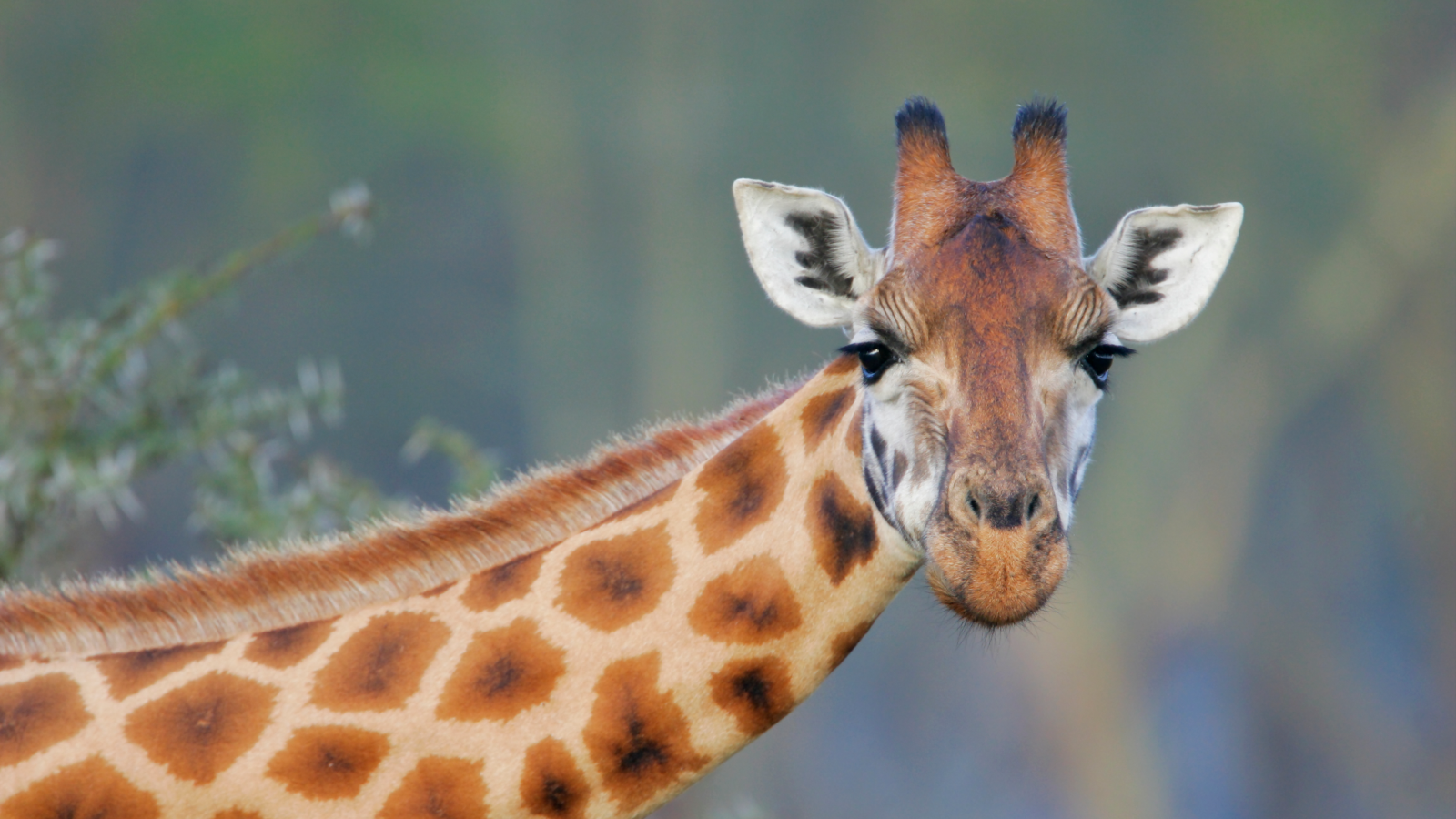
The giraffes are best known for their imposing cous, but their beautifully spotted coats are just as distinctive – and they fulfill important functions.
So why do giraffes Do you have spots?
One of the reasons is camouflage; The spots of a giraffe help him Mix in its environment. Irregular marks break the outline of the animal, especially when sunlight filters through trees and shrubs. This makes them difficult to see, despite their giant size, even a few meters away.
“According to the vegetation in which they live, they will have appropriate marks,” Mitchell told Live Science in an email. For example, some researchers have observed that the forms of patches in the mantle of a giraffe correspond to the acacia branching patternswho are common on the African savannah.
Camouflage is particularly important for young giraffes, whose survival depends largely to remain hidden from predators. A 2018 study noted that the larger and rounder well diagrams were linked to higher calf survival rates – a connection that researchers have attributed to more efficient camouflage. The study also showed that mothers of giraffe and their calves had Very similar coat modelssuggesting that certain characteristics of the spot shape of a giraffe are hereditary.
In relation: Why do so many babies have stains?
A less obvious – but just as important function – stains from a giraffe is to regulate body temperature. Giraffes I cannot sweat or dropYet they live in some of the hottest environments on the earth. So how are they cool? Through their spots.
Under each patch is a dense network of blood vessels. “When a giraffe needs to lose heat, blood vessels under a patch expand and send blood to a patch,” Mitchell said. This blood is close to the surface of the skin, where it can release heat. “”Thermal photographs Giraffes in hot conditions confirm this idea, “added Mitchell because they show that dark plates are warmer than the surrounding skin.
A Study of Masai giraffes (Giraffa Camelopardalis Tipelskirchi) which is currently under the peer examination is based on the idea that the spots are important for thermoregulation. He found that larger places seem to offer an advantage in colder climates, as blood vessels below can contract to keep heat. On the other hand, smaller spots are more beneficial in warmer conditions, because larger and darker plates tend to absorb more solar heat.
Interestingly, researchers also found that the occasional patterns influenced the survival of adult massi male giraffes, but not women, during extreme temperature oscillations. One possible explanation is that female giraffes are more sedentary and tend to stay in groups with calves, while men move in broader territories and face more varied environmental conditions.
The effects observed in Masai giraffes in Tanzania probably apply to other Giraffes populations, Monica linkWildlife biologist at the University of Zurich and co-author of the study, told Live Science.
Mantle reasons also help giraffes to recognize their parents, said Bond. In a Study published in 2022Bond and his colleagues have analyzed the punctual features – such as form, size and orientation – of 399 adult female female giraffes in the ecosystem of the Tarangire in northern Tanzania. They found that the Masai giraffes form stronger social ties with giraffes whose mantle patterns resemble theirs. Because coat patterns are known to be transmitted from the mother to offspring, these results suggest that the punctual model serves as a visual benchmark for parents’ recognition.
Finally, punctual models among mammals often signal its global health and social status and play a role in the choice of partners, according to a 2017 study. This can be true for giraffes, although it has not been studied directly, said Bond.
More than beautiful patterns, giraffe stains are tools for survival.
Animal quiz: Test on these funny questions about animals