Why is it so hard to get an early prenatal appointment? : NPR


Sunnu Rebecca Choi for NPR
Q: I just found out I’m pregnant. According to my period tracker app, I’m about five weeks in. But I can’t get my first prenatal appointment until nine weeks. I’m super stressed. Why can’t I see a doctor sooner? And is it really okay to wait that long?
First of all, congratulations!
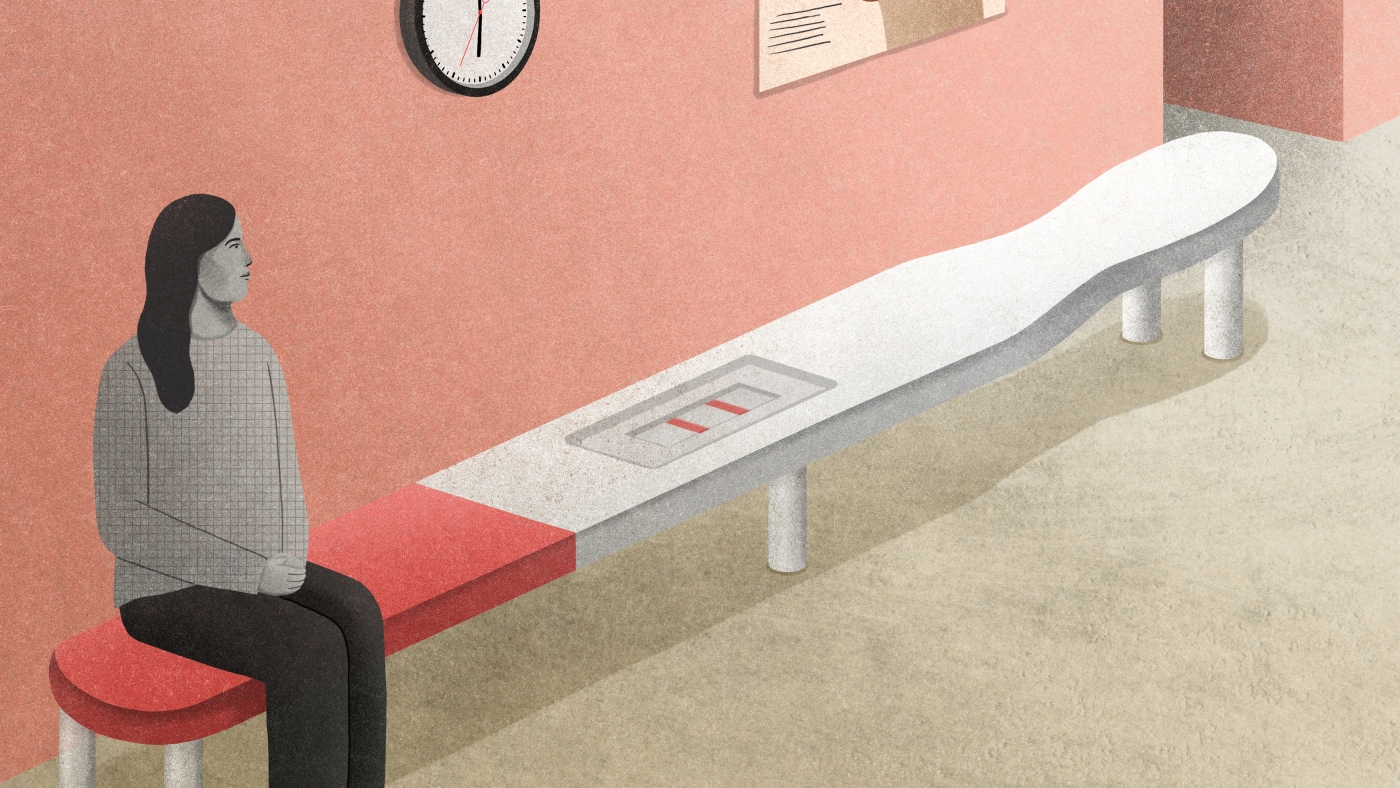
And don’t worry. It’s normal to want to seek medical attention immediately when you see these two lines side by side on a positive pregnancy test. But it’s also quite common to have trouble getting an appointment to confirm that you’re pregnant.
A doctor friend of mine also experienced this recently. Even with special connections at her hospital, she was unable to see a doctor for a month. So she texted one of the OB/GYNs at her office and asked him to do an ultrasound between her scheduled appointments!
My friend was lucky to be able to access this workaround. But I’ve always wondered why early pregnancy care isn’t available to those of us who don’t have an OB/GYN on speed dial.
Many prenatal providers will not schedule patients until eight or nine weeks pregnant, at the earliest. Waiting a month to see a doctor is not necessarily a bad thing, since most pregnancies will be healthy.
But it may look like a long time, since most highly sensitive home pregnancy tests can confirm pregnancy on the first day of your missed period, which usually lasts about four weeks.
So if you want an earlier appointment, here’s what you need to know.
Do you have a medical question you would like answered honestly? Write to us at thrive@npr.organd we will consider your question for the column.

Many people want earlier prenatal care
In a 2016 study, about 15% of participants said they couldn’t get a first prenatal appointment as quickly as they wanted.
Dr. Kavita Vinekar, an obstetrician-gynecologist whose work focuses on early pregnancies, thinks the figure could be even higher.
Vinekar became interested in treating patients in the early stages of pregnancy, as this is a very vulnerable time.
She interviewed patients at Jefferson Health in Philadelphia and learned that people were doing everything they could to confirm the pregnancy, even if prenatal practices turned them away.
Nearly 50% of patients had an ultrasound elsewhere before their first prenatal appointment, while 25% had gone to the emergency room.
Nearly 15 percent of those who had an ultrasound went to what’s known as a crisis pregnancy center, which offers anti-abortion counseling without approved medical care.

Why it’s hard to get these appointments
According to Vinekar, seeing patients during the first weeks of pregnancy is a radical departure from what many doctors learn during their training.
In the early stages, it is difficult to give patients definitive answers about the health of the pregnancy. Indeed, it can be difficult to visualize an early pregnancy on ultrasound.
“We were told, ‘Don’t see people in early pregnancy,'” Vinekar said. “You’re just going to open a whole can of worms. You’ll create stress when they don’t need to be. “”
But some patients are stressed when they can’t consult a doctor, especially if they fear miscarriage.
Unfortunately, Vinekar says the risk of miscarriage is actually one of the main reasons prenatal practices don’t plan patients early. They are not designed to care for the estimated 15% of pregnancies that will end in the first trimester, so they try to delay caring for patients until eight or nine weeks, when miscarriages are less likely.
Early miscarriage can be difficult to diagnose and require several urgent follow-up appointments. Additionally, practices may not want to leave these appointment slots open because if no one makes an appointment, they could lose money.
Here’s what you can do in the meantime
If you are waiting for an initial prenatal appointment but want medical advice sooner, your best option may be to try seeing your primary care provider. If you have an obstetrician/gynecologist, you can also make an appointment with them.
In my primary care practice, I often speak to patients who have just found out they are pregnant. They have questions about everything from the risk of miscarriage to whether or not they can eat sushi.
Many of my pregnant patients begin experiencing nausea weeks before their first prenatal appointment is due. They are frustrated that they cannot see an obstetrician/gynecologist to get some relief.
So instead, they call me – and I’m happy to help them.
If you experience nausea, heartburn or breast tenderness but do not yet have an obstetrics/gynecology appointment, do not hesitate to call your family doctor or go to the emergency room. Although we are not pregnancy experts, we can usually offer treatment for these common and unpleasant symptoms.
What to do if you fear miscarriage
As a family doctor, I sometimes receive calls from pregnant patients who are bleeding and cramping and worried about miscarriage.
First, don’t panic. Light spotting during pregnancy may be normal.
I usually do my best to have my patient undergo an urgent ultrasound at a radiology practice with experience diagnosing early pregnancy and miscarriage. Unfortunately, this can sometimes take several weeks.
If you already have an obstetrician-gynecologist, you can also make an emergency appointment with this doctor. If you don’t see anyone for routine reproductive health care, a Planned Parenthood or community health center may also be able to accommodate you.
Since it’s estimated that only 4% of miscarriages require emergency room care, I try to reassure my patients that what they’re experiencing is usually not life-threatening. Unless they are bleeding heavily, it may be safe to wait.
And of course, I always tell my patients that if they had a miscarriage, it’s not their fault. Most miscarriages are due to abnormalities in fetal development. It’s almost never due to something bad they did.
Yet, most patients immediately want to confirm whether they are having a miscarriage. In this case, emergencies are always an option. Doctors can usually do an ultrasound and help control the pain. But because miscarriage is a high-stakes diagnosis and not all doctors are trained in early pregnancy ultrasound, emergency rooms may not be able to answer all your questions.
Future solutions for early care
I hate to tell my patients all this, but our health care system doesn’t do a great job caring for patients who have miscarriages or are anxious about early pregnancy.
Take the story of Asha Spacek-Hobbs, who suffered a miscarriage before the birth of her youngest child. The Philadelphia mom couldn’t get an urgent appointment with an obstetrician-gynecologist. She said it was “like trying to book a flight to Antarctica.”
But the ER experience, she said, wasn’t definitive either.
“I left the hospital, believe it or not, not really knowing if I had actually miscarried,” Spacek-Hobbs said. “No one would really say that.”
Vinekar has seen this too often.
“Historically, we have avoided them and abandoned them,” she said. “Maybe that’s when they need us the most.”
That’s why Vinekar and her team started a clinic called the Jefferson Early Pregnancy Program, which is almost like emergency care for people who just found out they’re pregnant. When patients call, they are offered appointments in a few days.
Vinekar hopes these early pregnancy appointments can help patients get evidence-based miscarriage care right away, without waiting hours in the emergency room. And she hopes her model will spread so that it will be easier for people across the country to get care during early pregnancy.


