Why Israel must rethink Syria approach

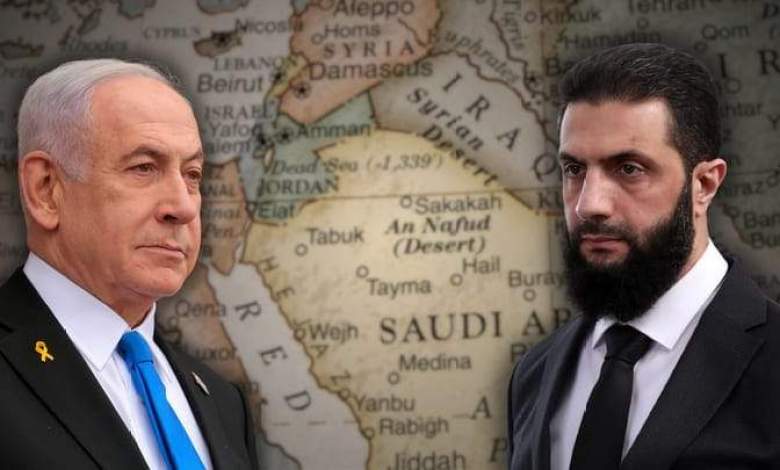
The Syrians have shown since December 8, 2024 that they want to rebuild their country and that they want peace. That doesn’t mean everything went well
With the current ceasefire in the Iran war, Israel has time to take stock of what is changing in the region. One of the narratives about Israeli and American operations against the Islamic Republic is that they will reshape the region. It has done so by weakening the Iranian regime and thereby weakening its support for its proxies.
As this continues, Israel’s power will increase and groups such as Hezbollah risk being sidelined.
One place where Israel should consider a policy change in order to cement the new regional order is Syria. However, it does not appear that Israeli leaders are ready to change their minds on Damascus.
On Saturday, Prime Minister Benjamin Netanyahu made a statement in front of a map of the Middle East. This is the kind of speech he is known for. Netanyahu likes props and cards.
The map was coded white, red and blue. All the red countries appear to be linked to Iran and its proxy groups, including Lebanon, Syria, Iraq, Yemen and Gaza – the Iranian axis.
Israel was coded blue and the West Bank was included in Israel. The other countries were all white.

However, Syria is no longer part of the Iranian axis. On December 8, 2024, the Assad regime – already weakened by a decade of civil war that left much of the country in ruins – fell. At the time, Israeli officials appeared to take credit for helping to overthrow the Syrian regime.
Yet Israel also launched massive airstrikes in Syria on the same day. The aim was apparently to deprive anyone who might take power of the country from using their weapons against Israel.
Syria has campaigned for peace since the fall of Assad
Since then, Syrians have demonstrated that they want to rebuild their country and establish peace.
However, that doesn’t mean everything went well. The new government in Damascus opposes Iran and Hezbollah. The Islamic Republic supported the Assad regime and used Syria to funnel weapons to Hezbollah.
Israel waged what is known as the “Interwar Campaign” in Syria during the Syrian Civil War. The objective was to prevent Iranian entrenchment. Thousands of strikes targeted Iranian weapons intended for Hezbollah. This was revealed by former Israeli Air Force Chief Amir Eshel in 2017, and former IDF Chief of Staff Avi Kohavi also discussed it in 2021. So it is known that Israel was waging a discreet conflict against Iran in Syria, using air power.
Hezbollah intervened in Syria to support Assad. It lost hundreds, if not thousands, of fighters repressing the Syrians.
The new Syrian president, Ahmed al-Sharaa, is well aware of the misdeeds of the Islamic Republic of Iran and Hezbollah.
However, Israel did not take advantage of the opportunity to establish positive ties with Damascus. Instead, Israeli officials viewed the new Syrian government as unstable and called Sharaa “jihadist.” Some Israeli officials have even threatened to eliminate the Syrian president over the past year.
Part of the anti-Chara antics has to do with Jerusalem’s claimed desire to support the Druze in southern Syria. However, supporting Druze rights in Syria is a political goal that does not provide a clear discussion about the rest of Syria. The Druze live in Soueida, a relatively small area in southern Syria. They are unlikely to create an independent state. Jordan and other countries would oppose it. Furthermore, the Druze will not control all of Syria.
In January, the Syrian government and the Kurdish-led Syrian Defense Forces reached an agreement. This led Damascus to consolidate its control over eastern Syria. The United States, which supported the SDF, also supported the deal. U.S. officials such as Ambassador to Turkey Tom Barrack, who is also the U.S. special envoy to Syria, have played a key role.
The United States ended sanctions against Syria and the Syrian government hosted numerous international delegations, including that of the Ukrainian president. Syria maintains good relations with countries around the world and in the region. It therefore seems logical that Israel would establish warmer ties with Damascus. Syrian officials have indicated they do not want tensions with Israel, and last January the United States, Syria and Israel held a trilateral meeting.
Syria can be useful to Israel against Hezbollah and also on other issues. The question for Israel is how to get the political tanker to change course. Foreign policy is like an oil tanker; sometimes it can’t move forward quickly. The map used by the Israeli Prime Minister indicates this.
The code red for Syria is symbolic and it is not just a mistake. Codifying Syria as still part of the Iranian axis is a decision, even if Syria is not linked to Iran today. The card cannot be read otherwise. For example, Afghanistan, although ruled by the Taliban, is not coded red. Neither does Pakistan. Code red only concerns countries linked to Iran, and not specifically countries that Israel considers hostile.
Why does Israel continue to view Syria as an enemy when Syria wants warmer relations? What is gained? Who benefits from tensions?
Israel is already at war in Lebanon and has still not defeated Hamas in Gaza.
Israel also recently fought a month-and-a-half-long war with Iran. A rapprochement with Syria would benefit Jerusalem in the region. This would also benefit the Druze in southern Syria, as it would allow for more reasonable discussions, rather than ill-conceived threats and assumptions about what happens next.
The Kurds of eastern Syria have made the pragmatic choice to collaborate with Damascus. Kurdish officials such as Sipan Hemo became officials in the Syrian Defense Ministry. This is the path forward that is being mapped out. There are, of course, challenges ahead, but diplomacy can usually smooth the way.
So far, the wars with Gaza and Lebanon have not led to a Clausewitz-style political and strategic victory for Israel. Syria offers an opportunity. It remains to be seen whether this opportunity can be exploited.
Changing the symbolic map used by the Israeli Prime Minister’s Office would be one way to illustrate that symbolic changes are occurring.


