Why some meat tastes gamey


The term “gamey” often seems maddeningly vague. It is somehow both positive and derogatory, used in one sense to describe unconventional meats in high-end restaurants and in another to decry an unpleasant or offbeat dish. People don’t seem to agree on what types of meat are considered game, or even how to define flavor.
Gamey is a catch-all term. Originally, it referred to the unique characteristics of hunted wild animals, which are already extremely diverse. But it now describes meat that is particularly tough, lean, grassy, earthy, nutty, sour, metallic, or generally spicy. In its broadest form, it covers any texture or flavor that is not common in a food system, which for most Americans means anything other than tender, factory-raised beef, pork, and poultry.
“Game is not a single, well-defined sensory attribute,” says Mohammed Gagaoua, a leading meat scientist at the French National Institute of Agriculture, Food and the Environment. Popular science. “It is a consumer-driven term that reflects a multidimensional and dynamic evaluation.”
But across these subjective and shifting definitions, Gagaoua and other meat researchers say there are still some consistent “gamey” characteristics. And understanding the conditions that give rise to these unique textures and flavors can help us avoid them or learn to appreciate their complexity.
What does “gamey” really mean?
“In relatively simple terms, the taste of game is primarily related to the intensity of the red color of the meat,” says Chris Kerth, professor of meat science at Texas A&M University. Popular science.
The more an animal uses a part of its body, he explains, the more red muscle fibers it develops to supply blood and generate energy. So, the darker the shade, the more you will have a gamey, “a little metallic or bloody-serum” flavor in the meat.
What causes gambling
High muscle use also leads to lean, tough meat, which some may describe as gamey.
Human tongues can only detect a small set of sensations: salty, sour, bitter, sweet, umami, and perhaps fatty. Most flavors are a combination of these sensations and the smell of the chemicals in our food, which rise to the back of our throat. But characteristics like appearance and texture also affect how we actually perceive and experience food. So the toughness of a piece of meat can reinforce our feeling that something is different or abnormal.
Farm animals bred for rapid muscle growth may develop a few pieces of darker meat, like a chicken thigh compared to its massive, largely unused breast. But even a chicken’s leg muscle will generally be lighter than the dark red of a wild animal’s. The more a muscle is exercised, the more gamey (i.e. redder) it becomes.
However, even the reddest factory-farmed meat, like “bright cherry red” beef, won’t taste gamey to most people, Kerth adds, “not because of the color of the meat, but because of the mostly grain diet” we feed livestock.
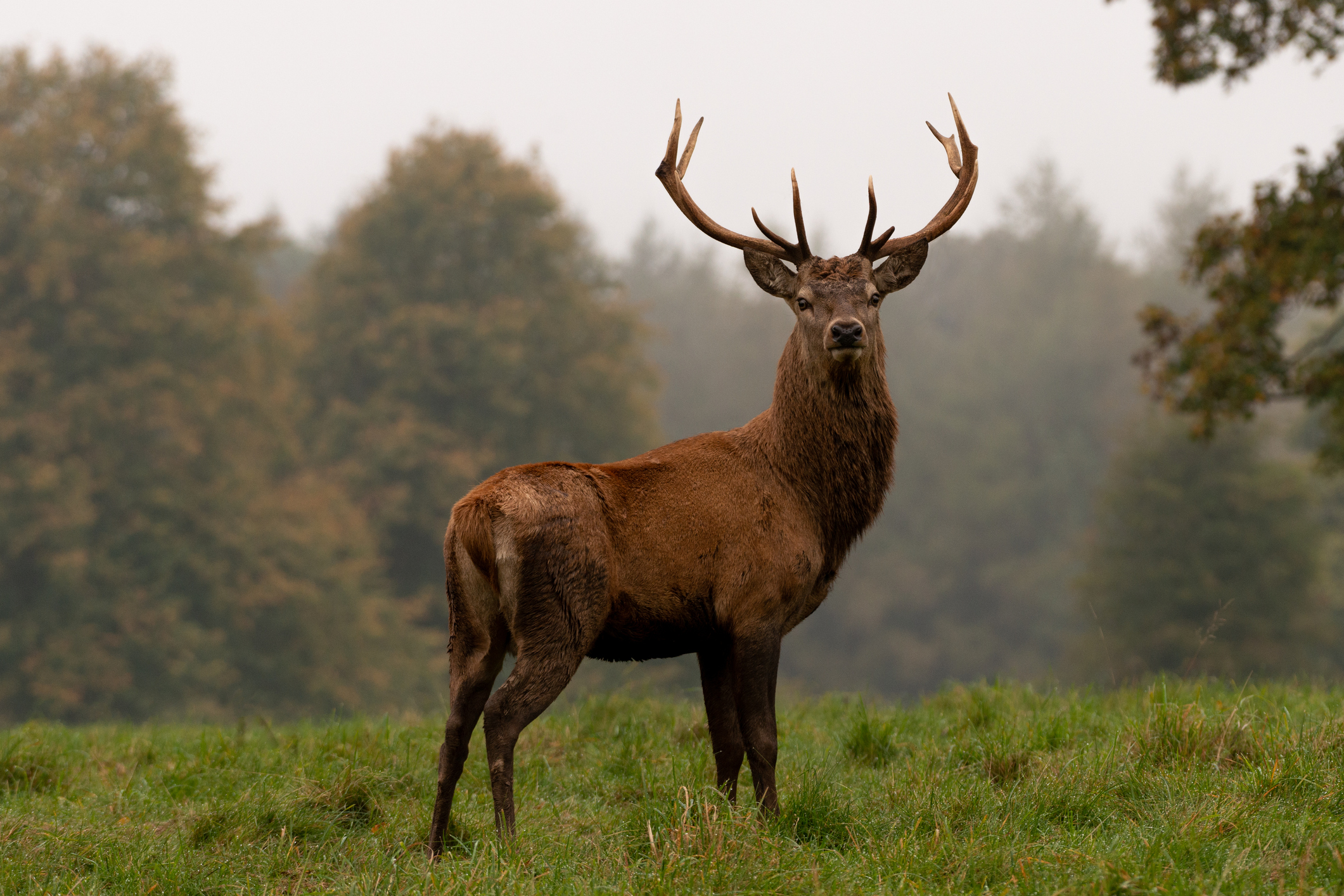
How an Animal’s Diet Affects Taste
Grains like corn are an abundant source of calories and are quite fattening, so they lead to tender, marbled pieces of animal flesh (meat streaked and speckled with juicy bits of fat). But as anyone who has eaten flavorless porridge can attest, plain cereal tends to be excruciatingly bland. This (lack of) flavor is found in the meat of an animal.
“Wild animals and farm animals allowed to forage without being fed grain will produce meat with a different fatty acid profile,” says Kerth. Usually, the varied diet of wild animals creates a healthy mix of unsaturated fats in their tissues. When cooked, Gagaoua adds, these fats break down to “produce flavors described as tallow, grassy or fishy” – the kind of flavors you might associate with pasture-grazed mutton or an old wild goose.
Additionally, aromatic compounds (the chemical elements that make up odors) in the foods animals eat often pass through digestion and into fatty deposits. These compounds give the animal’s meat subtle flavors, reflecting what it has eaten throughout its life. This is especially true for pigs, notes Kerth. Ruminants like cows and sheep, or wild moose and elk, have complex stomachs that dramatically change their food during digestion.
But pigs, he explains, “have simple stomachs that generally digest their food relatively intact.” So if you feed a pig some fragrant wild green onions, for example, you will get a strong allium flavor from their pork.
Many factors affect the flavor and gameiness of meat
Meat Scientists Popular science Those interviewed for this article pointed out that while activity and diet are the clearest variables in the game flavor equation, they are not the only factors at play.
We know, for example, that hormones flowing through a mature male mammal’s veins create “kind of musky notes” in their meat, says Robert Ward, a food scientist at Utah State University. Most consumers don’t like these ratings. This is one of the reasons why we castrate many feedlot animals and favor breeds that reach good slaughter weight while still young.
Likewise, we know that long-term stress and moments of acute fear just before an animal is killed can have a range of effects on the tenderness and taste of meat.
The flavors are delicate and complex. The unique biology of a species and breed, the food an animal ate and the stress it experienced throughout its life, the hormones present in its blood at the time of death, and even the way someone processed a carcass or cooked a piece of meat all contribute to flavor. For example, if you take too long to slaughter an animal or don’t cool its meat properly during storage, you might have a suspicion of sour spoilage. Age a piece of meat and you’ll likely get more tenderness from it. Overcook a slice and it will usually become tough and stringy.
All of these factors and more create the “taste” of the meat on your plate. This is one of the reasons why it is so difficult to give a precise definition of game: there can be as many varieties of game as there are animals and dishes.
Is game meat bad? It depends on preference.
Human taste is as diverse and malleable as the flavor of meat itself. Some cultures appreciate playful aspects, such as the taste for stress in some South Korean communities, which others avoid. So context and expectations play a major role in what a person considers gamey and how they respond to the flavor.
Gagaoua noted, for example, that some consumers have begun to view playfulness as a substitute for “ideas of wilderness, wilderness, and ecological authenticity.” (In truth, you can find gamey flavors in both wild and farmed meat.) Others equate the term — more accurately, says Gagaoua — with the idea of a lean, low-cholesterol, nutrient-rich cut of meat.
Regardless, these perceptions “may have a halo effect,” leading them to appreciate the “real or pure” taste of game meat.
For those who have no interest in cultivating an appreciation for gamey flavors, it’s not difficult to avoid them. Just stick to light, grain-fed cuts. Be careful not to overcook your meat, as this could bring out latent gamey notes.
And if for some reason you are faced with a dark piece of meat, you can try this simple trick:
“Soak the meat in cold ice water for about an hour before cooking,” Kerth recommends. “This allows some of the myoglobin to diffuse out of the meat.” Less myoglobin results in fewer strong metallic notes and, ultimately, less gamey flavor.
But for the adventurous eater, game meats are an opportunity. They encourage us to think critically about how an animal was raised, slaughtered and processed. They challenge us to develop new dishes that exploit the unique characteristics of meat. And perhaps most of all, they trade the sweet flavors of factory farming for a new horizon of possibilities.
In Ask us anythingPopular Science answers your wildest and most burning questions, from everyday things you’ve always wondered to bizarre things you never thought to ask. Do you have something you always wanted to know? Ask us.

The best new PopSci 2025 releases


