With ceasefire proposal stalled, Trump faces uneasy military options in Iran


As the United States and Israel enter the second month of their war against Iran, all three countries appear determined to leverage their strategic advantages rather than end hostilities without achieving their own ambitious goals.
With dueling ceasefire proposals hanging in the balance, President Donald Trump attempted Wednesday to claim an advantage in the negotiations. “They want to make a deal so bad.” If they don’t, he added, the United States “will continue to blow them up.”
Ali Akbar Ahmadian, longtime commander of the Islamic Revolutionary Guard Corps, returned the taunt. “We have only one message for American soldiers: come together.”
Why we wrote this
President Donald Trump is offering a 15-point proposal aimed at ending hostilities in Iran amid massive troop deployments to the region. Far from an agreement, he threatens to destroy power plants if Iran does not open the Strait of Hormuz.
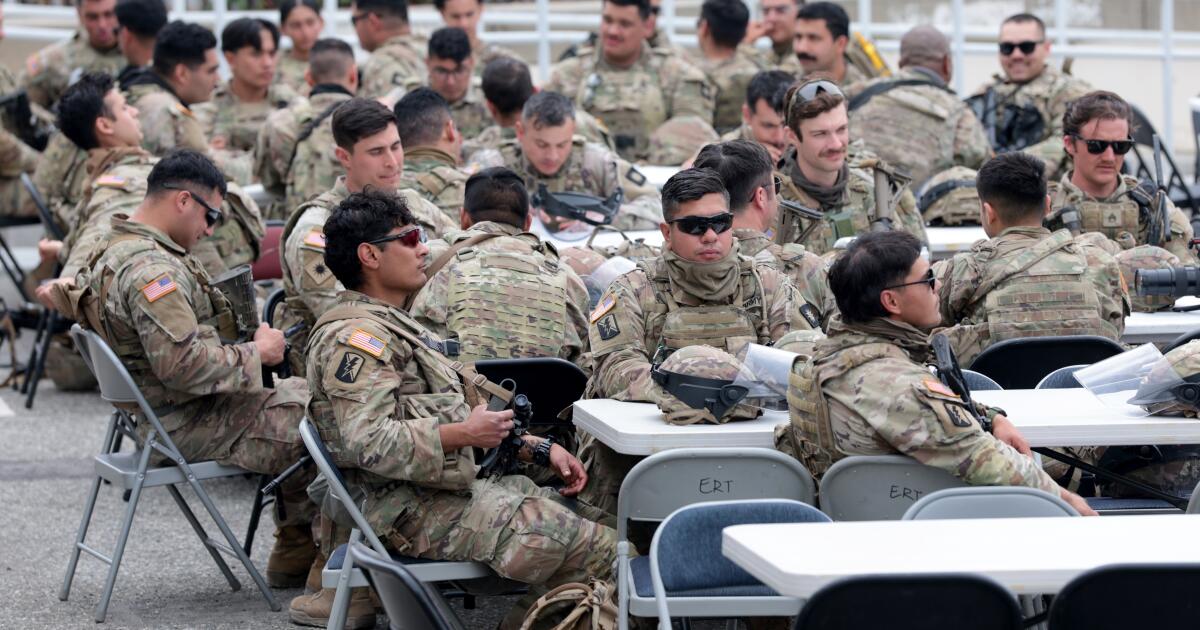
On Thursday, Mr. Trump announced that he would extend until April 6 the deadline for Iran to open the Strait of Hormuz. Some analysts have speculated that it was a delaying tactic aimed at buying more time for the thousands of U.S. troops heading to the region — including Army paratroopers trained for high-risk missions.
The president’s attempt to come to the peace table by threatening or attacking power plants may finally succeed. But without a common end for the US-Israeli alliance and Iran, this march appears to have stalled, with the growing threat of massive US military action.

Tehran officials suggest they are unmoved by the White House’s recent 15-point ceasefire proposal. On Wednesday, Israel announced it had killed the naval chief of the Islamic Revolutionary Guard Corps, Alireza Tangsiri, who was helping to block the Strait of Hormuz.
Iranian officials, meanwhile, have denied any direct negotiations and dismissed the reported U.S. terms as “extremely maximalist.” Tehran released its own, shorter list of demands against the United States
Iran has “no intention to negotiate at this time,” Iranian Foreign Minister Abbas Araghchi said this week. Tehran “will end the war when it decides,” another official told state television, “and when its own conditions are met.”
Wargames and endgames
Both sides display confidence that they can outlast the other if they cannot agree on peace terms.
For Iran’s leaders, that means surviving what Defense Secretary Pete Hegseth describes as “relentless” decapitation strikes. For the Trump administration, that means surviving the November midterm elections.
Amid rising fuel prices, about 60% of Americans believe U.S. military action in Iran has been “excessive,” according to an Associated Press poll released this week. While depriving Iran of nuclear weapons is an “extremely” or “very” important policy goal for two-thirds of respondents, an equal number say controlling gas prices is also a delicate policy balancing act for the administration.
For now, while it’s unclear whether tough negotiations will bring peace, what is clear, analysts say, is that U.S. troops are putting themselves in harm’s way as the president considers a high-risk escalation in the war.
Possible strategic moves
Tehran has already rejected as unviable many of the 15 points the United States reportedly raised in its peace proposal.
These include halting the country’s nuclear program by removing all enriched uranium. There would also be a cap, if not an outright ban, on long-range ballistic missiles and an end to support for proxy militias in the region, including Hezbollah, Hamas and the Houthis in Yemen.
More importantly, in the short term, Iran should agree to reopen the Strait of Hormuz.
In exchange, the United States would lift significant economic sanctions, allow Iran to re-enter global financial systems, and restore oil exports. Support for non-military nuclear cooperation – such as nuclear energy infrastructure – and reconstruction aid could also be at stake.
Meanwhile, Iranian hardliners have reportedly intensified their calls for Iran to develop a nuclear weapon.
If Iran continues to resist negotiation efforts, the U.S. military — including the 11th and 31st Marine Expeditionary Units, which number some 4,700 troops and specialize in launching attacks from ships to shore — is on the way, equipped with aircraft, artillery and infantry, and the Defense Department plans to reopen the strait by force.
The deployment also includes thousands of paratroopers from the 82nd Airborne Division, the Pentagon’s premier crisis response force.

Their eyes are on the Iranian island of Kharg, which processes 90% of the country’s oil exports. Seizing the 8-square-mile island could help force Iran to reopen the strait.
The island, about 25 miles (40 kilometers) off the coast of Iran in the Persian Gulf, “could be isolated and captured because it’s not that big,” says retired Col. Mark Cancian, a defense analyst at the Center for Strategic and International Studies.
But first American forces would have to cross the strait, which would be heavily targeted by Iranian forces, analysts believe. Along the way are smaller islands, Abu Musa and Larak, fortified by Iranian bunkers, which may also need to be captured to force Iran’s hand.
They could be used “as part of efforts to open the strait, then [the forces] would target Kharg Island,” adds Mr. Cancian.
In anticipation of this, Iran prepared its defenses, reportedly laying a series of explosive mines along the island to hamper resupply efforts. It also deployed air defenses and reinforced its forces there.
The U.S. military should “bait and ambush the remaining Iranian forces, bringing them out of hiding,” says Benjamin Jensen, a senior fellow at the Center for Strategic and International Studies.
Although seizing the island would be a goal, holding it could require additional U.S. forces.
The time of clarity
Last week, Mr Trump issued an ultimatum demanding that Iran reopen the strait or face US attacks that would “wipe out” the country’s energy and power plants.

If Mr. Trump follows through on his threats to attack power plants, he could cut off electricity to many Iranians, as well as to desalination plants that provide drinking water to several desert countries, analysts say.
Such attacks might not comply with the laws of armed conflict, which prohibit directing attacks against civilians or civilian infrastructure, notes retired Maj. Gen. Charles Dunlap Jr., former deputy judge advocate general of the Air Force.
Even if military law permits attacks that pave the way for peace, it’s unclear whether U.S. strategy fits that definition, says Mr. Dunlap, now executive director of the Center on Law, Ethics and National Security at Duke University Law School.
“This could give them a better chance of overthrowing the regime that has inflicted so much misery on them. ” But, he warns, “there is no doubt that the Iranian people would suffer.”