With no initial DNA match, Guthrie investigators turn to one of their newest tools to crack cases: genetic genealogy

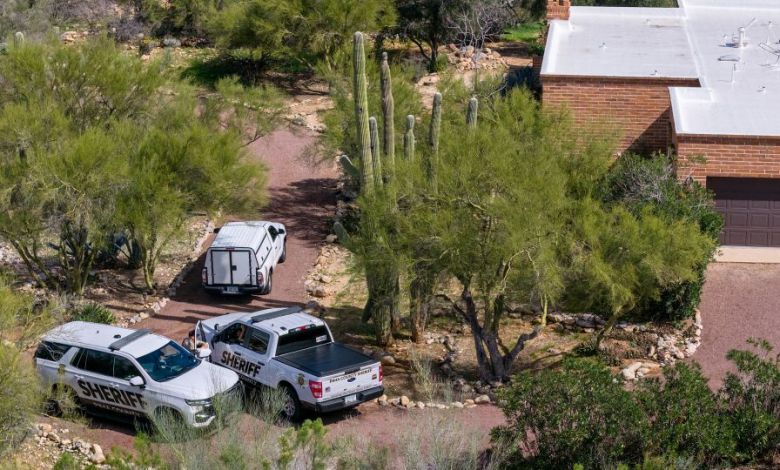
Only a few years ago, Tuesday’s announcement that a glove believed to be linked to the disappearance of Nancy Guthrie in Tucson, Ariz., had no matches in a DNA database would have been a dead end. For investigators, this is just the beginning.
“Investigators are currently exploring other genetic genealogy options to obtain DNA evidence to verify matches,” the Pima County Sheriff’s Department said Tuesday.
It brings a whole new dimension to uncovering the secret of gloves found 2 miles from Guthrie’s home, which investigators say are similar to those worn by a suspect in a disturbing video filmed by a camera outside Guthrie’s front door.
Separate DNA found on Guthrie’s property that did not match her or anyone “in close contact with her” also did not produce a match in the national law enforcement DNA database known as CODIS, Pima County Sheriff Chris Nanos told Fox News on Tuesday.
Comparing DNA collected in criminal investigations with publicly available databases of millions of people who have provided genetic profiles — and thus finding often distant relatives to piece together a family tree that could point to a suspect — has been a component of a number of recent cases, including the conviction of Bryan Kohberger, who ultimately confessed to the murders of four college students in Idaho and was sentenced to life in prison.
“From there, we get a list of people who share DNA with this unknown person. It can be as small as 1%, or even less,” CeCe Moore, an expert in genetic genealogy, told CNN’s Kaitlan Collins.
Although examining millions of DNA records based on a single sample has yielded seemingly miraculous results, the process remains haphazard and may not provide the Guthrie family with the answers they immediately want.
“It can go as fast as 20 minutes…and I have some cases that I’ve been working on for seven and a half years,” Moore said.
Genealogical investigations have had major successes
The successful use of DNA from distant family members to profile and identify suspects had an extraordinarily high-profile debut in 2018, when it was used to solve the cold case of the Golden State Killer.
After authorities spent five decades searching in vain for a suspect in dozens of murders and rapes across California, an investigator decided to put DNA from the crime scene — believed to be that of the perpetrator — into GEDmatch, a public database where people voluntarily upload their DNA data for genealogical research.
It took only four months to identify possible relatives and narrow the search for potential suspects to just three people. One of them, former police officer Joseph DeAngelo, was part of a task force investigating the Golden State Killer.
“We collected his trash and found a piece of cloth that we tested for DNA on that matched the killer from all these other places,” lead prosecutor Thien Ho told CNN last year.
He was 72 years old when he was arrested and had never been suspected before.
DeAngelo – now 80 – was convicted in 2020 and is serving a life sentence without the possibility of parole.

Joseph James DeAngelo Jr., second from left, who authorities have labeled the Golden State Killer, speaks during his sentencing hearing in Sacramento, California, August 21, 2020. – Santiago Mejia/Pool/AFP/Getty Images
Since then, technology has been used to identify more than just suspects in ongoing criminal cases. The identity of a victim of the 1921 Tulsa race massacre, for example, was discovered through DNA genealogy, determining that he was a World War I veteran.
In the Kohberger case, investigators acknowledged that the FBI used DNA from a knife sheath found at the crime scene as part of a genetic investigation. Genetic genealogy “pointed law enforcement toward” Kohberger as a suspect, prosecutors said, although investigators ultimately did not use that evidence to obtain the arrest warrant, saying they had enough other evidence, including surveillance video and cellphone data, to link him to the killings.
Even in genetic genealogy’s greatest success stories, examining DNA records helped narrow the number of suspects but did not directly solve the crime. In the Golden State Killer case, once police had their eyes on DeAngelo, the definitive link was only made by following the suspect to a Hobby Lobby store, where they stamped his car door handle while he wasn’t looking. Later, while rummaging through his trash, a single piece of tissue proved that DeAngelo’s DNA and that of the long-sought killer were one and the same.
DNA confidentiality in investigations remains hotly debated
The method of using DNA records that were primarily intended for family research and genetic curiosity in a criminal investigation is barely a decade old, and privacy concerns about how this incredibly personal information can be used pose the biggest obstacles to its use.
Privacy concerns about the use of huge DNA databases in law enforcement investigations persist — especially for services that exist primarily to satisfy people’s personal curiosity about their heritage. The three largest commercial providers of DNA products – 23andMe, AncestryDNA and MyHeritage – generally prohibit law enforcement from accessing their genetic data and would only release it if compelled to do so by a warrant or court order.
23andMe adds that it has only received 11 requests from law enforcement over a 10-year period and has so far never given up a person’s DNA data to investigators without the person’s consent.
“We can sometimes get lucky and find a closer relative, but because we are limited to the two smallest genetic genealogy databases, we can only compare with fewer than 2 million profiles,” Moore said.

Bryan Kohberger pleaded guilty to the 2022 murders of four University of Idaho students in this Moscow, Idaho, home. -David Ryder/Getty Images
These databases – GEDmatch and FamilyTreeDNA – are open source services where people are informed that the information could be used by law enforcement.
Moore is CEO of a third database, DNA Justice, which exists specifically to make DNA information available to law enforcement investigations. It has fewer than 7,000 DNA records.
In addition to the reluctance of many people to share their own DNA profiles for surveys, the success rate also depends on people’s willingness to have their DNA cataloged. These records exist more for Americans of Western European ancestry than for other origins, according to Moore.
“You see mostly white people with deep roots in the United States,” she said.
Given the many complications of collecting DNA evidence — and time appearing to be a major enemy in finding Guthrie safe and sound — Moore said the Guthrie family could advocate for greater access to records from major genealogy websites that have been very reluctant to participate.
“I don’t think they’re going to allow it unless they get an arrest warrant, and I think there’s going to be a tough, drawn-out fight then,” she said.
CNN’s Josh Campbell, Faith Karimi, Chelsea Bailey, Nicole Chavez, Eric Levenson and Sarah Dewberry contributed to this report.
For more CNN news and newsletters, create an account at CNN.com