World’s only flightless parrot doing okay against ‘crusty bum’ disease


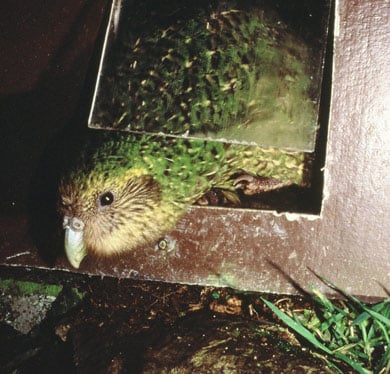
With only 237 birds in the wild, saving New Zealand’s critically endangered kākāpō is one of the small country’s major conservation projects. These giant experts in green camouflage are threatened by predators, invasive species, human encroachment, and a debilitating disease commonly known as crusty butt disease (exudative cloacitis).
Crusty butt disease causes inflammation of the lower digestive and reproductive tracts. Birds that contract it can become sterile, putting a strain on their already small populations. It can also be fatal in some cases. Crusty butt disease has been present in the critically endangered kākāpō population for about two decades and is usually treated with painkillers, fluids, and antibiotics. However, antibiotics carry the risk of antibiotic resistance and changes in gut bacteria.
Good news for the world’s only flightless parrots, the birds have managed to avoid dangerous antibiotic-resistant superbugs for the time being. The results are detailed in a study published this week in the journal Frontiers of microbiology.
What is kākapō?
Once widespread throughout New Zealand, kākāpō are large flightless parrots that can weigh up to 8.8 pounds. The birds last lived on the New Zealand mainland in the 1980s and were hunted to extinction. They now live on four offshore islands and in Maungatautari Sanctuary (Sanctuary Mountain), a protected natural area in New Zealand’s Waikato region, south of Auckland.
Although it cannot fly, the kākāpō uses its powerful claws and beak to climb high in trees and feed. They can also live over 90 years.
Efforts to preserve kākāpō include frequent doses of antibiotics to keep them healthy. Faced with the risk of antibiotic resistance, environmental advocates need to monitor what’s happening in their gut bacteria.
In the guts
In this recent deep dive into kākāpō intestines, a team from the University of Auckland scrubbed the cloaca (the cavity at the end of a bird’s digestive tract) of 14 kākāpo on two islands for signs of antibiotic resistance. They also focused on a male kākāpō known as Joe who was being treated with antibiotics.
The team discovered that the birds contain bacteria that are potentially resistant to antibiotics. However, these bacteria may have grown naturally in their intestines, so careful treatments with antibiotics may continue when treating crusted butt disease or other conditions.
Additionally, antibiotics have not yet had any negative consequences on birds and appear to remain effective. There is a risk that microbes in kākāpō may develop resistance to antibiotics through antibiotic treatment or transmission from other birds or even humans caring for them. With such a small population and the potential for superbugs to spread, the team says they will monitor the problem.

Shop Amazon’s Prime Day Sale


