Yellowstone Wolf Pup Numbers Fall to a New Low Since Reintroduction, with a Possible Link to Canine Distemper


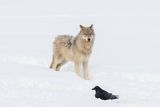
Since the reintroduction of gray wolves to Wyoming – both inside and outside of Yellowstone National Park – about 30 years ago, this species has faced one battle after another, including public opposition, trapping and poaching. But disease has also played a role in some of the struggles wolves have faced in these areas.
According to Wyoming Game and Fish’s 2025 wolf monitoring report, distemper significantly affected wolf pups in the park, leading to low reproduction and a population decline to its lowest level since wolf reintroduction.
This is not the first time these wolves have faced this disease, and it likely won’t be the last. Here’s how it will likely affect them.
Distemper in Wyoming Wolves
Distemper can be very unpredictable. Although epidemics can follow multi-year cycles, the disease can sometimes appear irregular or random. For wolves, when the population begins to grow, outbreaks may become more frequent.
In 2025, wolf researchers went into the field to capture and test wolves for distemper. The team predicted, based on computer models, that the infection rate would be around 28 percent. However, according to the report, 64.3 percent of captured wolves tested positive for distemper, a figure far higher than researchers had predicted based on historical trends.
Among the wolves studied, many came from outside Yellowstone National Park, particularly the Wolf Trophy Game Management Area (WTGMA). This area had nearly 200 wolves in 2023, which could have increased the risk of disease transmission.
According to the report, the virus has had its greatest impact on Cub Scouts. Of at least 87 cubs born in 2025, only 31 to 34 survived, a survival rate of about 37%. Some of the affected wolf packs had no surviving cubs. WTFMA experienced a population decline of approximately 19% in 2025.
Symptoms of distemper
Canine distemper is a contagious disease caused by a virus, according to the American Veterinary Medical Association. The virus commonly attacks dogs’ gastrointestinal, respiratory, and nervous systems, and although dogs of all ages can contract it, puppies are at higher risk.
Because the virus can affect multiple body systems, symptoms can vary widely. Gastrointestinal and respiratory symptoms include runny nose and eyes, cough, fever, loss of appetite, and vomiting. Nervous system symptoms include muscle twitching, loss of coordination, jaw chewing and drooling, head tilting, walking in circles, and seizures.
The virus can spread from animal to animal through airborne particles from sneezing, barking or coughing. It can also be spread through shared water and food sources.
Besides dogs, other mammals, such as ferrets, foxes, skunks, raccoons and wolves, can contract this virus.
Learn more: Viruses could cause wolves to change color
Distemper in Yellowstone wolves
Although the WTGMA surrounds and extends beyond Yellowstone National Park, there is little to no direct evidence that the park’s wolf population has contracted distemper. There is, however, indirect evidence.
Of the 36 cubs born in the park, only 17 survived, a survival rate of just 47 percent. This is the lowest recruitment of cubs since 1996, just after the reintroduction of wolves into the park. These trends suggest that disease – perhaps distemper – may have played a role, but more evidence is still needed to confirm this.
According to the report, at least 84 wolves still live in Yellowstone among 7 packs, with 3 breeding pairs, while at least 132 wolves still live in the WTFMA area, with approximately 22 packs and 10 breeding pairs. Ideally, however, for WTFMA, management would like this population to number around 160 individuals.
For now, park officials and the Wyoming Game and Fish Department will continue to monitor the situation and implement management plans to keep Wyoming’s wolf populations healthy.
Learn more: The reintroduction of wolves to Yellowstone National Park has helped restore aspens – but there is still much to learn
Article sources
Our Discovermagazine.com editors use peer-reviewed research and high-quality sources for our articles, and our editors review the articles for scientific accuracy and editorial standards. See the sources used below for this article:


