Your next sunscreen could be made from E. coli


Let’s be real, sunscreen is important for our health, but it can really be a drag. Some are greasy, they disappear after just two hours, and finding the right one can be like a game of whack-a-mole. Some ingredients can also pollute the planet’s vital coral reefs, which is why scientists around the world are turning to nature to create new formulas. Pollen could serve as an eco-friendly sunscreen solution, but there could be an even smaller source: bacteria. Escherichia coli, better known as E.colican help create an ultraviolet (UV) compound that can be used in sunscreens. The results are detailed in a study published today in the journal Trends in biotechnology.
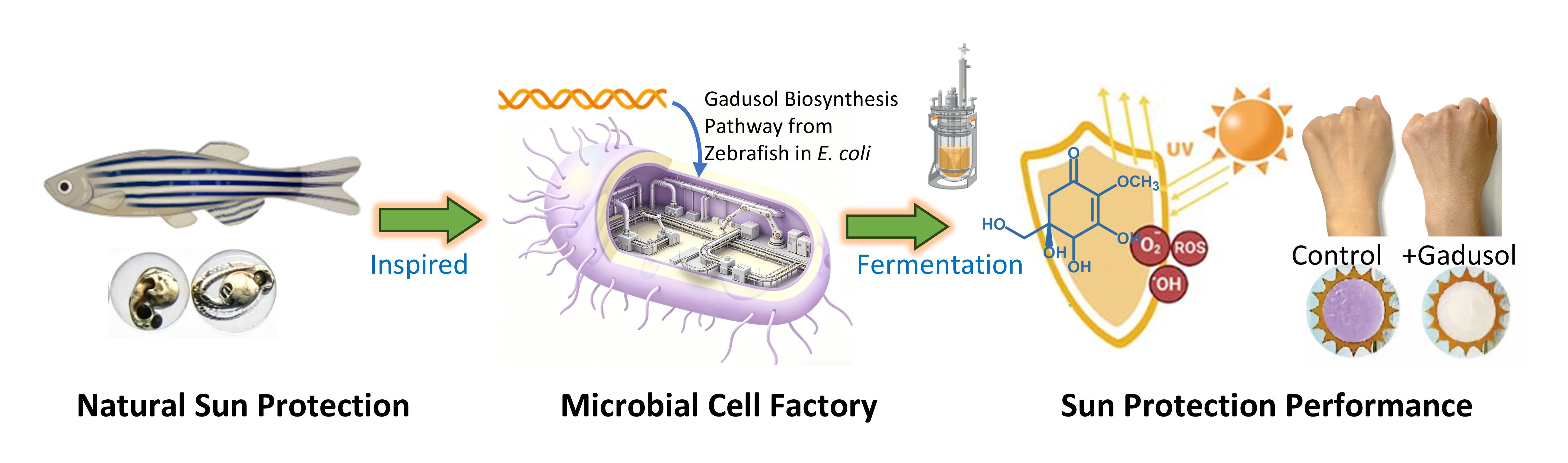
To survive the incessant sun on the open sea, fish can make their own natural sunscreen with a UV protective compound called gadusol. This rare molecular compound is found in the eggs of several species of fish, but it is rare elsewhere in nature and its extraction is not easy, efficient, or environmentally friendly.
“We want to find a scalable and more environmentally friendly way to produce gadusol,” Ping Zhang, study co-author and biochemist at Jiangnan University in China, said in a statement.
Zhang and his team turned microbes into mini chemical factories, instead of extracting them from nature. To do this, they reconstructed the journey of a zebrafish to produce gadusol inside a E.coli bacterium. They then refined the E.coli genetics and growing conditions. The modifications increased the yield of gadusol almost 93 times, from 45.2 milligrams per liter to 4.2 grams per liter. The lab-made compound also showed promise in early UV protection tests.
“Achieving this level of production in the laboratory is very promising,” says Zhang. “This suggests that we may be able to meet future demand for natural sunscreen ingredients through microbial production.”
In other experiments, gadusol showed that it could provide more than just protection from the sun. It showed antioxidant activity comparable to that of vitamin C, suggesting that gadusol may help neutralize cell-damaging free radicals that can result from excessive sun exposure.
These antioxidant properties also inspired a color-based screening test that allows researchers to quickly identify bacterial strains that produce more gadusol. When gadusol neutralizes free radicals, a purple chemical signal turns yellow, indicating that it is producing more of the UV protective compound.
“Compared with traditional chemical analysis, this approach is more convenient, efficient and economical,” added Ruirui Xu, study co-author and bioengineer from Jiangnan University.
Although gadusol’s combination of UV protection and antioxidant activity may make it an attractive natural ingredient for future sunscreens, it won’t join your next day at the beach just yet. The study did not compare gadusol to currently available sunscreens, nor did it evaluate its long-term safety or large-scale manufacturing. Before it can hit store shelves, it will also need regulatory approval.
However, Xu believes that this is a starting point for using gadusol in practical applications. Based on current technology, he expects that some products using gadusol may appear on the market within two years.
“For small molecules with application potential, we hope people will look beyond traditional extraction methods,” Zhang said. “Microbial cell factories are emerging as a greener and more sustainable way to put laboratory discoveries into practice. »

The best new PopSci 2025 releases