6 HomePod annoyances Apple might finally fix this year


Summary created by Smart Answers AI
In summary:
- Macworld highlights six current HomePod limitations that Apple could address with the upcoming HomePod 3 and mini 2 models launching with iOS 27.
- Expected enhancements include Siri 2.0’s conversational capabilities, multi-command processing, personalized data access from Messages and Mail, and music transitions powered by AutoMix AI.
- These next-generation HomePods could integrate third-party AI models like ChatGPT and Google Gemini, turning them into true smart speakers.
The HomePod mini is one of my favorite Apple products, offering impressive audio output and seamless integration with the rest of my Apple devices for just $99. A stereo pair powers my daily mini-parties while also acting as a home hub that controls my smart bulbs, even remotely. The speakers can estimate indoor temperature and humidity, alert me when smoke detectors, electrical automations and more are triggered; they are really awesome.
Despite its usefulness and ease of use, the HomePod isn’t really as clever as you would expect from a smart speaker. Because it relies on the infamous pre-Apple Intelligence version of Siri, it often fails to process complex commands or offer useful, up-to-date information. But there are reasons to be optimistic. The upcoming HomePod 3 and mini 2 reportedly won’t launch until Apple releases the enhanced AI experience with OS 27, suggesting that the next-generation HomePods will address many of the shortcomings of current models and become truly intelligent this fall.
Here are six problems with current HomePod models that could finally be fixed with the imminent launch of new hardware.
A serious multitasker
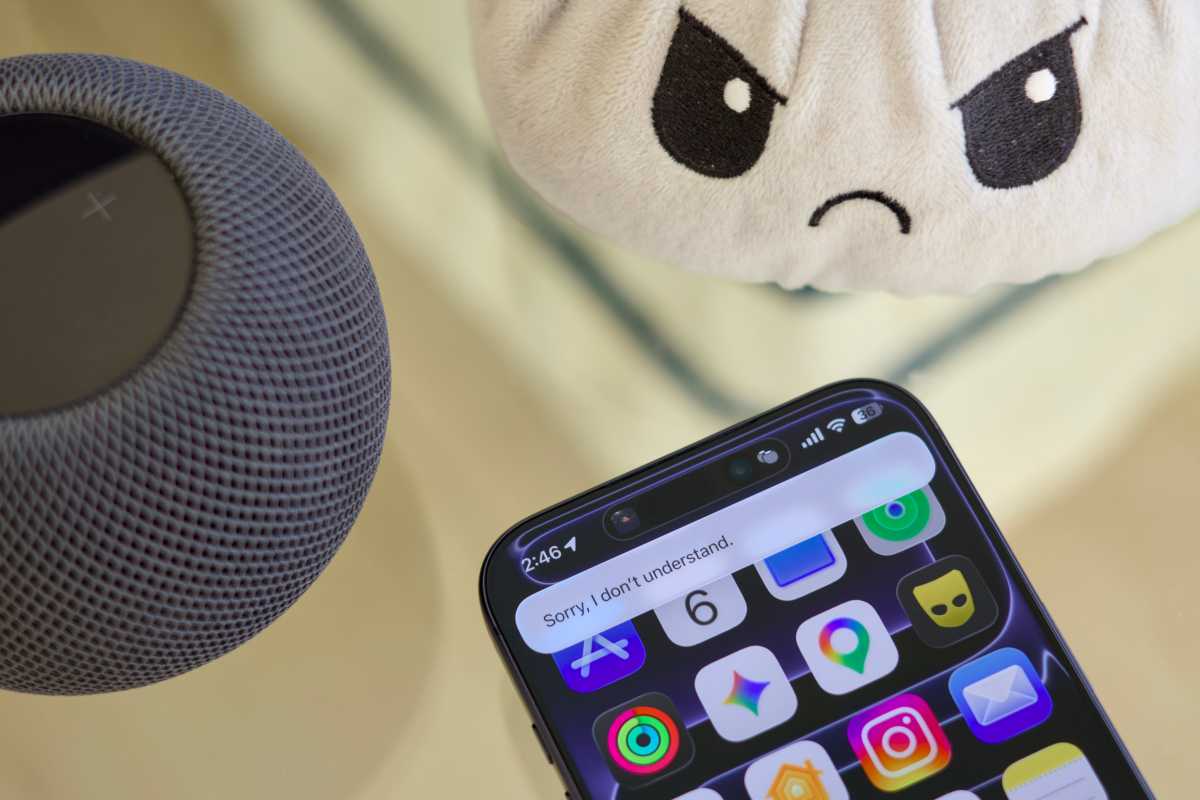
One thing I don’t like about my HomePods is how they limit me to individual commands. If you try to ask your Apple smart speaker to turn off the lights and turn on the TV, it won’t carry out either command, indicating that it can’t process the combined tasks. Instead, you’ll have to trigger the voice assistant, ask it to perform action A, wait for it to do so, and then repeat the same steps to perform action B. It’s tedious.
You can also create scenes (combinations of tasks) in the Apple Home app, then activate them with a single Siri command. This works well for routine activities, such as a movie night setup, but is almost useless for random, impromptu command combinations.
This is the current state of affairs. The future looks better: if the rumors come true, Siri in iOS 27 will finally be able to process several commands at once. Given that the HomePod 3 and mini 2 are expected to support Siri 2.0, it’s safe to assume that Apple’s smart speakers will learn to multitask later this year.
Mahmoud Itani / Foundry
The talkative type
When iOS 27 launches, Siri is expected to get a boost from LLM, allowing it to become as conversational as competing AI chatbots. If the next HomePods adopt the same technology, you will finally be able to have elaborate conversations with the voice assistant in natural language. It should also be able to maintain the context of the chat and provide follow-up responses accordingly.
Currently, HomePod doesn’t wait for follow-up requests once it answers a certain question. You can’t ask HomePod “What’s the weather like in Beirut?” » then add “And New York?” afterward it provides the first answer. He simply stops listening, causing you to trigger him again and ask comprehensive questions that ignore previous requests. Interacting with Siri on the HomePod also requires you to choose your words carefully, as the robot is prone to misinterpretations. The rumored LLM upgrade will hopefully clean up this mess.
A cure for amnesia
iOS 27 would introduce a dedicated Siri app that stores your conversation history and other useful information. Since Siri already supports iCloud syncing and the HomePod can distinguish between different household members, upcoming HomePods could realistically sync your recordings with the dedicated iPhone app. This would allow you to access past conversations you’ve had with the smart speaker to recall specific details.
You already know yourself
One of the most anticipated features of Siri 2.0 is the ability to pull user data from apps like Messages, Mail, and Calendar. With iOS 27, you should be able to ask Siri when your mother’s flight is, for example, and it will dig through your conversations in apps to find the relevant answer.
Since HomePods can distinguish between different users, Apple could realistically bundle this advantage with the 3rd generation and mini 2 models. In this case, the HomePod would rely on your nearby iPhone to retrieve the requested information before announcing the results. This approach would prevent others in your household from secretly accessing your personal data when you’re out and about, because it requires detecting your voice and that of your nearby iPhone simultaneously.
Mahmoud Itani / Foundry
A model student
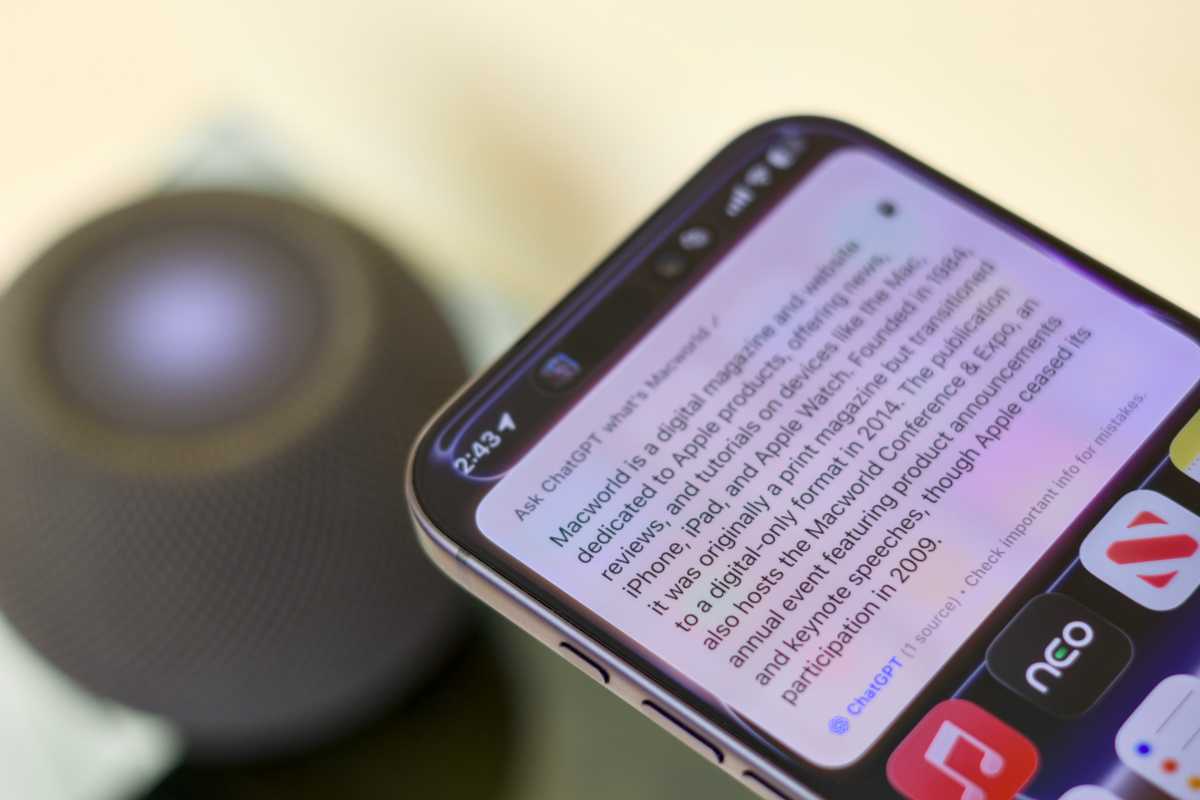
Siri on Apple Intelligence-enabled iPhones already offers convenient ChatGPT integration. The feature allows OpenAI’s chatbot to natively handle complex questions when Siri fails or the user explicitly requests it.
iOS 27 is rumored to offer even more extensions, including Google Gemini, giving users additional options to choose from. If the HomePod 3 and mini 2 are powered by the same, smarter Siri, they should also be able to leverage other vendors’ AI models if Apple’s LLMs are deemed unsatisfactory.
A DJ who actually listens
Beyond the Siri upgrade, there’s an Apple Intelligence advantage on iOS that the next HomePods could realistically carry. AutoMix is a reimagined crossfade feature for Apple Music subscribers that delivers DJ-style transitions between songs. It uses on-device AI to analyze tracks and mix them accordingly. This noticeably improves the listening experience and makes classic fade-in transitions sound old-fashioned.
It’s currently not impossible to achieve this effect on your HomePod: a workaround would be to stream music from a nearby supported iPhone. But it’s not as convenient as the native implementation we hope to arrive with the next generation of HomePod.


