A hospice that aims to save lives : NPR

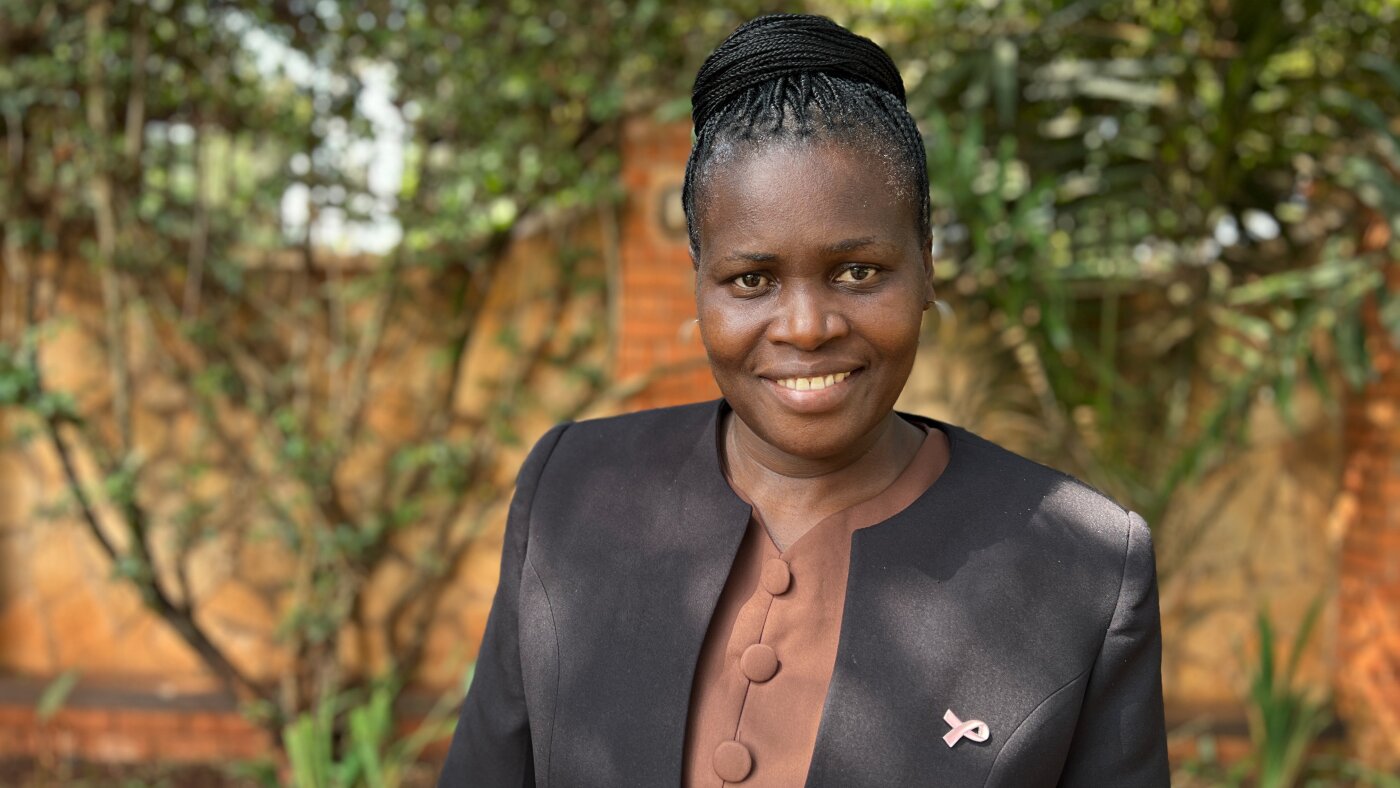

Sylvia Nakami, executive director of Rays of Hope Jinja Hospital in Uganda, leads the institution’s cancer prevention and treatment efforts.
Brian Simpson for NPR
hide caption
toggle caption
Brian Simpson for NPR
Deborah Nantenza learned about cervical cancer screening at a hospital in eastern Uganda, a rural region where early diagnosis is rare. She knew of women who had died from the disease, but she feared being tested. “The health workers encouraged me,” says Nantenza.
Clinical staff discovered precancerous cervical cells during this June 2022 clinical screening, and the 46-year-old mother of six was quickly treated. “I feel better,” says Nantenza, who now advocates on behalf of other women, many of whom have never been screened before.
Cancer screening, education and treatment were led by a hospice – an institution traditionally limited to relieving the pain of the dying.
The team at Rays of hope Hospice Jinja in Uganda has long wanted to do more. Even with liquid morphine and other painkillers provided by the hospice to relieve symptoms, women with cervical cancer “did not die a normal death. They died after suffering, suffering,” said Sylvia Nakami, executive director of the 20-year-old nonprofit.
So in 2018, they expanded beyond end-of-life care and shifted to prevention, offering cervical and breast cancer exams in primarily rural areas. Busoga region. Since then, the hospice has carried out nearly 29,000 screenings.
Clinical staff also provide on-site treatment for precancerous cervical lesions and educate communities about the HPV vaccine, which protects against cervical cancer, countering myths about infertility.
And as part of a project launching in 2023, Rays of Hope helped the district health department vaccinate more than 47,000 girls against HPV.
“There is something we can do about this. And that gives us hope,” Nakami says, adding that staff members no longer witness “only one outcome: death.”
Hospice’s unusual prevention initiative marks an emerging paradigm shift elsewhere in palliative caresupporting broader cancer screening, prevention education and oncology referrals in Africa, India and other places.
Cervical cancer, in particular, remains a deadly disease 350,000 deaths worldwide each year and 4,600 per year in Uganda, making it the largest in the country. leading cause of cancer deathaccording to the HPV Information Center. Faced with such losses, Nakami and his team were desperate to save the women’s lives – a concern shared across hardest hit regions by disease, particularly in sub-Saharan Africa.
How it started
In 2017, Nakami and her team studied their data on about 700 patients and found that more than 60% of cancer cases in women were cervical or breast cancers. They knew that both could usually be treated successfully if caught early. So they focused their prevention efforts there, screening 12,782 women for breast cancer and 16,003 women for cervical cancer by the end of 2025, while also offering palliative and palliative care. palliative care to patients with HIV and other diseases.
When the hospice launched its prevention work, some in Africa’s palliative care community “were a little uncomfortable with our new strategy,” Nakami says, noting concern that “we were abandoning palliative care.” Instead, they doubled the number of hospice and palliative care patients by approximately 750 in 2018, which will increase staff from 16 that year to 34 by 2025 due to growing regional needs. In total, in 2025, members of the Rays of Hope team made 8,844 visits to their patients.
The first mass screening organized by the hospice in 2019 lasted a few days and attracted nearly 700 women, Nakami says. Fewer than one in 20 people had ever been screened for cervical cancer.
“It’s something achievable, and it significantly reduces the occurrence of cervical cancer before it turns into something very serious for women and for the health system,” said Emmanuel Luyirika, recently retired executive director of the African Palliative Care Association (APCA), which recommends HPV screening and vaccination support to its more than 500 members in 52 African countries.
A need for more money
Prevention efforts like these require money. To cover its $600,000 annual operating budget and any expansion, Rays of Hope relies on donorsincluding individuals and American and Danish fundraising organizations. But the needs continue to grow and now is not the time to ask for help. Global health financing fell by around $10.5 billion (a 21% decline) between 2024 and 2025, according to the Institute for Health Metrics and Evaluation. It also puts pressure on NGOs and nonprofits trying to fill healthcare gaps, especially in countries like Uganda, which ranks first in healthcare. Africa in palliative care efforts.
Last year, Rays of Hope saw a particular increase in the number of patients, including some with advanced cases of HIV/AIDS following budget cuts, says Margrethe Juncker, a Danish doctor and hospital doctor. In August, the number of patients treated regularly already exceeded 1,300 assisted in 2024. The total for 2025 exceeded 1,500, with USAID-funded HIV clinics close the doors, among others losses. “We will have to raise more funds,” says Juncker, “because there will be more sick people.”
The traditional work of hospice and palliative care to relieve symptoms remains essential.
Deborah Nanyonga, a 35-year-old widow and mother of seven, is battling advanced cervical cancer and HIV. She relies on Rays of Hope for help with food, painkillers and social support.
On a good day, Nanyonga works washing clothes and earns about $2. On bad days, she says she’s in so much pain she can barely move.
Without family support, she can’t afford to travel to the Uganda Cancer Institute in Kampala, several hours away, says Joanita Mbabazi, Rays of Hope’s clinical coordinator. Workers from the team visit Nanyonga every month, bringing 3 kilos of rice, 2 kilos of beans, 1 kilo of sugar and a bar of soap.

Deborah Nanyonga, who is battling cervical cancer, with her children Prosper (left) and Jovia outside their home near the Jinja-Tororo highway in Uganda. She receives support from Rays of Hope Hospice, including food for her family.
Joanne Cavanaugh Simpson for NPR
hide caption
toggle caption
Joanne Cavanaugh Simpson for NPR
Sitting next to her son Prosper, 9, and daughter Jovia, 5, Nanyonga says she is grateful for the help. Although nothing can stop his worries, especially about his daughters, as they are at greater risk. socio-economic and health threats, including gender-based violence. “God help me,” she said, “that when I leave this earth, my daughters will be in school.”
Expand prevention
Hospices that also offer cancer prevention programs appear to be relatively few in number so far, in part because of funding limitations. A progressive model is Island Hospice and Health Care in Zimbabwe, known as Africa’s first hospice, founded in 1979.
In much of Africa, patients are referred to cancer care late – sometimes with stage 3 or 4 cancer. “We felt we needed to be involved from the beginning,” says Elias Masendu, the hospice’s program manager. “If we teach people how to prevent them, the demand for palliative care will decrease. It’s been an eye-opener for us.”
About ten years ago, Island Hospice began offering services such as breast cancer screenings. In October, health workers examined more than 300 women Rosetober. The island partly funds prevention and other programs by charging fees for external services such as its private nursing agencyexplains Masendu.
Research into innovations by palliative care groups is attracting interest elsewhere, including in rural India. In the state of Assam, a project by 2025 study co-directed by the Tata Foundation for Cancer Treatmenthealth workers visited more than 2,000 households – screening, diagnostic advice and facilitation of some care. The researchers found that the visits had the potential to implement effective cancer control strategies.
Rays of Hope, along with his academic colleagues, continues his own research, showing that insufficient rural health care and other factors fuel the problem. advanced breast cancer And cervical cancer case.
“They are able to reach more patients,” Luyirika says of Rays of Hope, encouraging similar models. “We operate in a context of limited resources,” he adds. “There is a need.”
There is also hope that those who benefit from new prevention services will serve as a grassroots promotional effort, with peer advocacy is already showing results.
This is how Deborah Nantenza reacted to her diagnosis, as well as to thermocoagulation treatment, which uses heat to remove the lesion, and medication.
Nantenza had a follow-up screening last summer: no cancer. She now tells her story to two or three women a week, with a feeling of a confidence that encourages them to act.
She says: “I discovered that at least you would rather get treatment than have cancer.”
This story was supported by the Pulitzer Center.
Joanne Cavanaugh Simpson, MFA, is a two-time grantee and advisor to the Pulitzer Center. His work appeared in The Washington Post, the Miami Herald And Scientific Americanamong other places.
Brian W. Simpson, MPH, is editor-in-chief of Global Health NOW, Pulitzer Center fellow and independent journalist whose articles have appeared in NPR, Smithsonian and other places.


