A huge iceberg becomes a deadly trap for penguins


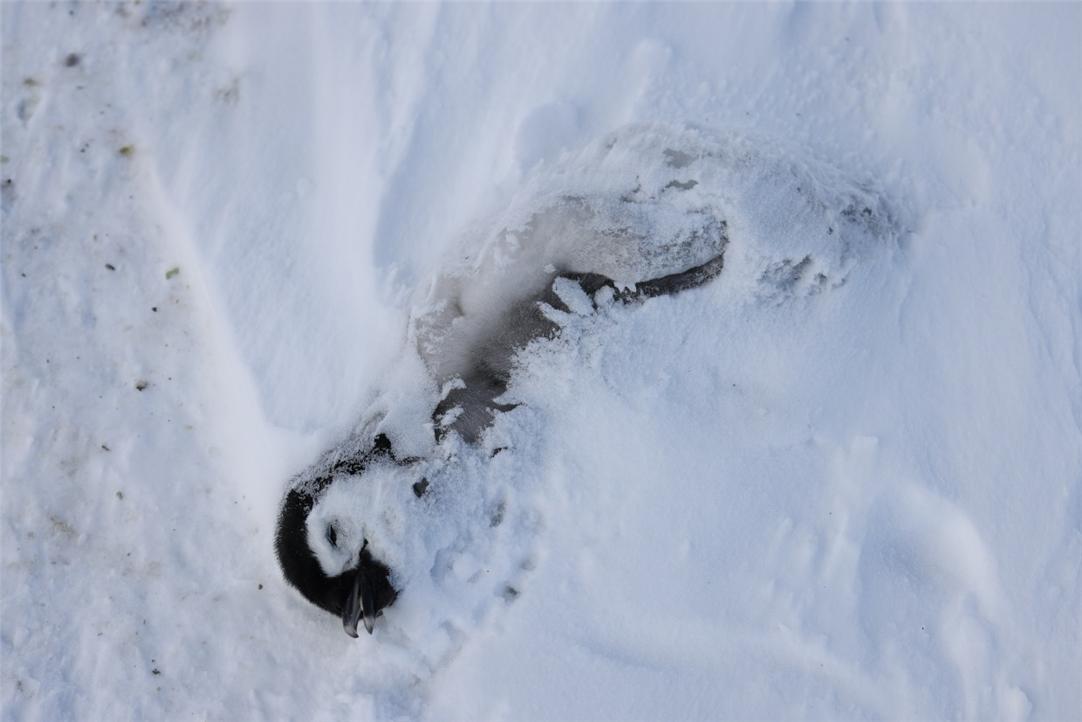
A massive iceberg has caused a catastrophic die-off of emperor penguin chicks in Antarctica, preventing thousands of parents from reaching their young. The event claimed the lives of around 14,000 chicks at the colony on Coulman Island in the Ross Sea, the largest breeding site in the region.
According to a research team led by Dr. Jeong-hoon Kim of the Korea Polar Research Institute (KOPRI), colony survival rates dropped by 70 percent. Satellite analysis and drone surveys reveal the population of new chicks has fallen from around 21,000 last year to just 6,700 this season.
A geographical trap
The main cause of this event was an iceberg stretching almost 14 kilometers. Field observations by KOPRI researchers Jong-U Kim and Youmin Kim confirmed that the ice had blocked the critical gateway connecting the breeding site to the ocean.
Satellite analysis indicates that the iceberg broke off the Nansen Ice Shelf in March 2025. It drifted north before running aground against Coulman Island. At the end of July, this blockage had effectively cut off the penguins’ migration route.
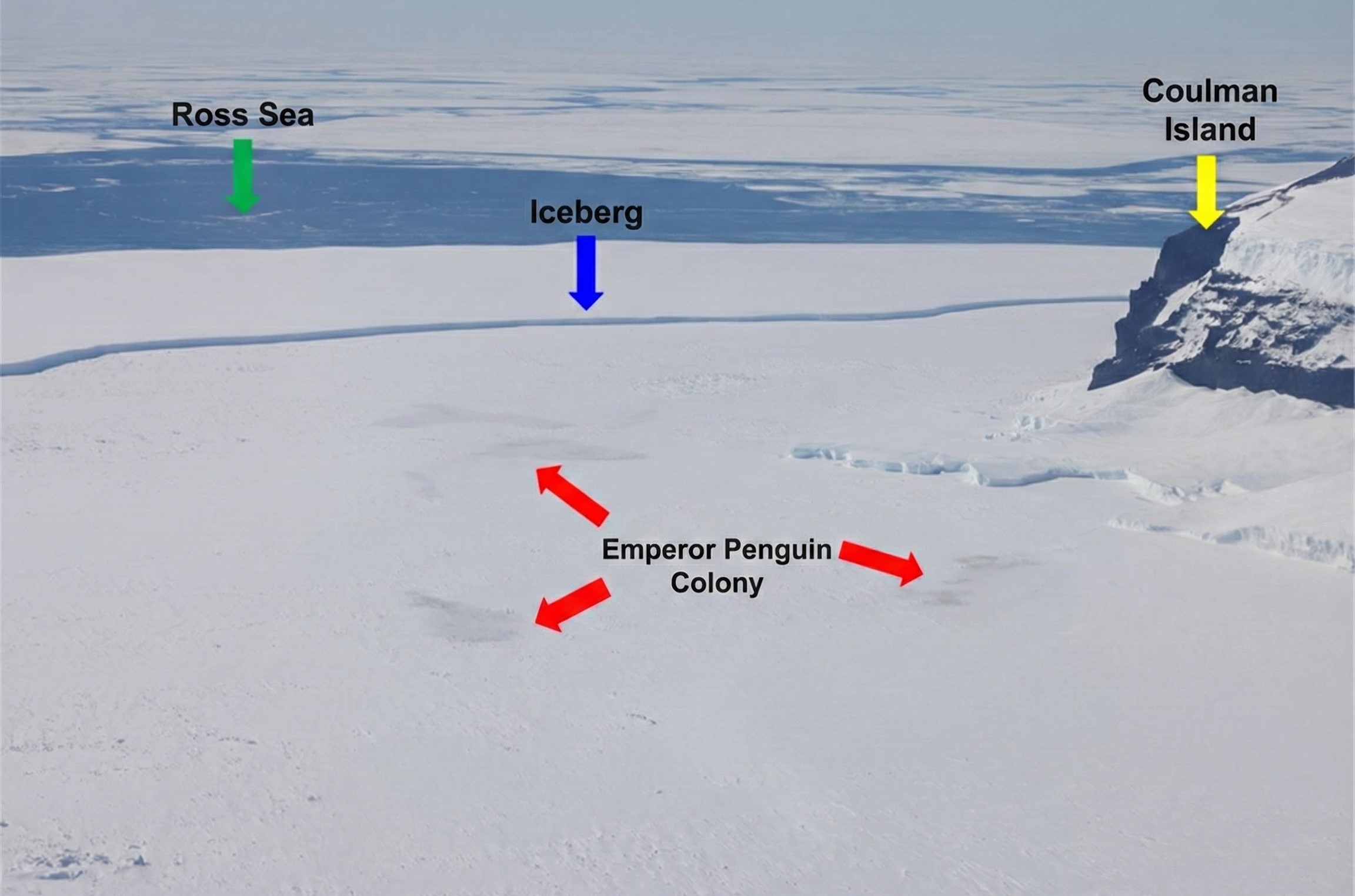
The obstruction occurred at a critical phase of the reproductive cycle. Under normal conditions, females go out to sea to feed after laying their eggs in June, leaving males to incubate the clutch. The survival of newborns depends on the mothers returning 70 to 80 days later to bring them the first meal.
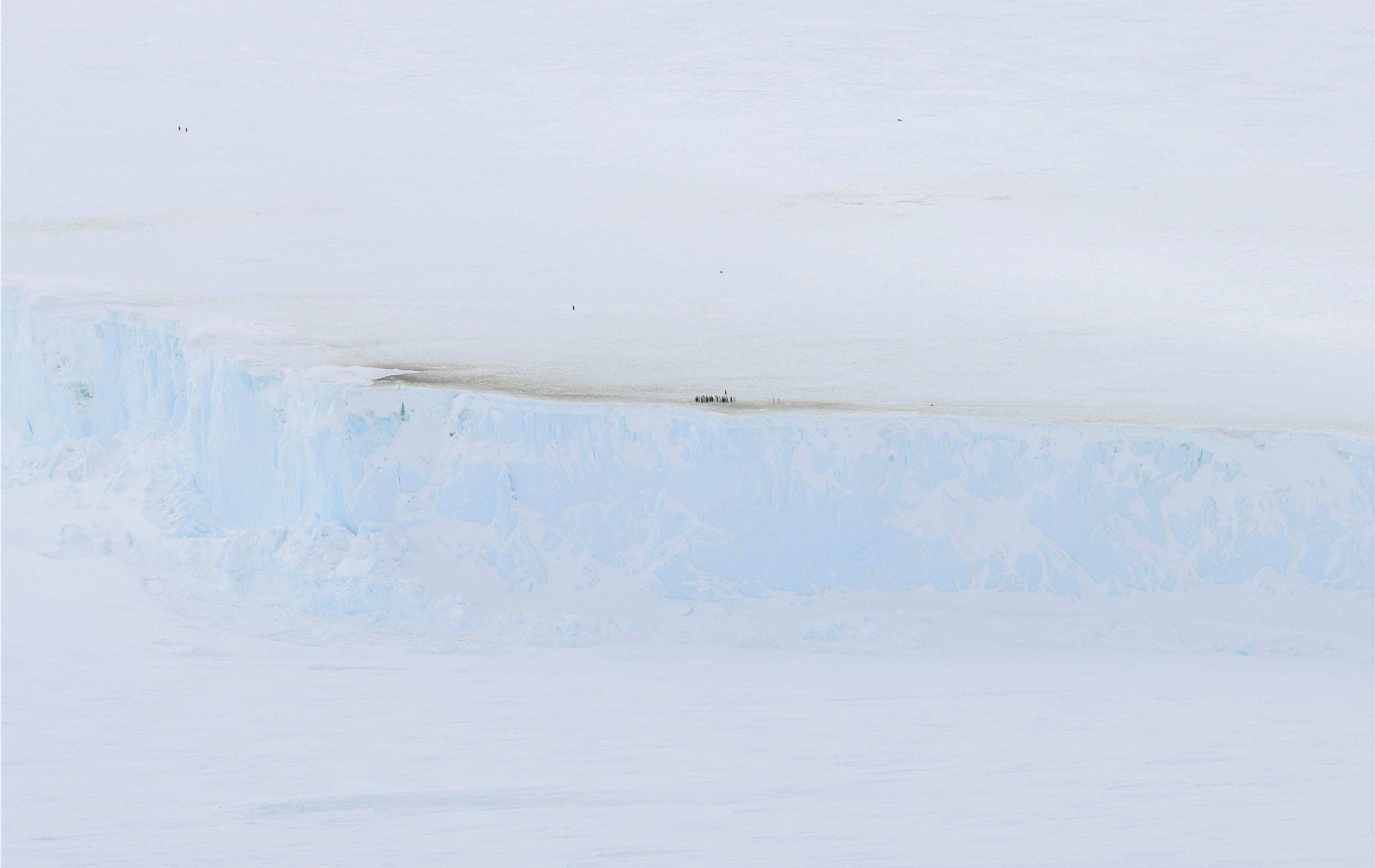
This year, however, the returning females were intercepted by a mass of ice the size of about 5,000 football fields. The iceberg formed a deceptive trap. while its seaward side provided a gentle slope that allowed penguins to climb easily, the side facing the inner colony fell into a steep vertical cliff. Upon reaching the ridge, the mothers found themselves stranded, unable to descend to the breeding ground below.
“The iceberg’s approach to the sea has a slight slope, making it accessible, but the edge facing the breeding site forms a steep cliff,” Dr Kim explained. “Mothers who were following their usual route on the ice floe suddenly found themselves confronted with this insurmountable barrier. »

감소…”빙산이 가로막아”
Drone footage captured a scene of desperate frustration. Hundreds of adult penguins were massed at the base of the ice cliff, pacing nervously as the topography barred them from accessing the colony. The surrounding ice was heavily marked with guano, evidence that the birds had been stuck there for an extended period of time.
For the males waiting above, the blockade was catastrophic. Having already fasted for over 70 days to incubate their young, they were pushed to their physiological breaking point.
“Males must survive to ensure future reproductive opportunities,” says Dr. Kim, describing nature’s brutal calculation. “It is highly likely that they were eventually forced to abandon the chicks and retreat into the ocean, unable to endure starvation any longer.”
Researchers estimate that the 30 percent of surviving chicks were fed by mothers who managed to find alternative routes around the blockage. “If the iceberg disappears before the next breeding season, there is potential for recovery,” Dr Kim said. “But if the blockage persists, we could see long-term impacts, including the forced relocation of the entire colony.”
Penguins pushed to the brink
The Ross Sea provides a vital sanctuary for emperor penguins. While regions like the Antarctic Peninsula have faced early ice breakup and chick die-offs, the Ross Sea has remained relatively stable. Sheltered deep within the continent, it benefits from robust sea ice and protection from rapid temperature changes.
However, the arrival of this iceberg introduces a new volatile threat to their survival. The incident was an anomaly. After calving from the Nansen Ice Shelf, the iceberg collided with drifting ice near Coulman Island, an accident that diverted its trajectory and closed the entrance to the colony. KOPRI researchers warn that this is not an isolated event but a harbinger of things to come. As global warming accelerates, frequent iceberg calving increases the risk of such blockages happening again.
Icebergs of similar magnitude are still frequently observed in the region, moving along drift paths that intersect other emperor penguin habitats. While icebergs on the Nansen Ice Shelf typically follow established routes, the analysis suggests that this specific iceberg deviated from its path after hitting underwater terrain or other ice masses, a deviation that led it directly to the colony.
The team also noted that a 14 km iceberg also skirted Cape Washington, another major breeding site. Researchers warn that if a future iceberg were to collide with this site and block its migration corridor, it could trigger another mass mortality event.
Dr Jin-ku Park, who analyzed the satellite data, said he was concerned about the wider implications. “The trajectories of icebergs calving from the Nansen Ice Shelf frequently pass through other major habitats,” he said. “This indicates that the disintegration of ice shelves poses a latent but potent threat to emperor penguins and other Antarctic wildlife.”
KOPRI plans to submit these results to international bodies next year, including the Commission for the Conservation of Antarctic Marine Life (CCAMLR). Although discussions to designate the emperor penguin as a “specially protected species” (SPS) are ongoing, progress has been blocked by objections.
“Objective scientific evidence is a prerequisite for designating a species as protected,” Dr. Kim emphasized. “The Coulman Island case will serve as crucial empirical evidence of the specificity and mortality of the threats posed by climate change to the emperor penguin.”
Since 2017, KOPRI has been monitoring the Antarctic ecosystem as part of a Department of Oceans and Fisheries initiative focused on the Ross Sea Marine Protected Area. The institute aims to use data from this incident to refine its remote sensing techniques and accelerate Antarctic conservation efforts.
“This disaster highlights the unpredictable dangers that climate change poses to the Antarctic ecosystem,” said Dr. Hyoung-chul Shin, President of KOPRI. “We plan to intensify satellite monitoring and field surveys during the upcoming breeding season and continue to study the impact of climate change on this fragile environment.”
The story was produced in partnership with our colleagues at Popular Science Korea.

The best new PopSci 2025 releases