At the height of its power, the ancient Mesoamerican city of Teotihuacan near present-day Mexico City was home to over 125,000 inhabitants. The city’s initial settlement began about 25 miles northeast of Mexico City around 100 BCE. Barely 350 years later, Teotihuacan featured multiple massive pyramids, religious temples, and multifamily residential structures along its streets.
But for all the physical artifacts and architectural remnants left behind, one question has long puzzled scientists: What language did Teotihuacan’s citizens speak? The answer would have major historical implications, since scholars could then use it to trace the city’s population to one of Mesoamerica’s later civilizations, such as the Maya and Aztecs.
“There are many different cultures in Mexico. Some of them can be linked to specific archaeological cultures. But others are more uncertain,” University of Copenhagen anthropologist Magnus Pharao Hansen said in a statement. “Teotihuacan is one of those places. We don’t know what language they spoke or what later cultures they were linked to.”
After careful analysis, Hansen and colleague Christophe Helmke believe they may finally have the answer—and the evidence has been in front of archaeologists’ eyes all along. Their theory is explored in a study published in the journal Current Anthropology and centers on some of Teotihuacan’s most vibrant relics.
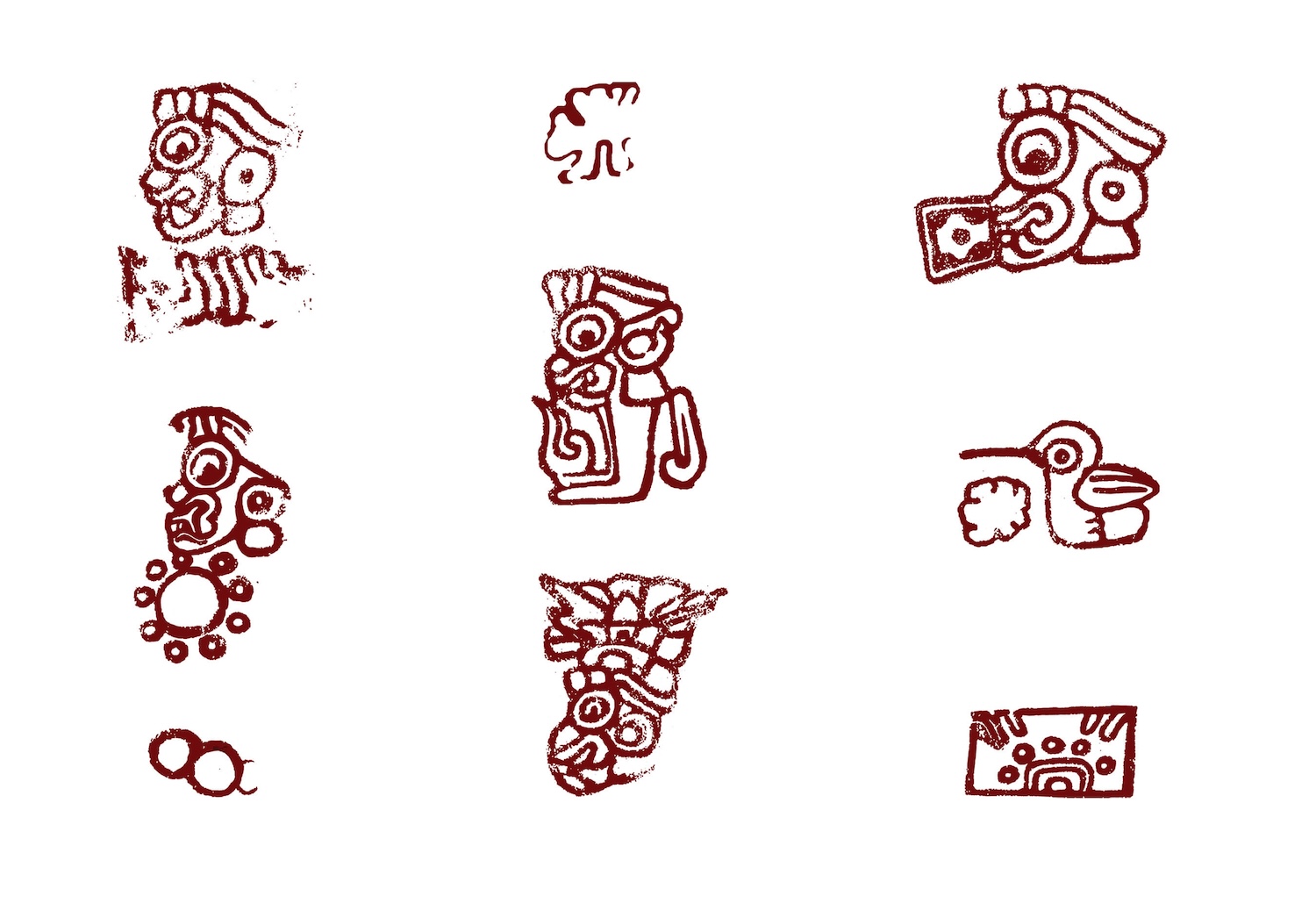
While time has claimed much of the city, Teotihuacan’s colorful wall murals have endured. For decades, researchers have debated whether the artwork is only illustrative, or if they are linguistic representations. However, according to this new study, both answers are correct. The writing system is a variant of the early Mesoamerican language family known as Uto-Aztecan. While it later influenced the Nahuatl language of the Aztecs, Uto-Aztecan was spoken well before the civilization’s establishment. Hansen and Helmke contend that Teotihuacan’s art conveys Uto-Aztecan, using both phonetic symbols and logograms. A logogram is a symbol that represents an entire word, like “4” for the number four.
Deciphering this work is as difficult as it sounds. They offer the logogram of a coyote as an example. In certain instances, the logogram is intended to only represent the animal. In other cases, it’s part of a rebus that forms a single word—likely a more conceptual idea that can’t be written with a single logogram. Meanwhile, the Uto-Aztecan used at Teotihuacan still isn’t fully understood. This means that modern researchers must simultaneously reconstruct the language while also using it to translate the mural art, and vice-versa. As painstaking as it is, the team believes it’s the only way to properly decipher the written language.
“Otherwise, it would be a bit like trying to decipher the runes on the famous Danish runestones… using modern Danish,” said Helmke.
Understanding this language may rewrite a major portion of Mesoamerican history. Experts currently believe that the people who would become the Aztecs migrated into central Mexico after Teotihuacan’s fall around 550 CE, likely due to climate change or internal unrest. If their theory is true, it suggests that Nahuatl-speaking people arrived in central Mexico much earlier than previously thought, making them the direct descendents of Teotihuacan.
At the same time, the study’s authors concede the project is in its relatively early stages, and suffers from a comparatively small selection of available text.
“That would further support our hypothesis, but for now we have to work with the texts we have,” said Hansen.
Until then, their approach offers a novel path forward for even wider linguistic studies.
“No one before us has used a language that fits the time period to decipher this written language,” Hansen continued. “In this way, we have created a method that can serve as a baseline for others to build on in order to expand their understanding of the texts.”

Shop Amazon’s Prime Day sale