A Mini Loch Ness Monster Look-Alike Lived in Arizona Around 220 Million Years Ago


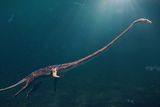
The legendary Loch Ness Monster now has a little sister – a small aquatic animal that lived in the Triassic period about 220 million years ago. Discovered from the fossils of the Petrify Forest National Park in Arizona, the new species represents a new TAXON DE TANYSRANTEID, a type of real Ancient reptile – Sorry Nessie – which is recognized by its long neck.
“Here, we describe that TanySrophic remains discovered in a multitaxic bone bed in the Petrified Forest National Park and names and describes a new Tanstropherideide Taxon,” wrote paleontologists who discovered fossils in a study in Paleodiversity. “After examining their affinities at […] Other tankapsters, we discuss the implications of the discoveries, mainly the diversity of previously unrecognized Tanstrophies. »»
Long neck reptiles
Many tanstrophies had a neck twice as long as their bodies and tail. But in addition to the length of their neck, these reptiles – which lived throughout the period of the Triassic – were “very diverse in the plans and ecologies of the body”, wrote paleontologists in their study.
Indeed, while some Tanstrophzes were small animals similar to lizards, only about a few feet in length, others measured about 16 to 20 feet long. And while some were adapted to life in water, others adopted a different lifestyle, the Tanstrophriids, including “taxa interpreted as aquatic, terrestrial and potentially even slippery”, wrote paleontologists in their study.
Of course, North America has seen its fair share of strange species throughout the Triassic, including some of these long neck animals. But so far, the remains of the Tanstrophors have been remarkably rare in the region. “The Tanstrophriids have historically been found mainly in Europe and China,” added paleontologists in their study, although “there is a small but expanding of Tanstrophors found in the Triassic of North America”.
The new Taxon adds to this file, demonstrating that a greater diversity of TanstrophriDes lived in North America than we thought before. Represented by the new species AKIDOSPROS OLIGOS, The taxon probably lived in marshy ponds and rivers in northern Arizona, which was then a much warmer and humid environment.
Learn more: The neck of these reptiles of the Triassic was so long that they lost their heads
Diversity of Tanstropherideide
Discovered by sieving sediments from the Petrified Forest “storm crest” through fine metal screens, the fossils of A. Oligos are so small that paleontologists considered them “microfossils”. Once sifted through these screens, the remaining sediments of the site have been studied under the microscope, revealing A. Oligos’ Tiny teeny specimens.
The process gave an assembly of fossilized vertebrae,, All who are incredibly small (smaller than the medium pink fingail) and adorned with a strange peak. From AKIDOSPROS OLIGOS results in “the tiny bone on back to points”, these unique features are what has given the taxon and its representative species their name.
In addition to emphasizing that North America housed a greater number of TantySrophoreides taxa, the discovery also suggests that these former reptiles lived in more environments than before. In fact, so far, all the aquatic Tanstrophies of North America came from salt water environments rather than freshwater.
In addition, the discovery indicates that several Tanstrophres lived in the same environment in Arizona, as A. Oligos’ Fossils have been found alongside specimens of the other two types of TanySrush.
“The presence of three distinct types of TanstrophriDes […] is unusual in that it is a very diverse tankrySrophic assembly which comes from a single locality, suggesting that several Taxesrrophices have coexisted in a single habitat or closely related habitats, “wrote paleontologists in their study.” It is also remarkable that this highly diverse assembly comes from non -marine continental deposits. “.
In the end, the study shows that the ponds and rivers of North America had their own long -neck reptiles – real animals which were much smaller and much more diverse than their imaginary lookalike of Loch Ness.
Learn more: Past discoveries highlighted the “Chinese dragon” fossil of 240 million
Article Sources
Our Discovermagazine.com writers use studies evaluated by high -quality peers and sources for our articles, and our publishers examine scientific precision and editorial standards. Review the sources used below for this article:


