Cholera Plagues Sudan amidst Civil War, and Climate Change Is Making It Worse


August 14, 2025
2 Min read
The effect of climate change on the Sudan cholera epidemic, explained
A civil war in progress in Sudan has forced millions of people to flee their homes and move to the camps, where a lack of water and sanitation infrastructure, as well as heavy rains, feed a huge cholera epidemic. What role does the environment play in the way the epidemic spreads?
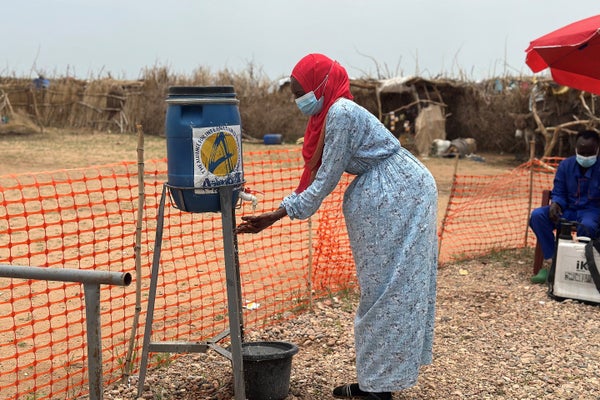
A woman washes her hands at the entrance of an isolation center of cholera in the western Sudan refugee camps, in the city of Tawila, Darfur, August 12, 2025. The cholera tears the Tawila camps in Darfour, where hundreds of thousands of people were left in the water.
On the support of scientific journalism
If you appreciate this article, plan to support our award -winning journalism by subscription. By buying a subscription, you help to ensure the future of striking stories about discoveries and ideas that shape our world today.
The people of Sudan are experiencing the worst cholera epidemic that the country has seen for years, according to a press release sent from the international humanitarian organization doctors without borders (MSF), also known as doctors without Borders on Thursday. As of August 11, there were nearly 100,000 suspicious cases and more than 2,400 deaths bound since the epidemic was declared by the Sudan Ministry of Health a year ago, according to the press release.
Highly contagious disease is caused by aquatic bacteria Vibrio cholerae. If humans ingest water or other liquids or foods contaminated by microorganism, it enters their small intestine and releases a toxin which causes severe diarrhea, vomiting and loss of liquid. In extreme cases, this dehydration can lead to death.
The epicenter of the epidemic is located in Darfur, in the west region west of Sudan, but it spreads to the rest of the country and in neighboring Chad and South Sudan. And propagation occurs while hundreds of thousands of people flee their house due to an in progress civil war. Many people have sought refuge in the camps and makeshift shelters far from the conflict, but the humanitarian groups and the residents indicate that the water shortages in these regions have made the continuation of hygienic practices, such as washing dishes and food with drinking water, according to the MSF press release. Without clean water, the conditions are ripe for bacteria to spread.
“When there is social dissatisfaction and conflicts, and causes damage, rupture or interference in the delivery of water and sanitation, create the conditions of the abundant bacteria,” explains Rita Colwell, environmental microbiologist at the University of Maryland, College Park.
The country’s health centers have been exceeded. Samia Dahab, a resident of the Otash travel camp, told MSF that the health centers had been full in Nyala, a city in Darfur. “Some areas have water, others have far or empty kiosks. A certain water is salty, and we drink it without boiled, without knowing if it is sure. ”
In addition, environmental factors play an important role in the epidemic, says Colwell. Vibrio proliferates during heavy rains and floods. And according to the MSF press release, “the heavy rains worsen the crisis by contaminating the water and by damaging the sewer systems”. These conditions arouse sediments and bring more nutrients to water that Vibrio Can eat, says Colwell, causing the growth of bacterial populations. If the conditions persist and there is no clean water or sanitation infrastructure, then people have no choice but to consume contaminated water, explains the environmental engineer Antarpreet Jutla from the University of Florida.
Colwell calls the current epidemic a “concatenation” of sociological events coupled with climate change. Climate change leads to warmer air and water temperatures, creating an environment in which Vibrio prosperous. These combined factors create an environment that Vibrio Naturally more abundant, and this “simply worsens the transmission of the person to the person”.


