Drones spreading seaweed to keep Britain growing

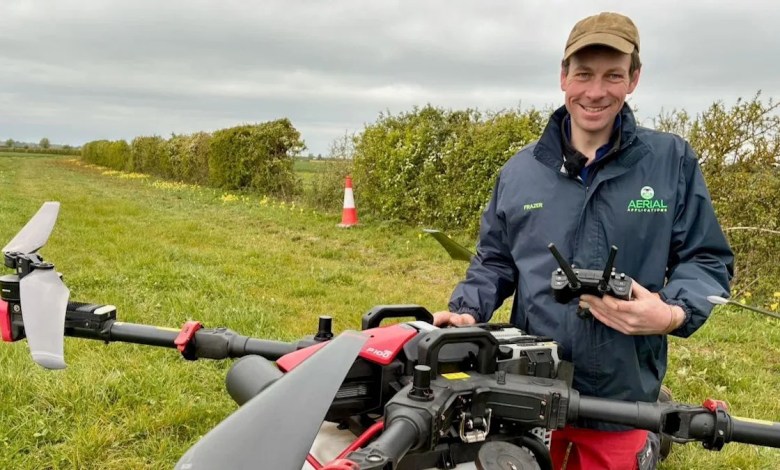
Farmers are using drones to spray algae on their crops as they grapple with the rising cost of chemical fertilizers.
The drone technology used “is on a different level”, according to farmer Andrew Ward, who used it to increase his winter wheat harvest in Leadenham, Lincolnshire.
Synthetic fertilizers, widely used in agriculture, are often imported and have become more expensive since the war in the Middle East.
A spokesperson for the National Farmers Union (NFU) said there would always be a need for chemical fertilizers “to help farmers feed people at scale and at a sufficient rate”, but farmers were still open to exploring alternatives.
North Shropshire dairy farmer Frazer Bloor is also a qualified drone pilot.
He said he has been busier than usual with requests to spray algae using his drone.
With its wingspan of 2.4m, the plane is an imposing sight when flying through the sky.
“This drone can carry 50 kg (110 lb),” Bloor said, which allowed it to hold enough liquefied algae to treat a large area of crops in a single flight.

Seaweed processor Dave Edwards says he is seeing an increase in orders due to rising fertilizer costs. [BBC]
Bloor used the drone to scan and map Ward’s winter wheat fields before treatment, to identify areas requiring more or less product.
Ward said the method reduced waste and helped producers who “currently have a very big problem trying to make a profit.”
Winter wheat is typically grown for use in making bread, breakfast cereals, and cookies.
According to the United Nations, about a third of the world’s fertilizers – such as urea, potash, ammonia and phosphates – typically pass through the Strait of Hormuz, which has been blocked since the start of the US-Israeli war against Iran.
The NFU warned that food prices in the UK were likely to rise as a result, while Svein Tore Holsether, chief executive of one of the world’s largest fertilizer producers, Yara, said the disruption to fertilizer supplies could cost up to 10 billion meals a week globally and would hit poorer countries hardest.
The use of algae as fertilizer is not new.
But Dave Edwards, one of several seaweed processors, said he has seen an increase in inquiries since the war began.
“We’re up about 20 to 30 percent so far,” Edwards said.
Seaweed is harvested from the North Sea in its raw form, raising some concerns about its impact on marine life.
But synthetic fertilizers also have an environmental impact, due to the carbon footprint of imports.
Edwards said natural fertilizers like seaweed could be crucial to national food security.
“If food runs out, we have to have something to be able to grow it,” he said.
“This will help.”
Learn more about this story


