Anti-ICE protests in Minneapolis fall short of constitutional crisis, experts say


NEWYou can now listen to Fox News articles!
Anti-ICE protesters have surrounded federal agents, Democratic leaders have denounced crackdowns and tensions in Minneapolis have boiled over, but legal experts say none of it yet crosses the line into constitutional collapse or would justify President Donald Trump’s use of federal emergency powers.
Legal analysts say the unrest, while volatile, does not hamper the federal government’s constitutional authority to enforce immigration law. This threshold would only be crossed if state officials themselves decided to block or materially obstruct federal agents, thereby raising concerns about the Supremacy Clause.
Ilya Somin, a law professor at George Mason University, told Fox News Digital that obstructing the work of federal agents, even aggressively, does not rise to that level.
“There is no general principle of law that anything that makes federal agents’ jobs more difficult somehow violates the Constitution,” Somin said.
THE FED’S MOVE TO TARGETED IMMIGRATION ENFORCEMENT IN MINNEAPOLIS UNDER HOMAN
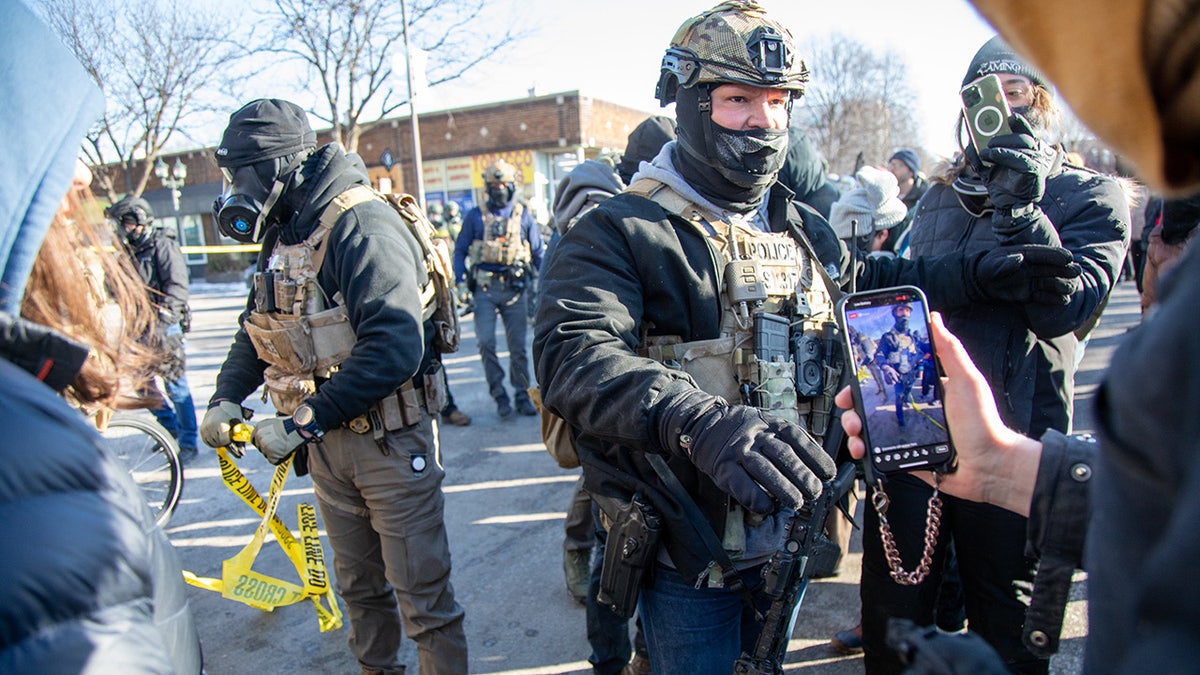
Protesters clash with law enforcement after a federal agent fatally shot a man on Jan. 24, the second federally involved shooting in the city this month, escalating tensions over enforcement operations in Minneapolis. (Arthur Maiorella/Anadolu via Getty Images)
Protesters have taken to the streets of Minneapolis in recent weeks to confront immigration agents during Operation Metro Surge, a federal enforcement effort that has deployed thousands of ICE and Customs and Border Protection agents to Minnesota. During the enforcement actions, protesters sometimes surrounded ICE agents with shouts, whistles, shootings and unruly crowds, creating a tense mix of peaceful demonstrators and coordinated agitators that sometimes escalated into blockades or violence.
The dynamics at play focused on two legal principles. On the one hand, the anti-commandeering doctrine prevents the federal government from forcing state and local authorities to enforce federal law. On the other hand, obstructing the enforcement of federal law is illegal and could violate the supremacy clause, which states that federal law trumps state law when the two conflict.
If the state were to pass laws that prevent federal law enforcement from carrying out their duties, it would trigger supremacy clause issues, Somin said, but he noted that such conditions were not present in Minnesota.
Operation Metro Surge began in December, sending 3,000 immigration agents to Minneapolis and St. Paul. Those efforts led to thousands of arrests but were met with resistance from residents and resulted in the high-profile deaths of two U.S. citizens at the hands of immigration agents, fueling public outrage. The FBI is currently investigating these incidents.
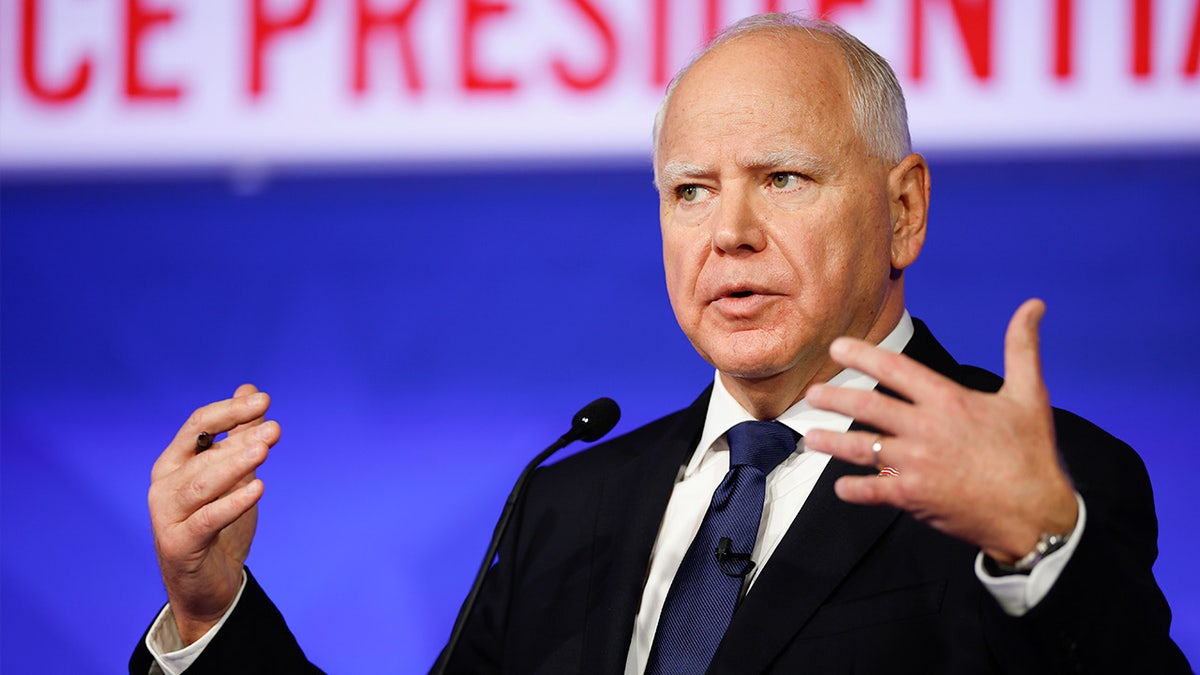
Minnesota Gov. Tim Walz met with Trump’s border czar Tom Homan as the administration reshuffles federal immigration leadership in the state. (Chip Somodevilla/Getty Images)
Democratic state leaders, meanwhile, have widely criticized the operation and have been blamed by Republicans for escalating tensions with their rhetoric. At one point, Minnesota Democratic Gov. Tim Walz compared ICE’s presence to the Civil War.
“I mean, is this a Fort Sumter?” Walz told The Atlantic. “It’s a physical attack. It’s an armed force that attacks, that kills my voters, my citizens.”
When asked if the resistant nature of Minnesota’s Democratic leaders could amount to “cancellation,” Somin dismissed the idea.
“Overriding occurs when state officials themselves resist the enforcement of federal law. If they simply fail to assist the federal government against private parties, that is something that is protected by the anti-commandeering principles of the Tenth Amendment,” Somin said.
This hands-off approach goes beyond rhetoric. Walz welcomed a reduction in federal staff but called for a faster drawdown, while Minneapolis Mayor Jacob Frey said the city would not help enforce immigration laws.
“We’re never going to agree, and we haven’t been, to enforce federal immigration law. Why? That’s not our job,” Frey said in an interview with The New York Times.
While state and local leaders have refused to intervene, opposition to the ICE operation has increasingly taken shape on the ground. Networks of activists have mobilized to confront and monitor federal immigration agents, an activity that legal experts distinguish from illegal state-led obstruction.
At the heart of this resistance is Defend the 612, a private citizen network that has coordinated what activists describe as “ICE shadowing,” using encrypted messaging apps to track enforcement activities and share information about agents’ movements, according to an article in the conservative City Journal.
In addition to street clashes, activists have staged protests at sensitive locations, including disrupting a church service in St. Paul, where the pastor also serves as ICE field director. Several participants, including former CNN anchor Don Lemon, were arrested and charged under a federal law typically used to protect abortion clinics and pregnancy counseling centers.
TRUMP’S IMMIGRATION VICTORY IN A MINNESOTA COURT IS A VICTORY FOR ALL LAW-ABIDING CITIZENS
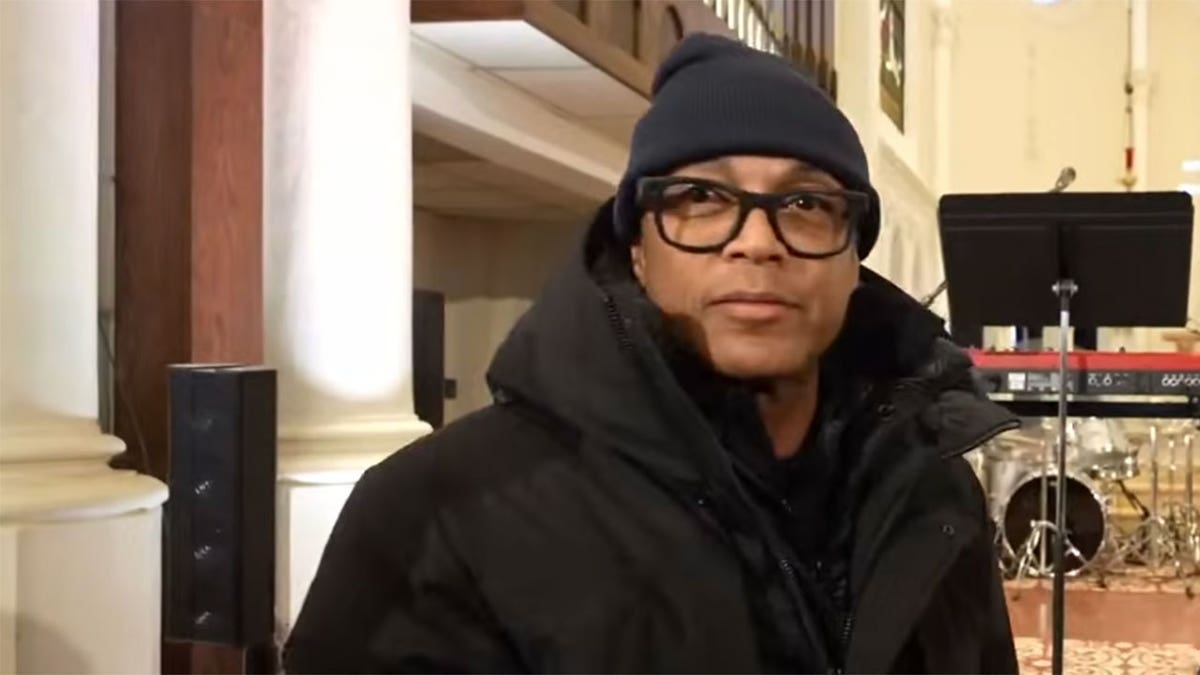
Don Lemon told Fox News Digital he stands by his reporting. (Don Citron/YouTube)
Federal authorities have decided to arrest individuals accused of directly obstructing the enforcement of immigration laws. Attorney General Pam Bondi announced charges against 16 agitators accused of blocking officers, assaulting officers or interfering with enforcement actions, while the Justice Department also charged a Minneapolis man, a self-described Antifa member, with cyberstalking after he allegedly called for attacks on ICE and doxxed a pro-ICE individual.
Still, legal experts emphasize that so far not all anti-ICE activity has resulted in a breakdown of federal authority. Hans von Spakovsky, a senior fellow at Advancing American Freedom, said existing laws already prohibit mob violence and obstruction, adding that Minnesota’s hands-off approach was “irresponsible” but not illegal.
In January, the DOJ subpoenaed Walz, Frey and three others to investigate whether they, too, conspired to interfere with ICE’s work. A DOJ spokesperson did not respond to a request for comment on the status of this investigation.
CLICK HERE TO GET THE FOX NEWS APP
If unrest escalates, the Trump administration has launched the Insurrection Act, a rarely used provision that allows the president to respond to illegal obstructions of federal authority. The president said that while it remains an option, it is not necessary at this time. Trump’s border czar Tom Homan, who runs immigration operations in Minneapolis, also downplayed the impact of anti-ICE agitators.
“You won’t stop ICE. You won’t stop the Border Patrol,” Homan said. “These roadblocks they’re putting up? It’s a joke. It won’t work, and it will only get you arrested.”
Ilan Wurman, a Minnesota law professor, said in a podcast that while Trump could “probably” invoke the insurrection law, under constitutional standards a president should only call on the military to enforce federal law as a “last resort.”
Fox News contributor Jonathan Turley explained when the Insurrection Act might be appropriate, emphasizing that it shows deference to the president.
“Establishing roadblocks and directly interfering with federal law enforcement may support such an invocation,” Turley said. “During the civil rights era, opposition to and obstruction of civil rights laws justified the use of military force.”
Still, Turley and others emphasize that the Minnesota protests, as intense and sometimes chaotic as they have been, do not yet meet the criteria for such drastic federal action.
“The promise of some Democratic leaders to arrest and prosecute ICE agents is likely to fail. Roadblocks to interdict federal agents would also be obstructive and, if state-backed, would violate the constitutional authority of the federal government,” Turley said.


