
Bambu Lab has put its foot in it again, inviting the wrath of open-source advocates and firebrand YouTubers over allegedly patchy adherence to the license that its slicer software depends on.
While it’s easy to condemn recent events, the company is at the top of its game for a reason, and that can be an altogether more difficult beast to wrestle with.
The problem with Bambu Lab
The Nintendo of 3D printing
Bambu Lab is in the news again for its recent decision to issue legal threats against the developer of an OrcaSlicer fork. For those out of the loop, OrcaSlicer is a fork of Bambu Studio (which itself was forked from Prusa Slicer). The developer in question restored the network access for printers that Bambu Lab stripped out in a controversial firmware update in 2025.

Bambu Lab now insists that third-party slicers use a closed-source network plug-in to communicate with its cloud infrastructure if they don’t want to rely on the offline-only Developer Mode. Going the offline route means severing your Bambu Lab printer from the company’s cloud services, which includes the Bambu Handy mobile app. Thankfully, self-hosted solutions like Bambuddy still exist.
The developer of a fork known as OrcaSlicer-bambulab was threatened with legal action and eventually took down the project. The whole affair ignited a fierce debate about whether Bambu Lab is skirting the rules of the AGPL (the software license that the company must adhere to) by not including its network infrastructure plugin alongside its open-source code.
Critics accuse Bambu Lab of profiting from open-source projects while simultaneously rewriting the rules and using bullying tactics against open-source developers. This follows criticism of Bambu Lab’s decision to gate off network access in the first place.

The company has also been accused of scaremongering about third-party filaments, while at the same time not being able to keep enough filament in stock.
What makes Bambu Lab printers so hard to resist?
There’s a reason they’re so popular
So if the company is so easy to criticize, why buy a Bambu Lab printer in the first place?
The main reason is that the company makes objectively good printers, and targets a wide range of price points. One thing that Bambu Lab has set about nailing is a “plug and print” simplicity. Before the company arrived on the scene, 3D printing was the domain of die-hard fans and those with enough patience to assemble a printer, modify it to suit, and manually level the print bed.
Bambu Lab changed the face of 3D printing by prioritizing the path of least resistance. The company helped standardize automatic bed leveling and put RFID tags inside filament spools, so that the slicer could automatically detect what’s loaded. Bambu Lab’s Automatic Material System (AMS) wasn’t the first of its kind, but it’s widely considered to be the first multi-filament device that worked properly.
There’s also the small matter of price, with Bambu Lab offering feature-rich printers at seemingly unbeatable prices. The most recent launch is the X2D, a dual-nozzle printer with a heated chamber and improved belt system (among other things) that retails for a mere $100 more than the P2S that came before it.
Bambu Lab has also heavily developed a thriving community and ecosystem to match. The company’s MakerWorld repository is now the world’s largest and integrates neatly into the company’s slicer and mobile apps. That mobile app lets you initiate and monitor prints from anywhere.
Print quality shouldn’t be an afterthought, but we’ve reached a stage where most modern printers on the market now produce excellent prints. Calibration and proper setup make this all the more likely, and that’s another tick in the Bambu Lab box.
A moral quandary
Buying a 3D printer just got harder
I bought my Bambu Lab P2S at the end of 2025, after the company locked down its cloud infrastructure, but before the latest blow-up regarding the OrcaSlicer fork. I’m not in any rush to get rid of my printer, especially considering nothing has technically changed on the end-user side since I bought it.
I debated between Bambu Lab and Prusa for a long time, eventually choosing the former for its value for money, local stock that didn’t cost hundreds of dollars to ship, and a bundled AMS 2 Pro for drying and managing multiple rolls of filament. I don’t regret my purchase, but I do find Bambu Lab’s recent actions regrettable.
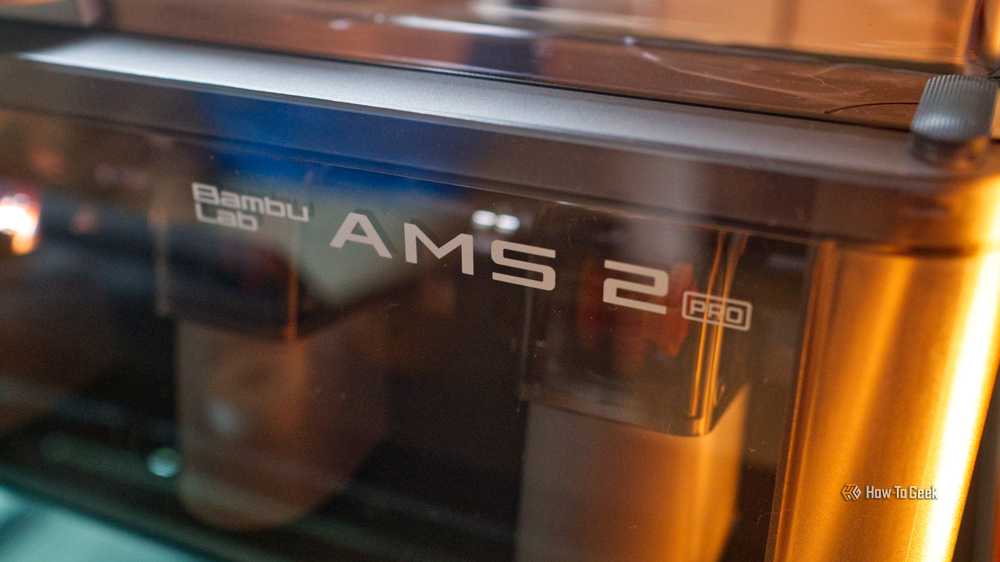
I wouldn’t blame anyone for not wanting to support the company at the moment. I also understand the allure of Bambu Lab printers to those for whom a 3D printer is just a tool. Some people just want a printer to engage with their hobbies, they don’t want the printer to be the hobby.
One silver lining is that Bambu Lab’s dominance of the 3D printing market has had a knock-on effect for the whole industry. When Prusa printers like the Core One+ use marketing phrases like “prints at the press of a single button,” you know that 3D printing has taken a welcome step towards accessibility.
The final bastion is value for money, and that’s one area that Bambu Lab seems to have everyone beat… for now.
I’m still a huge fan of my Bambu Lab printer, even if the company itself has me writhing in my seat—and I’m not the only writer at How-To Geek to feel that way.


