Denmark sees outbreaks fall in 2024


Denmark revealed that Norovirus caused most of the food -like epidemics last year with Salmonella and Campylobacter in second position.
In 2024, 55 epidemics of food origin was recorded with 1,126 sick people. Representatives of the National Food Institute of the Technical University of Denmark, Danish Veterinary and Food Administration (Fødevarestyrelsen), and Statens Serum Institut (SSI) said that it was nine less than in 2023. The number of people sick in epidemics also fell from 1,760 in 2023.
There were 1,266 Salmonella infections in 2024, against 1,207 in 2023. Salmonella Enteritidis was the upper serotype with 274 patients, 66% of whom were infected abroad.
Ten Salmonella epidemics were recorded, including three international incidents. While Salmonella represented fewer epidemics than the previous year, the number of cases remained the same. It was largely due to three major epidemics – one linked to the rocket salad and spinach for babies, and two with ground beef (chopped). Denmark had five cases in an international epidemic of Salmonella Mikawasima with an unknown source.
Wash the salad, don’t taste raw beef
Nearly 200 diseases caused by Salmonella Umbilo have been recorded across Europe. In Denmark, 22 people were sick. The epidemic was allocated to the salad and spinach of an Italian company.
“DTU and Danish Veterinary and Food Administration studies show that rinsing lettuce with cold water can eliminate up to 80% of bacteria. Consequently, Fødevrestyrelsen advises consumers to wash fruits and vegetables, especially if they must be consumed raw and the sørine food administration.
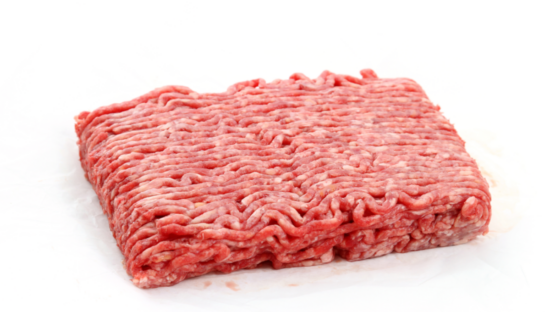
Two large Salmonella epidemics infected 66 and 70 people, respectively. During the first epidemic of Salmonella Typhimurium, cases took place in four countries and 24 people were hospitalized. An investigation has shown that the source was of England. Hilton Foods traced the problem with one of its suppliers. The processor found a corresponding epidemic tension in the beef samples of the production site.
The second monophasical epidemic of Salmonella Typhimurium was linked to beef of Danish origin. Twenty people were hospitalized. In the two epidemics, several patients had eaten raw meat – either by tasting it before cooking, or by consuming it as a steak tartare.
“Although EU legislation requires that meat (chopped) be free from salmonella, contamination can occur in sink, where meat can be exposed to harmful intestinal bacteria such as Salmonella or E. coli. If consumers want to eat steak tartare, chopped beef specifically produced for the tartare must be purchased, “said Møller.
The largest epidemic caused by clostridium perfringens
Norovirus was responsible for 16 epidemics of food origin, an increase compared to 13 in 2023. Three epidemics with 57 cases were linked to sick cooking staff or a healthy carrier of the virus among restaurant employees. An epidemic with 14 boxes was caused by imported raw oysters served in restaurants. Another with 15 patients was due to the consumption of contaminated frozen blackberries.
Seven of the 10 Campylobacter epidemics were linked to chicken meat. A total of 5,546 cases were reported in 2024, compared to 5,186 in 2023.
Denmark had 1,269 infections at E. coli producing shiga toxins in 2024, against 1,431 in 2023. The source was not found in two E. coli O132 epidemics and E. coli O26 with four cases each. The cases of Yersinia Enterocolitica went from 1,191 to 2023 to 1,296.
There were 61 listeriosis infections in 2024 against 54 in 2043. Two list of Listeria extending over seven years were found in polar salmon laks, a producer of Danish fish. Patients from Germany, Italy and Sweden were also linked to these epidemics and the same types of Listeria were found in product samples in the company.
After an inspection of the Danish Veterinary and Food Administration at the beginning of 2025, the company was reported to the police for not having withdrawn foods ready to eat contaminated by Listeria identified in their own check checks in 2023 and 2024 of the supply chain or informing authorities.
A regional gastroenteritis epidemic in schoolchildren was associated with the consumption of raw cow’s milk and the consulating consumption.
A small epidemic of hepatitis A with five cases has been linked to dried dates.
An epidemic of Bacillus Cereus with 27 patients in a kindergarten was linked to carrot bread.
An epidemic of clostridium perfringens caused by the roast pork served in a canteen at 91 and another incident with 95 cases was charged to mixed food during a treated event.
A pathogen unknown in porridge for infants reported 48 people.
(To register for a free subscription to Food Safety News,Click here.)


