
Two California residents are suing Cento Fine Foods, alleging the company engaged in “tomato fraud” by claiming that the tomatoes in one of its canned products are the authentic “San Marzano Certified” version from Italy.
The plaintiffs claim that Cento’s “Certified San Marzano” labeling is “false, misleading and unfair,” alleging that the product lacks an official designation from an Italian tomato authority. Cento’s tomatoes also lack the quality and taste of real fruit, the plaintiffs said in the lawsuit.
In “the way Champagne can only be produced in the Champagne region of France, real San Marzanos can only be grown, processed and canned in a specific region of Italy,” the lawsuit states.
New Jersey-based Cento Fine Foods did not immediately respond to a request for comment.
Jeanne Freiman 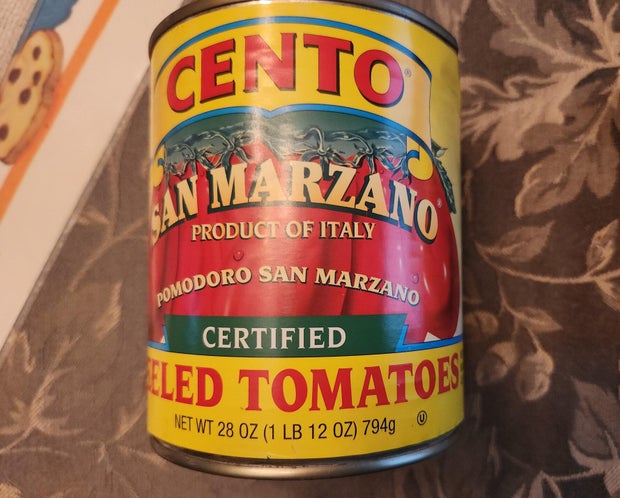
On the tomato cans and on the company’s website, Cento says its San Marzano tomatoes are certified by an independent third-party agency called Agri-Cert. The lawsuit alleges Cento’s labeling suggests the product has an official DOP designation, a label granted to San Marzano tomatoes by an Italian consortium that stands for “protected designation of origin.”
Cento’s label designs are used to “falsely convey they are the famous San Marzano tomato grown in the traditional method and certified by [the] Consortium,” the suit alleges.
The consortium, known as Il Consorzio di Tutela del Pomodoro San Marzano DOP, promotes and regulates the sale of San Marzano tomatoes, which the suit states must meet “strict production and quality standards.”
Cento says San Marzano tomatoes come from the town that bears their name in the Campania region of southern Italy. The tomatoes have a “thicker tomato wall, fewer seeds and less acidity than other tomatoes, making them ideal for authentic Italian cuisine,” according to Cento, which claims to be the only U.S. company with a production facility in the region.
Cento customers can also trace the exact field where the tomatoes in their product were grown by scanning the lot code on their can, according to the company’s website.
The suit isn’t the first time Cento’s tomatoes have been called into question. A 2019 lawsuit filed in New York alleged the manufacturer doesn’t produce as many San Marzano tomatoes as it claims.


:max_bytes(150000):strip_icc():format(jpeg)/hdc-embryologist-GettyImages-1732050393-fe78179c8c8240f1adbb407fe97aed9d.jpg?w=390&resize=390,220&ssl=1 "Can IVF Help You Choose Your Baby's Gender?")
