Credit: Shutterstock / Tyler Onove
Today, an growing number of people care about the impact they make on the environment, and that’s a great thing. However, having good intentions and actually changing your lifestyle to support the environment are two very different things. Luckily, reducing your carbon footprint at home doesn’t require as much effort as it seems.
Limiting your hot water usage and upgrading to a smart thermostat can help you significantly reduce your carbon footprint at home. Take five 5- to 8-minute showers and replace incandescent bulbs with LEDs to minimize emissions. It’s also important to stop using pesticides, fungicides, and synthetic fertilizers, which can all harm the environment.
You can also make a big difference by growing your own fruits and vegetables at home. Follow along as we explore 11 ways to reduce your carbon footprint at home.
11 Ways To Reduce Your Carbon Footprint At Home
Living a more eco-friendly existance will not only help the environment, but it will also help you save money. After all, using lots of electricity and fossil fuels can take a toll on your wallet and the atmosphere. You can reduce your carbon footprint in many easy ways, including:
1. Use A Smart Thermostat
An HVAC system is a huge part of your energy consumption at home. That’s why your energy bills surge during the summer and winter when you must keep up with extreme temperatures. You can reduce your carbon footprint and save money by installing a smart thermostat. You can program it to use less energy when you’re gone or asleep. Not only does this ensure no energy gets wasted, but it can also reduce the strain on your HVAC system. A smart thermostat is a good investment considering how expensive energy bills have become.
2. Switch To LEDs
Fluorescent and incandescent lights were the standard for many years however, many people have upgraded to LEDs. These lights are cheaper, more durable, longer-lasting, and better for the environment than fluorescent lights. They consume up to 75%-90% less energy than incandescent lights, which makes LEDs an easy way to reduce your carbon footprint. Many people use LEDs for their lamps and lighting fixtures, but you can also use them in your landscaping. You’ll be happy when these bulbs last up to 25 times longer than incandescent ones.
3. Start A Compost Bin/Pile
Composting is one of the most environmentally friendly practices any homeowner can get involved in. It may seem intimidating, but composting is not that difficult. If you don’t want to buy a bin, you can easily start a compost pile out in your yard. The key is to maintain the perfect ratio of three parts brown materials to one part green materials.
Brown composting materials include paper, straw, dry leaves, cardboard, and wood chips. Green composting materials include manure, grass clippings, weeds, lettuce, and plant cuttings. The ratio is extremely important, as brown materials release carbon and green materials release nitrogen. Too many green materials can create a slimy, foul-smelling mess, and too much brown can slow the composting process.
4. Go Dark
Nobody can blame you if you accidentally leave on a light or two every once in a while. However, constantly leaving too many lights on can significantly increase your carbon footprint. That’s because this energy typically uses fossil fuels, which can take a toll on the atmosphere. Lighting may only account for 10% of the average homeowner’s energy consumption, but regularly leaving on too many lights can increase that number. Not only does this affect your carbon footprint, but it can also be costly. Keeping too many lights on in and outside your home will also cause light pollution at night, which negatively impacts animals’ sense of direction and can disrupt their circadian rhythm.
5. Limit Hot Water Usage
Everyone loves taking hot showers, but it’s important to limit your time in the shower. It takes oil or gas to heat your shower, which can widen your carbon footprint. Taking long, hot showers will increase your home’s emissions, waste water, and increase your bills. Today, 18% of the average homeowner’s household energy consumption comes from heating water. That doesn’t mean you must take cold showers, but you could at least take shorter ones.
You can waste up to 50 gallons of water by showering for 10 or more minutes. Try to limit a shower to between 5 to 8 minutes whenever possible. That way, you can minimize your carbon emissions and waste less water. You can also save a lot of water by installing a low-flow shower head and tankless water heater.
6. Stop Using Outdoor Chemicals
Managing a garden at home can be challenging, especially when dealing with bugs, fungal diseases, and slow plant growth. Understandably, many people use pesticides, insecticides, fungicides, and synthetic fertilizers to solve common problems. Commercial pesticides, weed killers, and fertilizers often contain harmful chemicals. The runoff from synthetic fertilizers can taint bodies of water and kill the life within them.
Pesticides pollute the air, nearby water, the soil, and can kill nearby plants. Many common garden products also emit greenhouse gases, which contribute to climate change. You’re better off using compost than synthetic fertilizer. It’s also better to get rid of pests with household products, like garlic oil, cayenne pepper, and peppermint. Read the label on any product you plan to use outside to make sure you understand what you’re dealing with.
7. Grow Your Own Food
Most people know how bad the meat industry is for the environment. Vegetables are better, but the produce you find in stores got there because they were transported using fossil fuels. You can significantly reduce your carbon footprint at home if you grow your own food. You can’t grow all your own food overnight, but you can at least start today. Carefully research your area, the climate, and which vegetables and fruits are native to where you live. Native crops will grow more easily than imported ones, so that’s the best place to start.
8. Source Food Locally
No matter where you live, there’s probably at least one locally owned produce stand or farmer’s market nearby. Shopping locally can help reduce your carbon footprint. Food that comes from nearby farms, whether it’s veggies or meat, doesn’t travel far to get to your house. Conversely, buying avocados during the winter in Illinois is problematic because those avocados probably came from California, and the trucks that brought them produced harmful emissions. Even just buying one third of your groceries from local sources can make a difference, because they don’t have to be transported across the country.
9. Reduce, Reuse, Recycle
If the Environmental Protection Agency (EPA) wants you to do one thing, it’s reduce your waste. The best way to do so is to recycle plastic, aluminum, cardboard, glass, and paper items. Some renters think they can’t recycle because their landlord only provides a trash can, but that’s not true. You can easily call your local recycling service, request a bin, and get started.
More importantly, cut back on single-use plastics, as even recycling them isn’t enough. That includes plastic bags, wrappers, food packaging, and straws, among other items. One way to do this is to bring reusable totes to the grocery store and buy in bulk as much as possible. Buying in bulk reduces the amount of plastic wrap, which can make a big difference. At the very least, it helps to buy items with minimal packaging.
10. Order Online Less Frequently
Ordering items online doesn’t mean you’re a lazy or bad person. Doing so is convenient and lets you buy things you can’t always find near you. However, shopping online worse for the environment than shopping locally. Many large chains ship items via airplane, which are then picked up and delivered by trucks. That uses a lot of fossil fuel, especially compared to you driving to a store a few miles away. Shopping locally can reduce your carbon footprint by a large margin.
11. Go Solar
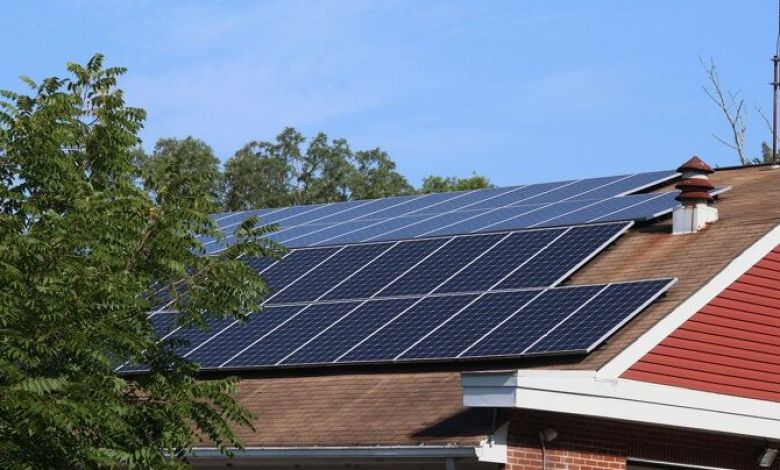
Solar power is nothing new, but only roughly 7% of homeowners have solar panels. Installing these on your home generates energy without any harmful emissions and environmental side effects. You can save up to 4 tons of C02 emissions per year by installing solar panels at home. Most residential solar panels aren’t 100% efficient, but they can still make a huge difference. Not everyone can justify going 100% solar, since installing them can be expensive. However, everything that you can do to reduce your carbon footprint can help make the world a less polluted place.
Summing It Up
You can reduce your carbon footprint at home if you stop using single-use plastics and start recycling as much as possible. It’s also important to replace incandescent lights with LEDs and only have lights on when you’re home. Grow as much of your own food as possible, install solar panels, and use compost instead of synthetic fertilizers.
Related Guides:


