Kennedy draws bipartisan pushback at Senate hearing over moves to limit vaccines


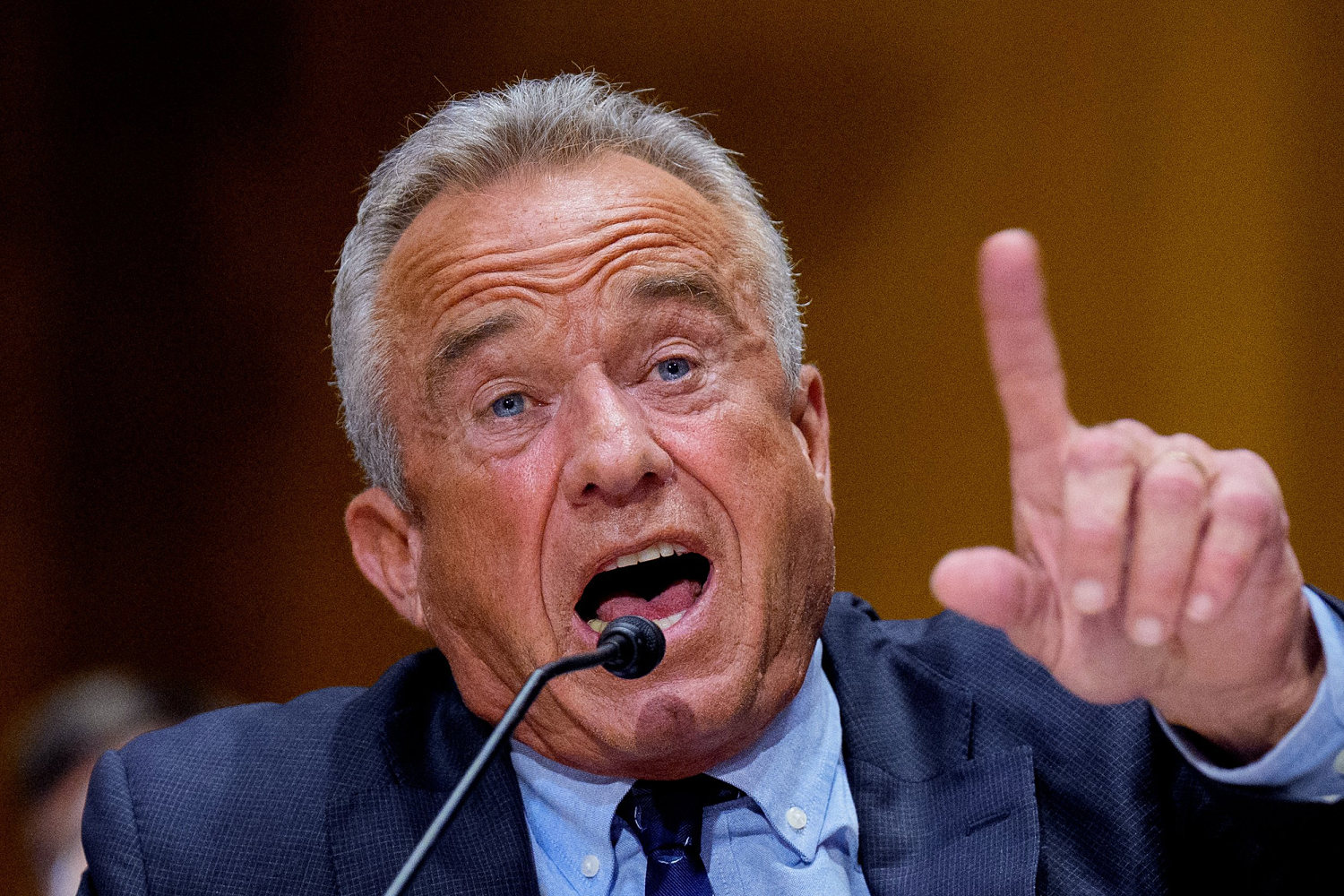
Washington – A rare demonstration of bipartite consensus was seen Thursday during a remarkably controversial audience of the Senate with the Secretary of Health, Robert F. Kennedy Jr.
Kennedy appeared before the Senate finance committee after an extraordinarily tumultuous week and a half in which he announced limited access to the hairstyle vaccines and dismissed the newly confirmed director of Centers for Disease Control and Prevention, Susan Monarez, leading to an exodus of senior officials from the agency.
In about three hours of questioning, Kennedy was more vocal in his anti-vaccine opinions than during the previous hearings of the Senate and seemed to return to adopt marginal positions that experts have advanced could seriously harm public health.
He told Senator Michael Bennet, D -Colo., That he thought that vaccines developed with mRNA – the technology used for the co -voted plans of Pfizer and Moderna – causing serious damage, including death. He then doubled the remark during an exchange with Senator Thom Tillis, RN.C.
It was Kennedy’s criticism of vaccines that attracted bipartite conviction.
Several Republicans have sought to highlight a gap between Kennedy and what they said was one of the greatest achievements of President Donald Trump of his first mandate: Operation Warp Speed, the public-private program to develop and quickly distribute the first cocovio shots.
Senator Bill Cassidy, R-La., Asked if Trump deserved a Nobel Prize for the initiative, to which Kennedy said: “Absolutely, Senator.”
“As a main lawyer for the defense of children’s health, you are involved in multiple prosecution to try to restrict access to the conscious vaccine,” said Cassidy. “Again, it surprises me that you were thinking so strongly of the deformation operation, when, as a lawyer, you tried to restrict access.”
Cassidy’s question line was impatiently expected. The senator was a key vote in Kennedy’s confirmation, but has since criticized some of his decisions. Earlier this week, Cassidy would not say if he regretted his vote to confirm the secretary.
He also read aloud an article on X of the conservative talk show Erick Erickson, whose woman has stadium lung cancer and – according to Erickson – could not obtain a vaccine cocodes “thanks to the current disorder at HHS”.
“I would say, in fact, we refuse people the vaccine,” said Cassidy.
Senator John Barrasso, R-Wyo., Underlined the turmoil at the CDC and questioned Kennedy’s response to the measles epidemic in western Texas. During the epidemic, Kennedy minimized the advantages of vaccination and pushed unproven treatments.
“Secretary Kennedy, in your confirmation audiences, have promised to comply with the highest standards for vaccines,” said Barrasso. “Since then, I have become deeply worried.”
The ardent defense of vaccines by Barrasso (he is also a doctor) and the questioning line was notable given his management position in the Senate, where he serves as a majority whip.
Tillis underlined several examples of what he said to be contradictions between the words and actions of Kennedy, in particular Kennedy promising not to impose his beliefs on others, then licensed the director of the CDC, canceling 500 million dollars of RNA research contracts and ousting the long -standing members of the CDC advisory advice.
“You said you were going to empower HHS scientists to do their job. I would just like to see evidence where you did this,” said Tillis.
CDC chaos
The CDC chaos, including the dismissal of Monarez, was a flash point for Democrats and Republicans. In an editorial of the Wall Street Journal published shortly before the hearing, Monarez said that she had been dismissed after being invited to pre -proprovated recommendations made by a vaccine consulting committee whose members expressed skepticism concerning vaccines.
“Mr. Secretary, did you actually do what the director Monarez said that you did it, which told him to simply accompany the recommendations of the vaccine, even if she did not think that such recommendations were aligned on scientific evidence?” asked Senator Ron Wyden, D-ear., The classification member of the finance committee. (Earlier Thursday, Wyden, as well as other Democratic senators, called Kennedy to resign.)
“No, I didn’t do it,” said Kennedy.
“So she is lying today to the American People in the Wall Street Journal?” Said Wyden.
Kennedy replied: “Yes, sir.”
In an ardent exchange, senator Elizabeth Warren, D-Mass., Also wrote Kennedy about the reason he rejected Monarez. Kennedy said he had told Monarez to resign because he had asked him if she was a “trustworthy person” and, he says, she said no. “If you had an employee who had told you that he was not trustworthy, would you ask them to resign, senator?” Asked Kennedy.
Senator Bernie Sanders, I-VT, pushed to clarify his remark.
“Do you tell yourself that the former CDC chief went to you, you asked him,” Are you a trustworthy person? ” And she said, “No, I’m not a trustworthy person”? “Asked Sanders.
“She didn’t say,” No, I’m not a trustworthy person. She said, “No,” said Kennedy.
The dispute concerning the recommendations of the vaccine, which Monarez declared in his editorial that had been asked to pre -carry, stems from Kennedy’s decision earlier this summer from dismissing all members of the CDC vaccine advisory committee and replacing them with skeptics of vaccines. Kennedy said he did this to eliminate conflicts of interest.
According to Cassidy, Kennedy had promised that he would not change the influential panel.
During the hearing, Cassidy pointed out that conflicts of interest on the previous panel were low – less than 7% – and that Kennedy had appointed new members who witnessed the complainants who pursue vaccines.
“If we put people who are paid for people who pursue vaccines, it actually looks like a conflict of interest. Really quickly: do you agree with this? ” Cassidy said.
“No, I don’t do it,” replied Kennedy. “It can be a bias, and this bias, if it is revealed, is ok.”
At several points, Kennedy accused the senators of lying when he was faced with difficult questions about the actions he has taken at the agency and his opinions on vaccines.
“You invent things to scare people, and it is a lie,” he told Senator Maggie Hassan, DN.H., in response to his assertion that Kennedy did not offer a transparent explanation for approval limited by the food and drug administration of coated vaccines.
The FDA last week reduced its vaccination approval covids a smaller and high risk group: people 65 years and over and those who have at least one medical condition that puts them at risk of serious illness. The CDC in can also stop recommending the vaccine for pregnant and healthy children.
Dr. Demetre Daskalakis, former director of the CDC National Center for Immunization and the respiratory diseases that resigned last week, NBC news on August 28 told the changes to the vaccine recommendations coded on social networks. Daskalakis said he had asked to see the data that supported the decision and “he was told no”.


