Lost, ancient cult site unearthed near a Norwegian highway


Archaeologists in Norway have discovered human remains and structural artefacts indicating a 3000 -year -old cult site near a project of expansion of the highway. Surchanters initially discovered the first signs of ancient religious activity more than a decade ago, but more recent excavation works offer more attention to the spiritually significant community location. The surrounding geological environment also indicates why the inhabitants finally abandoned it – a giant mud flow in the Gauldal river valley from the center of Norway around 800 EC.
“It is a very special discovery. We have never found anything like this. Science NorwaEarlier this month.
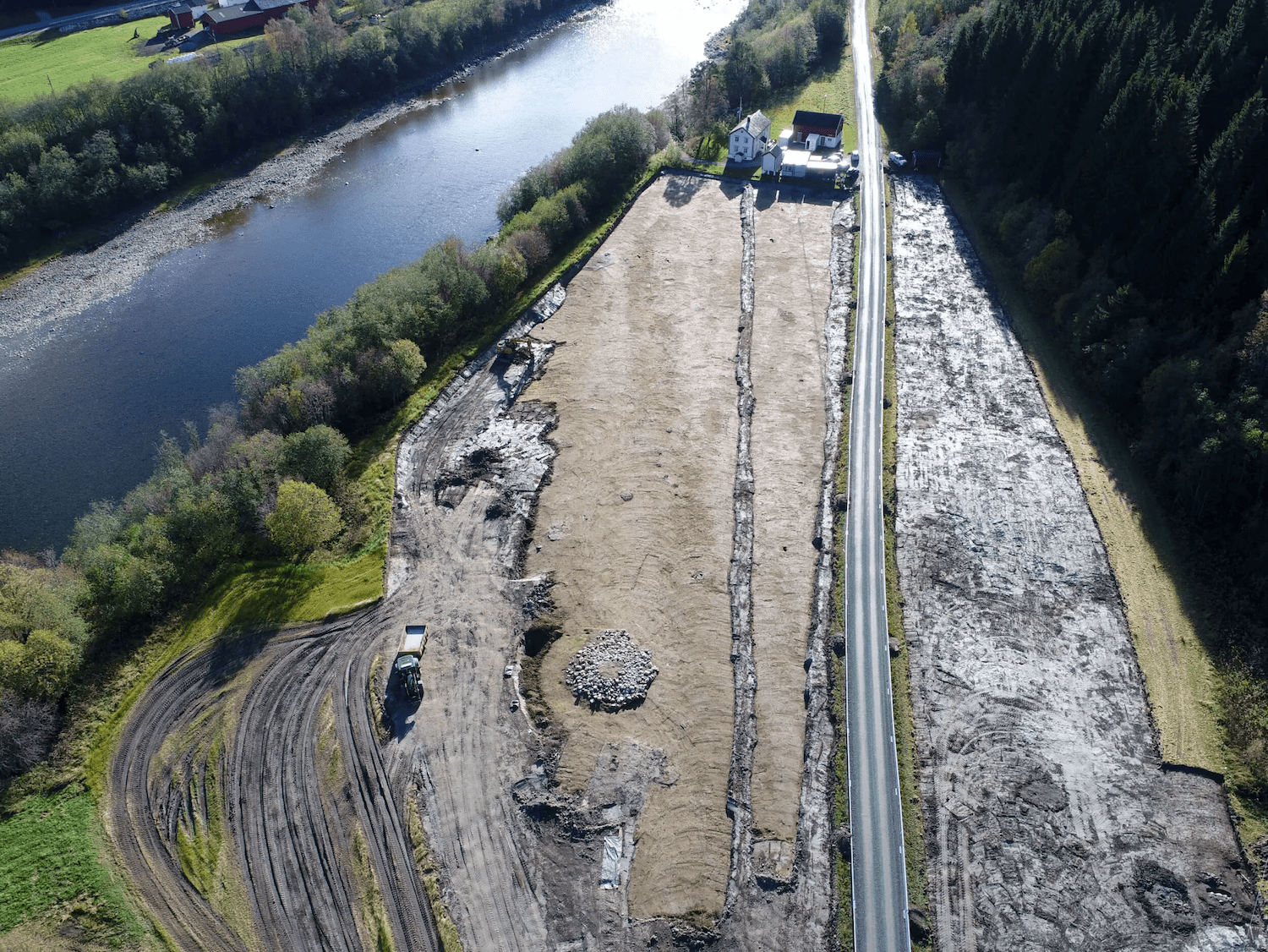
Bryn visited the Region for the first time in 2014 in the name of the County Municipality of Sør-Trøndelag, but returned in recent years to help an archaeological survey before an expected expansion of the highway. During two summers, she and her colleagues have traveled a large region buried under 9.8 feet of clay.
All this digging has borne fruit. The location is made up of two main sections which each included a long house of moderate size, measuring 33 to 39 feet in length. Near a long house was held a larger stone funeral mound called Cairn, as well as three funeral chambers, some of which sheltered carbonized human bones. Archaeologists have also found proofs of cooking cooking and a home probably used to make bronze.
Throughout the site, the researchers documented many stones carved with works of art such as a imprint, a boat, human figures, as well as a bow and an arrow. The stones are particularly striking because Norwegian rock art at the time was generally engraved directly in the rocky substratum. In comparison, these individual stones seemed to have been conceived as perhaps portable relics.
“This is a very special discovery,” said Bryn about a stone measuring around 4 by 8 inches. “It’s so small. It’s portable, you could wear it in your pocket. “
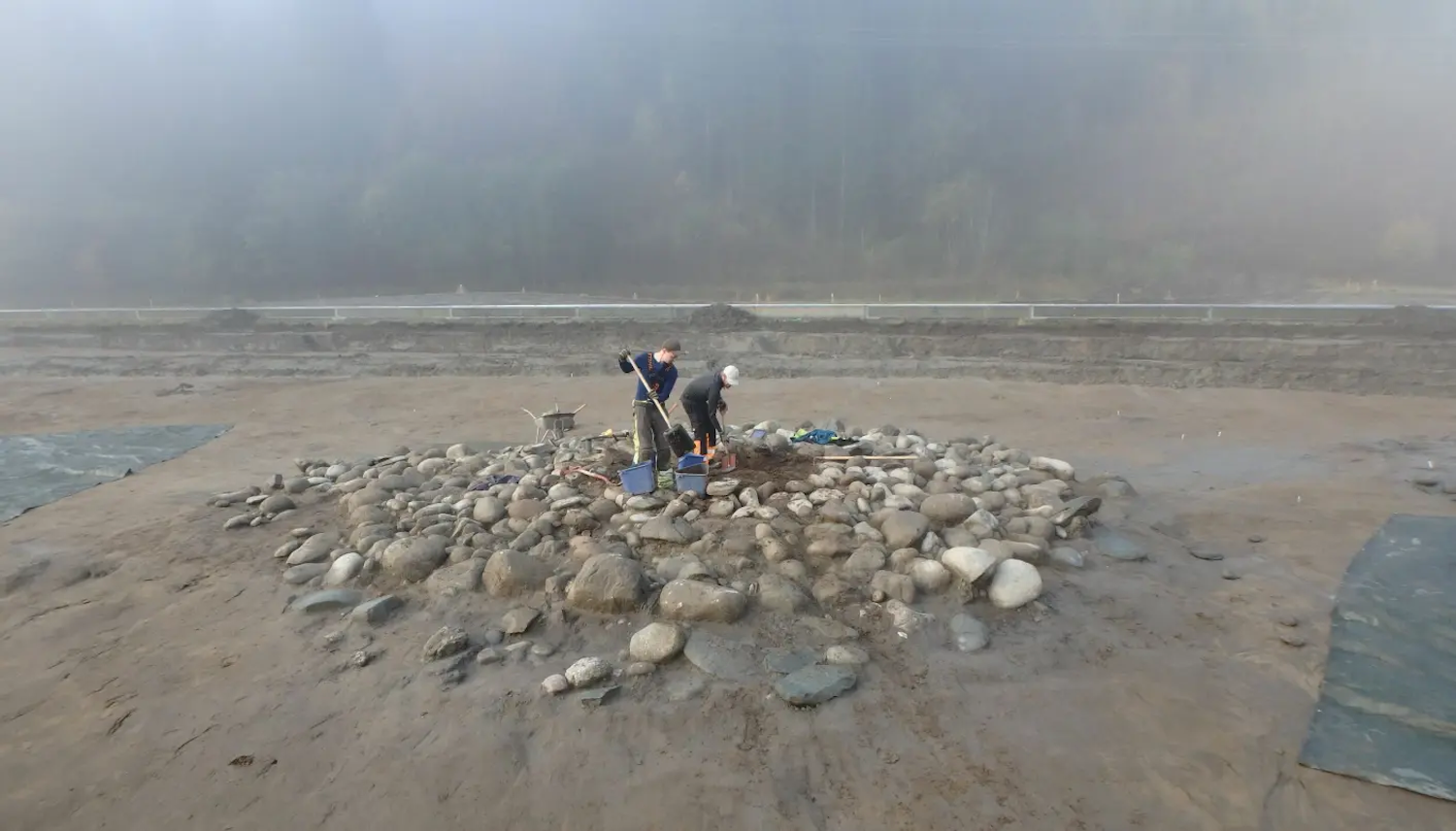
However, there is a type of construction that archaeologists have not found. So far, there is no evidence of a permanent community. Without this proof of a more permanent colony nearby, the researchers believe that the location has completed an important spiritual function and was seen with respect.
“He indicates a site of particular importance,” said Bryn.
The analysis of human remains showed that bones date from 1000 to 800 BCE, which places them at the time of the devastating mud flow which flooded the Gaudal River Valley. That said, it is not clear if the inhabitants actively used the site as more than a funeral ground at the time of devastation.
“There are no traces of people here. It was not a pompeii, although we are wondering about it,” said Bryn.
Bryn and his team are now investigating an area on a set near the expansion of the highway. Although they have not found anything “exceptional” yet, there are indications of a kind of human colony. Whatever the result of the new project, the importance of what they found just at the bottom of the road is clear.
“Finding portable stones like this, lying in the landscape where they were once used, is particularly rare,” said Bryn. “There are not many discoveries that compare itself.”

More offers, reviews and purchasing guides


