New poll finds 60% oppose Iran war as Trump economic pessimism deepens


NEWYou can now listen to Fox News articles!
Voters are increasingly pessimistic about the economy and President Trump’s handling of key issues, while a majority oppose continued U.S. military involvement in Iran, even though most believe the United States is winning the war. That’s according to a new national investigation from Fox News.
Affordability continues to dominate the political landscape.
Fifty-eight percent cite the cost of living as their top economic concern, up from 50% in February. This overshadows other issues, such as government spending (16%), employment (8%) and tariffs (8%).
FOX NEWS POLL: VOTERS SEE AI AS A RISK TO PRIVACY, PAYCHECES
More than three-quarters also believe that the economy is in bad shape (77%), worse than a month ago (73%) or a year ago (71%). Only 23% rate it positively, the lowest in more than a year.
Pessimism is also personal. A slight majority of voters (51%) believe that their family’s finances are worse than two years ago. Before the 2022 midterm elections, 44% said the same thing.
FOX NEWS POLL: 56% DOUBT WHITE HOUSE’S COMPETENCE TO MANAGE GOVERNMENT
All of this helps explain Trump’s worsening ratings on the economy. A year ago, 56% of voters were against and last month, they were 66%; now it’s 71%. The increase since April comes from a 7-point rise in Republican disapproval.
Notably, approval of Trump on the economy among non-MAGA Republicans (36%) is more in line with that of independents (18%) than that of MAGA Republicans (74%). The president’s overall approval for handling the economy stands at just 29%, down from 34% in April.
Trump gets his lowest marks on inflation, with just 24% favorably, down from 35% in January. Inflation is a rare issue where a slim majority of Republicans (51%) disapprove of Trump. It reached 85% among independents and 96% among Democrats.
Its employment figures are also net negative on foreign policy (38-62%). Until this month, border security was the only issue on which Trump received a positive rating. Now voters are divided (49-51%) on his performance on border security, causing his ratings to drop for the first time this term. This change comes even as 45% of voters believe border security is better today than two years ago, while 29% say it is worse.
Approval of Trump’s overall job performance is 39%, down 3 points since last month and down 10 points since the start of his second term — and just 1 point above its lowest point in October 2017. A record 61% disapprove of the job he does, including 48% who strongly disapprove of him.
Since April, approval has declined among some of his key constituencies, such as rural whites (-6 points), white men without a degree (-5), and Republicans (-3).
Trump’s approval is lowest among Republicans (80%), non-MAGA Republicans (54%), whites (43%), and rural voters (43%).
“Despite still strong support from the Republican Party, the president’s numbers are leaking a bit,” said Republican pollster Daron Shaw, who leads the Fox News poll with Democrat Chris Anderson. “Make no mistake; it’s all about affordability. Independents jumped ship in 2025, and now non-MAGA Republicans and other core constituencies are dithering.”
Additionally, in the long term, more voters believe Trump’s policies will harm the country (57%) rather than help it (34%). The “injured” share is up 6 points since last April. Fully 88% of MAGA Republicans say his policies will help, while only 43% of non-MAGA Republicans agree.
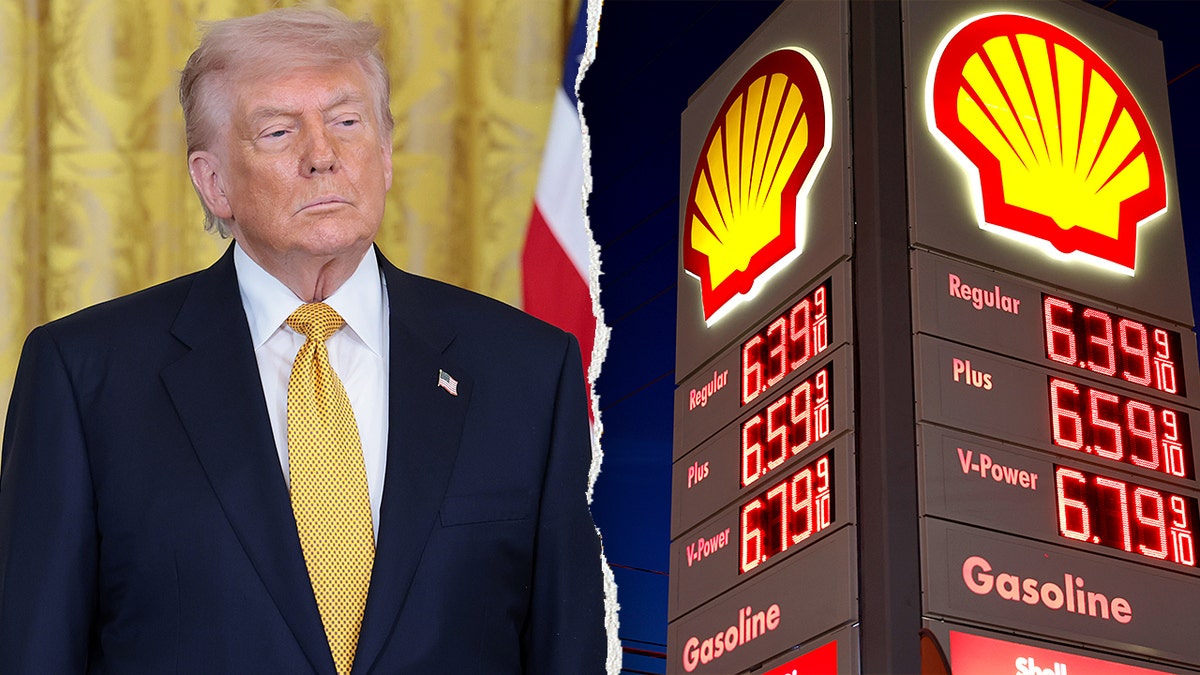
Meanwhile, gas prices are putting a strain on voters’ budgets: 86% view rising prices as a problem, with 51% calling it a “major” problem. Concern is almost universal for the economy as a whole, where 96% view gas prices as a problem and 75% call it “major.”
In assigning blame for gas prices, voters largely targeted domestic factors, with about 8 in 10 pointing the finger at Trump’s policies, national oil companies and government regulations. However, they overwhelmingly see the war in Iran as the main driver, with 91% saying it is responsible.
Iran
Two-thirds think the United States is winning the war in Iran, but opposition to U.S. military action rose to 60 percent, up from 55 percent last month.
Half think the war will last a year (18%) or more (33%), unchanged since March, while 6 in 10 favor a limited timetable for U.S. involvement in Iran, including 3 in 10 war supporters and 4 in 10 Republicans.
Nearly all Republicans (89%) and two-thirds of independents believe the United States is winning the war, while more than half of Democrats believe Iran is winning the war (56%). Generationally, voters under 30 are most likely to believe the United States is winning (79%), but they are also among the most opposed to the war (67%).
Among voters who served in the military, 55% support U.S. action against Iran and 72% believe the United States is winning the war.
Last summer, voter concern over the possibility of Iran acquiring a nuclear bomb reached a record high of 78 percent. Today, it is at a record high of 56%, up from 66% in March. Since March, concern has been declining among Democrats (-13 points), independents (-11) and Republicans (-6).
Poll-rotten
While 45% of respondents approve of the way Trump handled the US-China summit, a majority of 54% disapprove.
This matches views on the outcome of the negotiations: 52% think Chinese President Xi Jinping got more of what he wanted, compared to 46% for Trump. More than a quarter of Republicans (27%) join majorities of Democrats (75%) and independents (56%) in thinking Xi won the summit, as do nearly a quarter of those who otherwise approve of Trump’s handling of the trip (24%).
CLICK HERE FOR CROSSED POINTS AND TOP LINE
Conducted May 15-18, 2026, led by Beacon Research (D) and Shaw & Company Research (R), this Fox News investigation includes interviews with a sample of 1,002 registered voters randomly selected from a national voter file. Respondents spoke with live interviewers on landlines (109) and cell phones (635) or completed the survey online after receiving a text message (258). Results based on the full sample have a margin of sampling error of ±3 percentage points. Sampling error for results among subgroups is higher. In addition to sampling error, the wording and order of questions can influence the results. Weights are typically applied to the age, race, education, and region variables to ensure that demographics are representative of the registered voter population. Sources for developing target weights include the most recent American Community Survey, Fox News Voter Analysis and voter file data.
Fox News’ Victoria Balara contributed to this report.


