Newborn hepatitis B vaccine under fire as RFK Jr. and GOP Senators question immunization


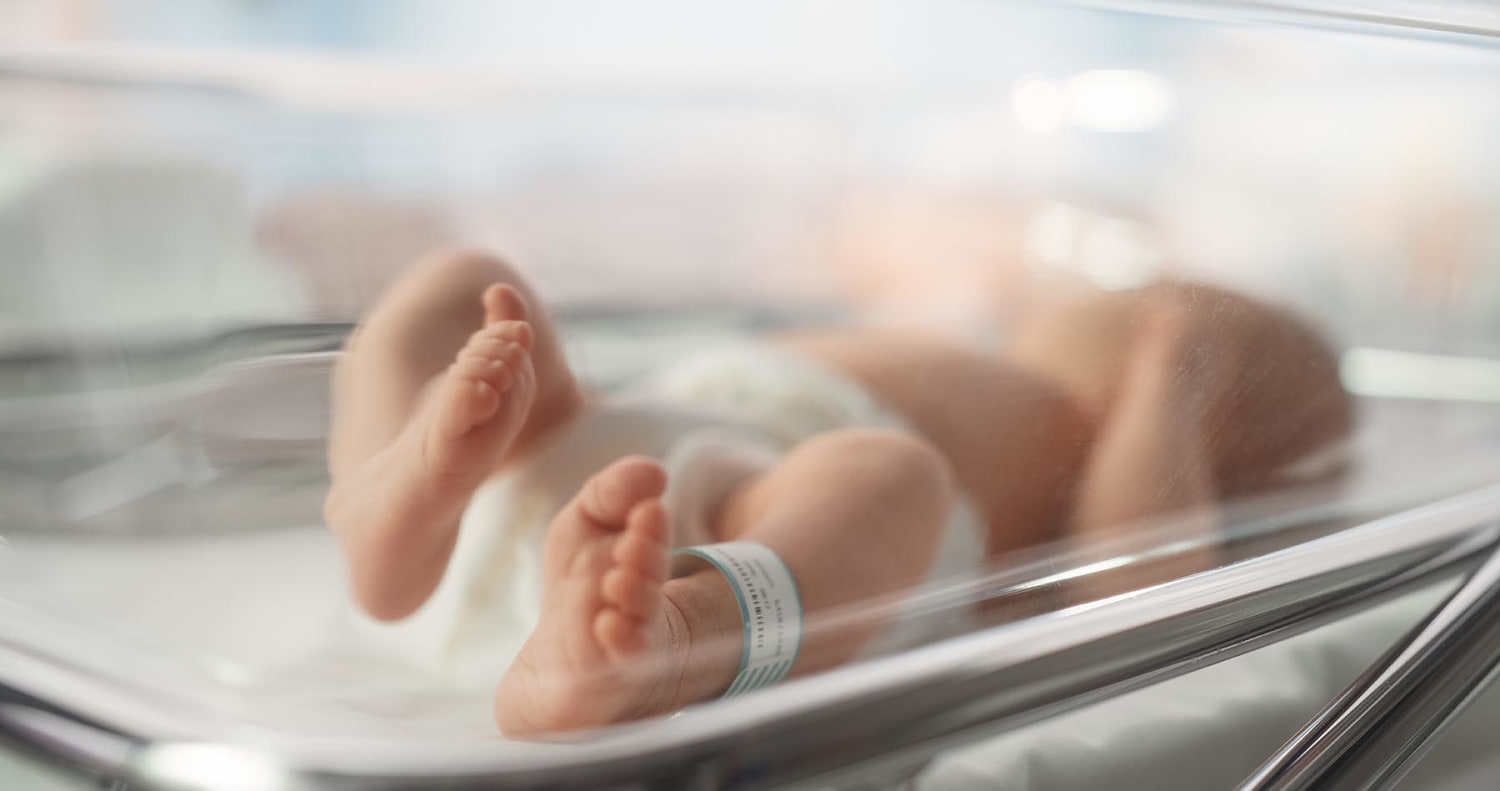
The hepatitis B vaccine has become the last point of flash while the health secretary Robert F. Kennedy Jr. continues to question the safety of vaccines.
The vaccine is systematically given to babies shortly after birth because hepatitis B – an incurable infection that can cause liver disease, cancer and death – can be transmitted from mother to child during childbirth.
During a hearing of the Senate finance committee with Kennedy on Thursday, Senator Roger Marshall, R-Kan., Declared that providing the hepatitis B vaccine to all newborns “had no sense for me”, especially if the mother is negative for the virus.
Marshall, an OB-GYN who said he had delivered 5,000 babies, said he was supporting the vaccination of women who had not received prenatal care or who had not been tested for hepatitis B., but he questioned the need for universal vaccination.
He is not the only republican senator to have criticized the vaccine.
“No medical reason to give newborns the vaccine against hepatitis B if the mother is not infected. All the mothers who deliver in a hospital are tested,” Rand Paul of Kentucky wrote on X last week.
This prompted Senator Bill Cassidy, R-La., To answer.
“Empirically, this is not true. Not all mothers have prenatal care,” wrote Cassidy. “Some are infected between tests during the first quarter and delivery. In some cases, the test is overlooked.”
Paul and Cassidy are doctors; Paul is an ophthalmologist and Cassidy is a gastroenterologist who has treated patients with hepatitis.
The question should not disappear anytime soon: next week, a committee that advises the centers for Disease Control and Prevention on vaccines should discuss the hepatitis B vaccine. Kennedy dismissed the 17 members of the previous committee in June and selected seven replacements, several of which have expressed anti-vaccine opinions.
The new chairman of the committee, Martin Kulldorff – a biostatistian who said he had been dismissed from Harvard for refusing to obtain a coded vaccination – questioned the hepatitis B vaccine at the group’s first meeting in June.
“Unless the mother is positive for hepatitis B, an argument could be advanced to delay the vaccine for this infection,” said Kulldorff.
This argument includes dangerous hypotheses, said Chari Cohen, president of the hepatitis B foundation. A 2019 report revealed that only 84% to 88% of pregnant women are tested for the virus.
Hepatitis tests are not perfect and sometimes produce false results, said Cohen. And pregnant women may not inform their doctors of their past or current behavior for fear of stigma. The virus can spread by sexual contact or share needles to inject medication.
Without vaccination, 90% of babies exposed to hepatitis B virus during birth develop chronic hepatitis, an incurable disease that destroys the liver, said Cohen. Many of these children finally need liver transplants. In rare cases, babies can die of overwhelming infections.
Why do newborns get the hepatitis B vaccine?
Doctors vaccine babies on the first day of life because it is at this time that the vaccine is most effective, Dr. Ravi Jhaveri, responsible for infectious diseases at the Chicago children’s hospital.
When infants are infected during childbirth, the hepatitis B virus enters their blood circulation and heads for the liver, where it can install a life infection, said Jhaveri. The vaccination of newborns just after childbirth gives its immune system the possibility of quickly fighting the infection, rather than allowing the virus to multiply and get started. Studies show that the vaccination of older babies exposed to hepatitis B is not effective, he said.
Hepatitis B spreads by contact with infected blood and body fluids – even microscopic quantities – and is incredibly infectious.
Children can be infected at home by people with virus, especially if they share toothbrushes, razors and earrings, said Cohen. The vaccination of newborns before leaving the hospital protects them against infected throughout childhood.
Dr. Su Wang, an internal medical doctor, learned that she had hepatitis B after giving blood when she was at university. Although his mother did not have the disease, other family members did it.
Wang takes antiviral medicine for hepatitis B and remains healthy. She said that she assured that her four children had obtained the vaccine at birth, as well as a dose of immunoglobulin of hepatitis B, which provides the body with additional antibodies. While vaccines can take a week or two to take full effect, immunoglobulin offers immediate protection against the virus, Wang said.
“It is such a relief that I don’t have to worry about my four children suffering from hepatitis,” said Wang.
When the hepatitis B vaccine was introduced for the first time in 1982, doctors only provide it to high -risk adults. Two years later, the CDC recommended the high-risk newborns, said Jhaveri. The number of perinatal infections has remained stubbornly.
But hepatitis B infections fell after the CDC began to recommend a universal dose of hepatitis B vaccine at birth in 1991. Cases of acute hepatitis B infections in children dropped from 99% from 1990 to 2019. Infection rates remained the same or increased in adults over 40 years of 2019.
Baby vaccination seems to protect them for at least several decades, said Jhaveri.
Although people inject drugs run a high risk of hepatitis B, doctors do not see many infection in adolescence people, from the 1920s and 30s – generations young enough to have been vaccinated at birth, Jhaveri said. As generations of children vaccinated at birth are aging, doctors will learn if these gunshots prevent infections at the average or more age.
“It’s really a horrible disease,” said Dr. James Campbell, vice-president of the American Academy of Pediatrics’s Committee of Infectious Diseases. “For a very inexpensive vaccine known to be safe and effective, we can eliminate perinatal hepatitis B.”
If the next CDC vaccine panel recommends against vaccination against hepatitis B at birth, this could make the vaccine more difficult to obtain. The recommendations of the CDC vaccine influence the vaccinations covered by insurance, and all the vaccines recommended by the CDC are included in the Federal Vaccines for Children program, which makes vaccinations available free of charge. In the United States, about half of children are eligible for free vaccines as part of the program.
Last month, Kennedy had newly confirmed the director of the CDC, Susan Monarez, because she said in an editorial of the Wall Street Journal, she would not “preete” the recommendations of the vaccine panel.
What to know about hepatitis B
When adults are infected with hepatitis B, their immune system often overcomes the virus, so that is no longer a threat, Campbell said. Babies, whose immune systems are not developed, generally develop a chronic infection for the rest of their lives.
The more people live with chronic inflammation caused by infection, the higher their risk of liver damage and cancer, said Cohen. No child should develop cancer from a avoidable infection, she said.
“We want to give each baby born in the United States the absolute right to a long healthy life,” she said, “not an increased risk of cancer since the day of birth.”
Cassidy, the Senator of Louisiana, was a vocal supporter of the hepatitis B vaccine.
In its original state, Louisiana, he created a public-private partnership to vaccinate 36,000 children in the red baton region against hepatitis B at no cost.
During Kennedy’s confirmation hearing in January, Cassidy told a story about the “worst day of my medical career”, telling her experience of treatment of a young woman with hepatitis B en route to a liver transplant. “It was an inflection point in my career,” he said. “Since then, I have tried to do everything I can to make sure I never have to talk to another parent about their death from their child due to a vaccine preventible disease.”
The prevention of the disease is practically always cheaper than treating it. Hepatitis B blows are among the cheapest vaccinations. A liver transplant in 2020 costs $ 878,400. Liver cancer treatment costs $ 93,228, according to a 2024 study.
A 2015 study revealed that the United States spent more than a billion dollars a year in hospitalizations for hepatitis B.
“There are people who are in adolescence and the twenty who can die of liver cancer because of hepatitis B, when they are otherwise healthy and prospered,” said Jhaveri. “These are risks that we will take if we stop using this safe and efficient vaccine.”


