This new air scanner could replace drug dogs at US borders


NEWYou can now listen to Fox News articles!
Border Patrol is about to obtain a new powerful ally, and it does not take. A microwave size device called vaporide could soon replace dogs sniffing medicines to American border crossings. Built to detect fentanyl, cocaine, methamphetamine, MDMA, ketamine and even explosives, technology shows precision and speed that trained dogs simply cannot correspond.
Register for my free cyberguy report
Get my best technological advice, my urgent safety alerts and my exclusive offers delivered directly in your reception box. In addition, you will have instant access to my survival guide at the ultimate – free swindle when you join my Cyberguy.com/Newsletter.
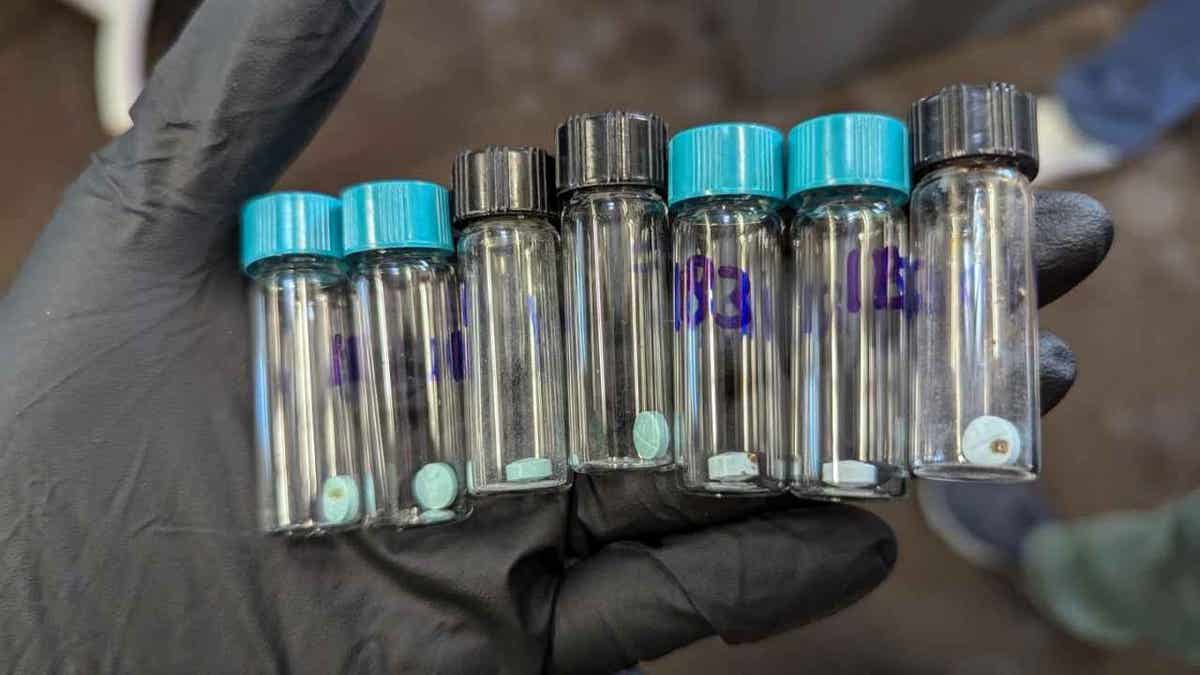
Photo showing fentanyl pills seized on the American border. (Elizabeth Denis / Pacific Northwest National Laboratory)
How vaporide detects drugs faster than swab tests
This portable air scanner, created at the Pacific Northwest National Laboratory (PNNL) of the Ministry of Energy, is put on the market by the instrument manufacturer based in California Bayspec. The device works by pulling the air and identifying the molecules in real time using a miniature mass spectrometer.
Unlike traditional swab tests that take five to thirty minutes, Vaporide detects fentanyl in seconds, even at levels as low as six parts per billion. It’s like spotting a single pine needle in an entire forest.
Why could drugs soon be overwhelmed by vaporide
For decades, the formed canines are the gold stallion at the entrance ports. But dogs have limits; They get bored, need managers and cannot be reprogrammed with software updates. Vaporide, on the other hand, never needs a nap. It can detect not only known drugs, but also fentanyl analogues, variants made in the laboratory designed for skirt.
The peak design of the system includes an atmospheric flow tube which allows tiny drug molecules for more time to interact with loaded ions. This chemical dance considerably stimulates sensitivity, which makes it possible to detect even the most elusive threats.
During a trial in the real world of the real world at the border crossing of Nogales, in Arizona, the device detected traces of several drugs, including fentanyl and cocaine, in a few seconds within a laboratory for the protection of customs and borders.
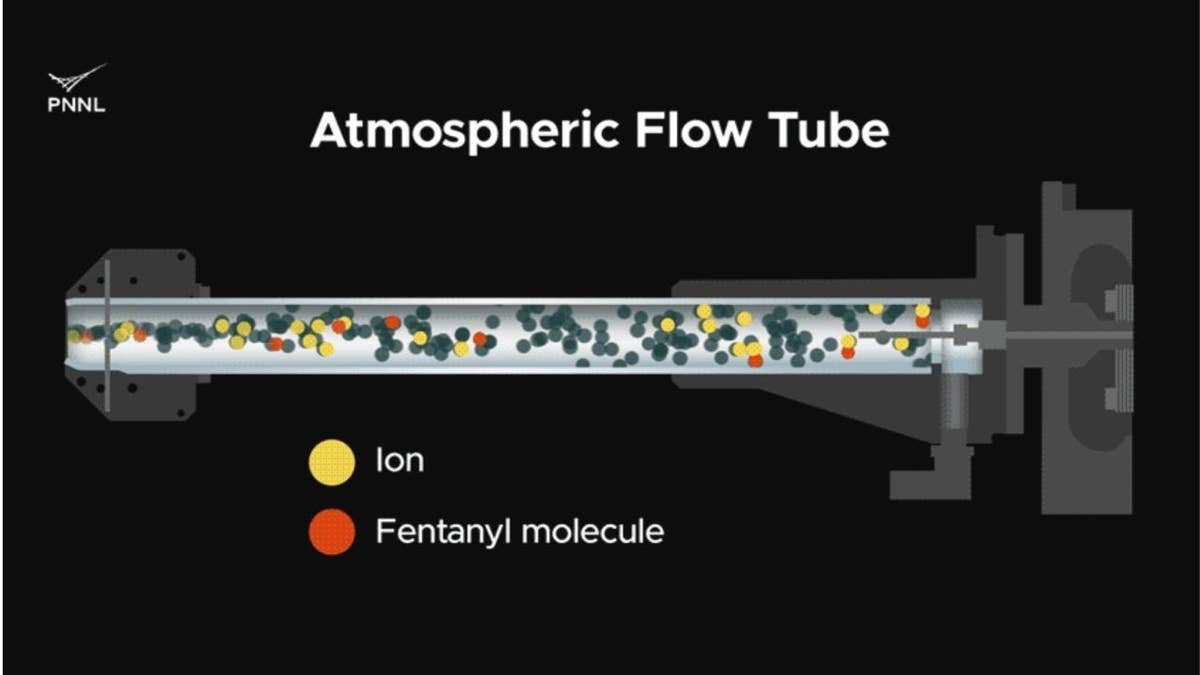
Illustration of the action in the atmospheric flow tube which is a key to detecting fentanyl trace levels. (Sara Levine / Pacific Northwest National Laboratory)
How vaporid works: air, ions and instant answers
The vaporide weighs around 40 pounds and attracts ambient air like a miniature vacuum. The suspect molecules are filtered, marked with electrically loaded ions and passed through a tiny mass spectrometer. Only the relevant particles succeed. This process filters interferent background vapors from things like perfumes or cleaning agents, giving border agents a clear, precise and immediate reading on potentially dangerous substances.
What vaporid for border safety means
If it is widely deployed, Vaporid could revolutionize the way in which customs and the protection of American borders detect narcotics and explosives. Its fast and hands -free sweeping would help agents detect vehicles, cargoes, luggage and even people, without relying only on canine units or an invasive sampling.
The sensitivity of the device also opens doors for use beyond borders. The Department of Homeland Security is already working with PNNL and Bayspec to adapt technology for mail screening, airport luggage controls and large -scale freight inspections.
For materials like TNT (Trinitrotoluène) and Petn (Pentaerythritol Tétranitrate), the two powerful explosives that release very few molecules in the air, ultra-sensible detection of vaporid offers a level of protection which has long been out of reach with current methods.
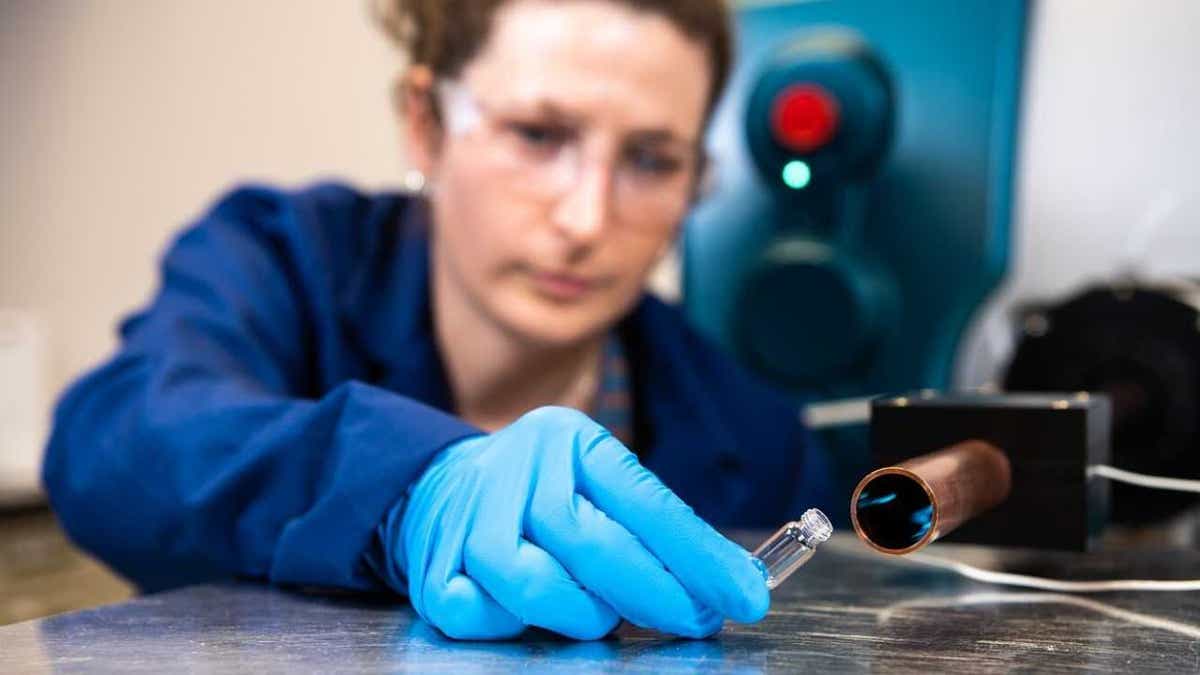
The chemist Elizabeth Denis uses the PNNL system to check a laboratory substance. (Andrea Starr / Pacific Northwest National Laboratory)
The role of vaporide in the fight against drugs and explosive smuggling
The United States faces a deadly influx of synthetic opioids. According to the CDC, more than 80,000 Americans died of drug overdoses in 2024, including around 48,400 deaths linked to fentanyl and other synthetic opioids. Quick and contactless detection in the entrance ports could help suffocate the supply chain before these fatal substances touch the streets. And in an era of increasing geopolitical tensions, having a portable scanner which can also detect explosives could be a critical layer of national defense.
Kurt’s main dishes
Technology no longer helps border agents; It starts to surpass their most reliable tools. Vaporid brings speed, precision and reliability to a job where the seconds count. While dogs who sniff drugs have served well, this portable air scanner could soon lead the front line in the detection of threats. While agencies are preparing to deploy the system, one thing is clear. The future of border security does not take. He beeps.
Would you be more safe by knowing the machines, not the dogs, keep our borders? Or does this change raise concerns concerning reliability and dependence on technology? Let us know by writing to Cyberguy.com/Contact.
Register for my free cyberguy report
Get my best technological advice, my urgent safety alerts and my exclusive offers delivered directly in your reception box. In addition, you will have instant access to my survival guide at the ultimate – free swindle when you join my Cyberguy.com/Newsletter.
Copyright 2025 cyberguy.com. All rights reserved.


