What research on sexting reveals about how men and women think about consent


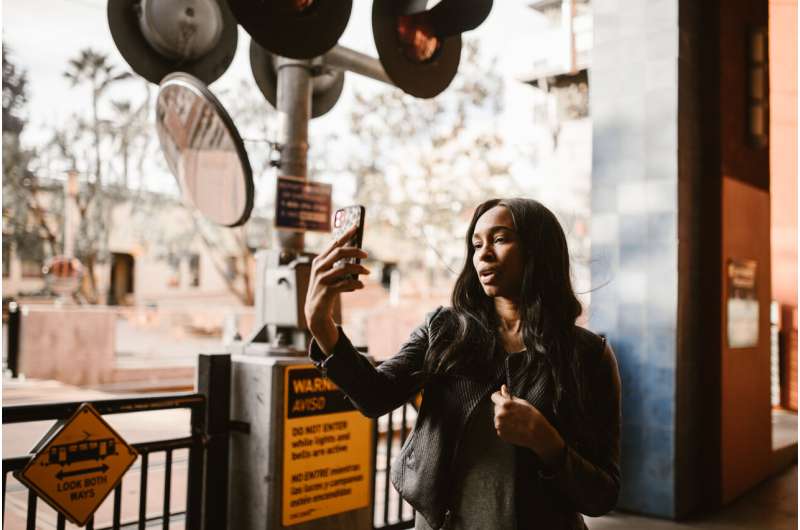
Credit: PEXELS RDNE stock project
Sexting – The creation and exchange of sexual texts, photos and videos – is part of the sex and romantic life of many people. At a time when interpersonal relationships often take place thanks to digital technology, especially from the pandemic, understanding sexing can help us better understand intimacy.
Discussions around this subject inevitably imply concerns about sexual consent and violation of it. A frequent concern is the risk of abuse of intimate images, where private sexual images are shared without the consent of the person represented. Another is the risk of receiving non -consensual or non -consensual “photos”.
These violations can and affect people of any gender identity. But research suggests that the two types of violation particularly affect girls and women, who are more likely to be victims of the non -consensual sharing of intimate images and to receive un solicited cock photos. Girls are also more likely than boys to report a person forcing nudes or other sexual content.
In my research, I explored how men and women experience and sail on consent during sexing in heterosexual relations.
I found that consent is at the heart of the sexing practices of women and men, but that they approach it differently. Overall, women I spoke were most concerned about the risk of violating their consent. Men, on the other hand, were more concerned with the risk of accidentally rape the person with whom they were sext.
Women’s experiences
Between June 2016 and February 2017, I interviewed 44 women on their use of digital media and technology in their romantic and sexual relationships. An essential part of this discussion concerned their sexing experiences. Our conversations have focused in particular on their sexing experiences with men and their notions of privacy, risk and confidence.
My participants mainly saw the risk of intimate image abuse as an individual responsibility. In other words, these women considered themselves responsible for ensuring that their consent was not raped by a sexing partner.
They thought about the importance that women take care of to protect themselves. For example, not trusting the “bad” type of person during sexing. Many have used tactics to reduce risks, not to show their face in an image, to establish close links with friends and family of their sexing partner.
As a participant explained in the middle of their twenties: “I try to meet their family and friends in advance, just so, if something happens, I can somehow go say to his mom.”
Just as women focused on their individual responsibility to reduce risks, they also understood men as individually responsible for sexism for sending unlined cock photos. Overall, they have seen it as a question of certain men behave badly, rather than part of a broader systemic problem. This point of view differs from that of researchers in this area, who have linked photos of non -consensual cock to wider misogyny and social issues such as rape culture.
Men’s experiences
The 15 interviews I conducted with men took place between May 2022 and May 2023, five years after interviews with women. During these years that intervene, the #MeToo movement has acquired a world range. This movement has made the generalized, social and structural problems that lead to violations of sexual consent and abuse of power in sexual relations.
This research, the results of which will be published in a next book chapter, has coincided with what many have recognized as a #MeToo backlash. This reaction (in politics, entertainment and broad society) manifested itself, for example, in the advancement of the manosphere and the repression of sexual and reproductive rights.
A single participant mentioned #MeToo specifically, noting their role in sexual implementation on the agenda. However, it was clear that the rapidly evolving and tumultuous social and political landscape concerning sexual consent informed the experiences of men.
A participant at the end of the thirties stressed how an interest in consent was what made him want to participate in an interview. He said: “I grew up during a period when … Understanding consent has changed a lot. Men my age … I just think we are very badly prepared for the expectations of modern society.”
My participating women had been the most worried to protect themselves against the violation of their consent. But men seemed to be the most worried about the possibility that they could violate a woman’s consent by not having assured sexual consent during sexing.
Some participants found it difficult to manage what they understood as contradictory messages concerning the expectations of women towards men during sexage. For some, it meant to avoid the sexing which they considered to be “risky”. For others, it meant continuously establishing consent by checking with a partner.
Move forward
Overall, my interviews revealed that men and women take consent seriously and are impatient to prevent their violation.
This is something I explored in workshops with other researchers, charitable organizations and relevant stakeholders. Our discussions, summarized in the report on the consent of the report on digital sexual cultures, emphasize the importance of creating space (for young men in particular) to explore ideas around consent without worrying about social repercussions.
C charitable organizations like Beyond Equality and Fumble already create spaces for such discussions during their meetings with young people at school, university and online. We must also see more of these discussions taking place at home, at government level and by collaboration with technological companies.
Navigating consent in sex has long been a difficult task for many. Digital technology has created new opportunities for sexual interaction, but also for the violation of consent. We need spaces for dialogue, to help us understand – together – what a good sexual consent is and should look like, for all those involved.
Supplied by the conversation
This article is republished from the conversation under a Creative Commons license. Read the original article.
Quote: What research on sexing reveals about how men and women think of consent (2025, July 7) recovered on July 7, 2025 from https://phys.org/news/2025-07-sexting-reveals-men-women-conent.html
This document is subject to copyright. In addition to any fair program for private or research purposes, no part can be reproduced without written authorization. The content is provided only for information purposes.


