When It Comes to Crowning Ant Queens, It All Comes Down to Genetics


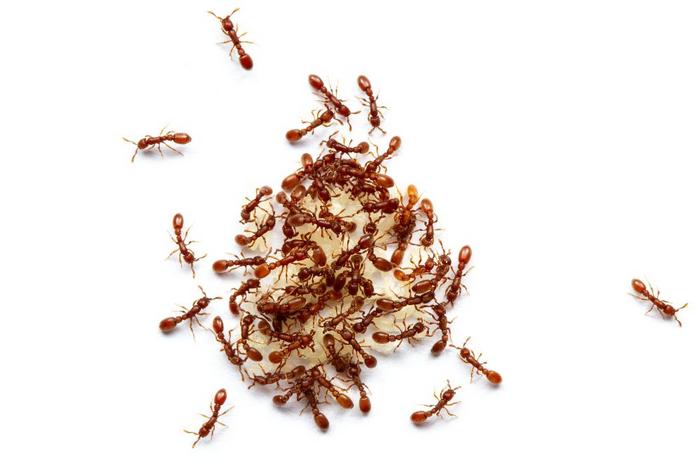
How does an ant colony decide who is capable of becoming a queen? In most cases, the larger a female ant, the more it must be crowned the queen of a colony. In fact, the size of the ants governs the entire structure of their colonies, which are meticulously organized in several castes which fulfill specialized roles.
A new study published in the Proceedings of the National Academy of Sciences noted that genetics, above all, is what often decides whether a female ant will be raised to the queen status or will serve as a worker. While environmental conditions and genes play a role in the size of ants, genetic variation helps some female ants stand out from the rest, granting them queen traits that emerge early.
The anatomy of an ant colony
Furniture colonies are generally made up of three types of ants: males (drones), non -reproductive women and a queen.
Women without wings and non -reproductive are almost always smaller than the queen. They are the ones who do all the hard work around the colony; Workers spend their busy days recovering food, taking care of the queen and larvae, and keeping the colony clean. The more marble females with powerful mandibles act like bodyguards, protecting the colony of the intruders.
The winged males, on the other hand, have a main duty: mate with the queen. And since the colonies are constantly expanding, the virgin men and queens will leave their colonies and will launch Nuptial flight. During this annual event, Virgin Queens attracts several males to mate with tunes, then to land and lay eggs, thus starting a new colony. Males cannot stay long – they die quickly after reproducing with a queen.
Find out more: The crazy ants open the way to the intelligence of the swarms, helping the colonies to plan complex tasks
The reign of queen ants
The researchers involved in the new study have decided to understand why certain women who become queens while others do not do so, which could also offer an overview of the ant caste.
“One of our objectives is to understand how an insect society works,” said author Daniel Kronauer, professor of evolution at Rockefeller University, in a statement. “The study of the way in which individuals differentiate themselves in a colony can shed light on our understanding of the types of caste systems, from queens to workers via soldiers, who can evolve in thousands of sortis of ants.”
Environmental factors, such as food availability and temperature, have been considered as crucial elements that determine the body size of an ant. But what really matters is genetics. Previous research has shown that when genetically identical anticine larvae has been raised with less food, they would become smaller and fail to develop queen lines. However, if the larvae managed to reach a certain size despite the lack of food, they would always develop queen features.
Genes adapted to a queen
To determine the importance of genes in body size and the organization of castes, the researchers examined the anti -clonals ants. Although these ants do not have conventional queens, they have individuals called intercrasions which develop features similar to those of the queens. The reason why these ants have been used is that their genotypes can easily be checked.
The researchers tested genetically different larvae from these ants under similar environmental conditions. They found that not only their genes influence the size, but that they also oblige when an ant will develop queen lines.
The ants of a genetic line, which the researchers marked “M”, systematically reached an average body size smaller than those of another line, labeled “A”, even when they are raised under the same conditions. However, for any body size, line ants were more likely to develop queen lines.
This means that some ant genotypes are starting to express queen lines with smaller sizes.
“If an environmental factor affects the caste, this will also affect size,” said author Patrick Piekarski, now a postdoctoral researcher in the Kronauer laboratory. “It cannot induce a change in one and not in the other. As far as we can say, whatever the environmental variable that you manipulate, the relationship between the size of the ant and the caste remains unchanged and is rather genetically coded.”
Researchers think that their results have important implications for understanding the ants of ants as superorganisms, which contain genetically identical individuals that play different roles, just like cells in a tissue.
Find out more: Ants poop and they even use toilets to fertilize their own gardens
Article Sources
Our writers at Discovermagazine.com Use studies evaluated by high -quality peers and sources for our articles, and our publishers examine scientific precision and editorial standards. Review the sources used below for this article:
Jack Knudson is a deputy editor -in -chief to discover with a strong interest in environmental sciences and history. Before joining Discover in 2023, he studied journalism at the Ohio University Scripps College of Communication and previously interned at recycling Today Magazine


